









AI Agent Use Cases by Industry, What Works in Production in 2026

Shaun Kollannur
Senior AI Engineer, Unico Connect
In this article
- Quick Answer
- Key Takeaways
- AI Agent Use Cases by Industry at a Glance
- AI Agents in Healthcare
- AI Agents in Banking and Lending
- AI Agents in Insurance
- AI Agents in Logistics and Supply Chain
- AI Agents in Retail and Ecommerce
- AI Agents in Real Estate
- AI Agents in Travel and Hospitality
- AI Agents in Manufacturing
- AI Agents for Customer Service
- AI Agents for IT and Back Office
- AI Agent Use Cases That Are Not Ready
- How to Choose Your First AI Agent Use Case
- How Unico Connect Builds a First Agent
- Frequently Asked Questions
AI agent use cases are easy to list and hard to check. Most lists of AI agent examples name a job and skip who runs it in production, what it touches, where a person signs off and which rule applies. The sections below cover eight industries plus customer service, IT and back office, with every deployment named and sourced, and early ones marked.
Quick Answer
The AI agent use cases running in production in 2026 are frequent jobs where a mistake is cheap to catch. Customer service chats at Klarna, freight quotes at C.H. Robinson and renter questions on Zillow Rentals run on their own, and an agent handles routine patient calls at WellSpan. Small insurance claims, customs paperwork and Medicare prior authorization reviews run with a person deciding. Since 2024, clinical notes are drafted by AI and finished by clinicians. Final credit, coverage, tenant and hiring decisions are not ready for an agent acting alone.
Key Takeaways
- Each regulated industry has a rule to check first, such as Regulation B for credit or 19 CFR 111.28 for customs.
- Treat a customer facing agent as speaking for the company. Air Canada lost a tribunal case over its chatbot in 2024.
- Retailer gateways for outside agents are still early, and hotel agents mostly answer calls so far.
- Start where a mistake is cheap, reversible and owned by one team.
AI Agent Use Cases by Industry at a Glance
The matrix lists 22 agentic AI use cases by industry. Assists means the agent drafts or answers and a person acts. With approval means a person confirms the consequential step. Alone means people handle only exceptions. Not ready means a person should decide. Early means no named production deployment at a primary source, and its autonomy is our suggested start. None found means no rule written for that use case, so general law applies. Annex III is the EU AI Act high risk list.
Table 1. AI agent use cases by industry, autonomy, approval, rule and evidence
| Industry | Use case | What the agent does | Systems it calls | Autonomy | Who approves | Rule | Evidence |
|---|---|---|---|---|---|---|---|
| Healthcare | Visit notes | Drafts notes from visit audio | Audio, medical record | Assists | Clinician reviews notes | HIPAA, vendor BAA | Kaiser, Aug 2024 |
| Healthcare | Patient calls | Answers routine calls, books visits | Phone, calendar | Alone | Not stated | HIPAA, vendor BAA | WellSpan, Jul 2026 |
| Healthcare | Medicare prior authorization | Screens requests before clinical review | Submitted requests | With approval | Licensed clinician | CMS WISeR terms | CMS WISeR, from Jan 2026 |
| Banking | Client questions | Answers from 700+ responses, books meetings | Accounts, calendar | Assists | Specialist on handoff | None found | Bank of America, Oct 2026 |
| Fintech | Service chats | Answers routine service chats | Orders, payments | Alone | Person on request | EU AI Act disclosure | Klarna 20-F, FY2025 |
| Lending | Credit denial | Scores the file, drafts reasons | Loan system, bureau | Not ready | Credit officer | Reg B, 12 CFR 1002.9 | Klarna, ML automated, not GenAI |
| Banking | Fraud alerts | Drafts a case summary | Payments, case system | Assists | Analyst | Outside Annex III 5(b) | Early |
| Insurance | Small property claims | Checks cover, weather, fraud and payout | Policy, weather, claims | With approval | Person decides payout | US NAIC bulletin | Allianz Nemo, Jul 2025 |
| Insurance | Life and health pricing | Rates individual risk | Rating engine | Not ready | Pricing team | NAIC bulletin, Annex III 5(c) | Early |
| Logistics | Freight quotes | Quotes truck freight in five modes | Pricing | Alone | None per quote | None found | C.H. Robinson, Oct 2026 |
| Logistics | Customs documents | Sorts, extracts and requests documents | Document intake, shipments | With approval | Licensed customs broker | 19 CFR 111.28 | C.H. Robinson, Oct 2026 |
| Logistics | B2B status questions | Answers voice notes, hands off | Laravel and Postgres platform | Alone | Person on handoff | WhatsApp escalation rule | Quick Couriers, our build |
| Logistics | Repeat B2B orders | Confirms each repeat order | Order platform | With approval | Buying customer | WhatsApp escalation rule | Quick Couriers, our build |
| Retail | List to cart | Turns a list photo into a cart | Catalog, cart | Assists | Shopper checks out | California bot law | Walmart Sparky, Oct 2026 |
| Retail | Retailer gateway buying | Shops through a retailer gateway | Gateway, cart, checkout | With approval | Shopper or spending limit | Retailer terms | Walmart plan, Oct 2026, Early |
| Real estate | Renter questions and tours | Answers, books tours, hands off | Listings, property system | Alone | Leasing team on handoff | Fair Housing Act | Zillow Rentals, Oct 2025 |
| Real estate | Applicant screening | Scores rental applicants | Screening data | Not ready | Leasing staff | Fair Housing Act | Early |
| Travel | Airline queries | Answers booking questions, escalates | Booking system | Alone | Contact center | 14 CFR 260.6 | Air India AI.g, Nov 2024 |
| Hospitality | Hotel guest calls | Answers calls, booking and stay questions | Phone, reservations | Alone | Not stated | None found | Wyndham with Canary, Dec 2025 |
| Manufacturing | PLC code | Writes and checks control code | TIA Portal | With approval | Engineer | None found | Siemens, Apr 2026 |
| IT | Employee IT questions | Answers staff IT questions | Service desk | Assists | Employee acts | None found | Bank of America, Aug 2025 |
| HR | Applicant screening | Ranks applicants | Applicant tracking | Not ready | Recruiter | Colorado SB26-189, Annex III 4(a) | Mobley v. Workday, May 2025 |
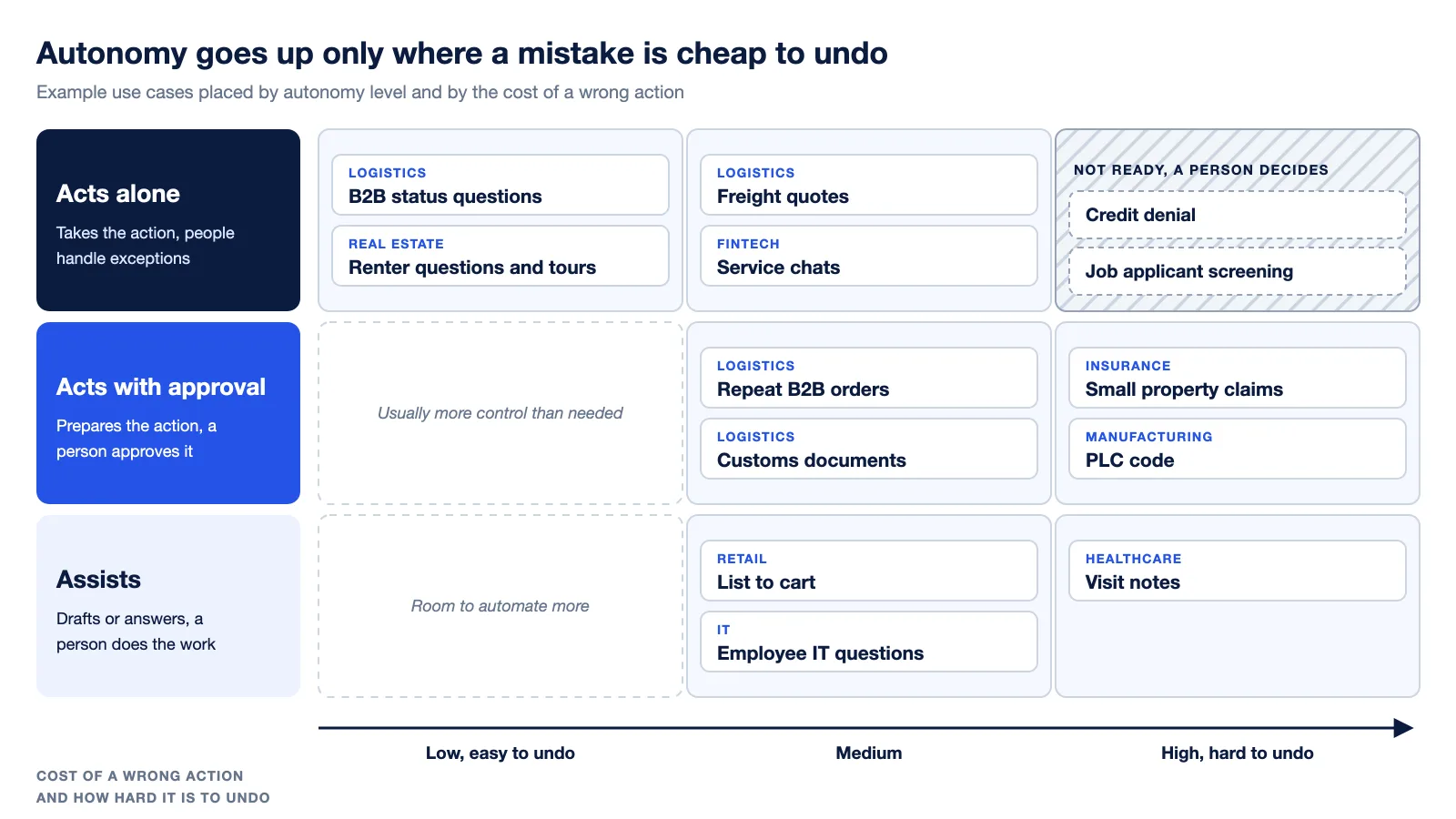
No high cost job is ready to act alone. Gartner data in our agentic AI statistics for 2026 points the same way. Just 15% of IT application leaders are considering, piloting, or deploying fully autonomous AI agents, a sign of how early true autonomy still is. Move a use case up one level only after clean runs at the level below, as our AI pilot to production guide explains.
AI Agents in Healthcare
In healthcare, agents draft for clinicians or handle routine patient calls. Kaiser Permanente made an assisted clinical documentation tool available across its 40 hospitals in August 2024, with patient consent and clinician review of every note. WellSpan says its Hippocratic AI agent, Ana, now manages more than 160,000 patient calls a month. Its 2024 launch, a screening pilot, sent clinicians call transcripts and allowed live transfer in some cases. The CMS WISeR model pairs AI with human clinical review in six states, and licensed clinicians decide every recommendation for non payment.
A HIPAA ready app protects protected health information through engineering, not paperwork. It also means a business associate agreement is in place with every service that processes health data on your behalf. For an agent, that includes the model API provider. HHS cloud guidance treats a cloud provider holding health data for you as a business associate even when the data is encrypted, and we read a model API the same way. Phone agents add consent work, covered in our guide to voice agents in production.
AI Agents in Banking and Lending
At banks, agents mostly answer and route questions and stay out of credit decisions. Bank of America says Erica helps more than 24.2 million clients. It said in August 2025 that Erica answers from a library of more than 700 responses, so Table 1 lists it as an assistant. Klarna says in its annual report on Form 20-F that its AI assistant handled 80% of customer service chats in 2025 while every customer can still reach a person. The same report calls its underwriting fully automated on machine learning credit models, and Klarna told the SEC in July 2025 that it does not use generative AI for credit underwriting.
Regulation B requires the reasons for an adverse action, whether given in the notice or on request, to be specific and to name the principal reasons, and saying the applicant missed a qualifying score is not enough. In a KPMG survey of 100 banking leaders at large US companies, 75% said in Q3 2026 that agents may not access sensitive data without human oversight. In India, an RBI committee report of August 13, 2025 recommends human oversight for medium and high risk tasks.
AI Agents in Insurance
The best documented agentic AI use case in insurance has agents prepare a claim and a person decide the payout. Allianz launched Project Nemo in Australia in July 2025 for food spoilage claims under AUD 500. Seven agents plan the work, check cover, weather, fraud and the payout amount, audit the result, guard the data and pass a summary to a claims professional. Allianz says payout decisions are never automated, and processing fell from several days to one day or even hours.
As of November 3, 2026, the NAIC model bulletin on AI use by insurers had been adopted in 27 states, the District of Columbia and Puerto Rico. It expects a written program for AI systems that make or support regulated insurance decisions. In the EU, life and health insurance pricing for individuals is high risk under Annex III of the AI Act. After the AI Omnibus entered into force on 27 July 2026, rules for high risk systems in sensitive areas apply from 2 December 2027, as our guide to choosing a software partner notes.
AI Agents in Logistics and Supply Chain
Agentic AI in supply chain and logistics has clear production use cases, because quotes, bookings and status questions are frequent and easy to check. C.H. Robinson says a single agent quotes truckload, less than truckload, temperature controlled, flatbed and hotshot freight, and its ocean booking agents launched in China in August 2026. It says its customs agents and automations classify and extract documents so brokers can focus on validation, and that time spent has fallen 23% so far. That split follows 19 CFR 111.28, which requires licensed brokers to exercise responsible supervision and control.
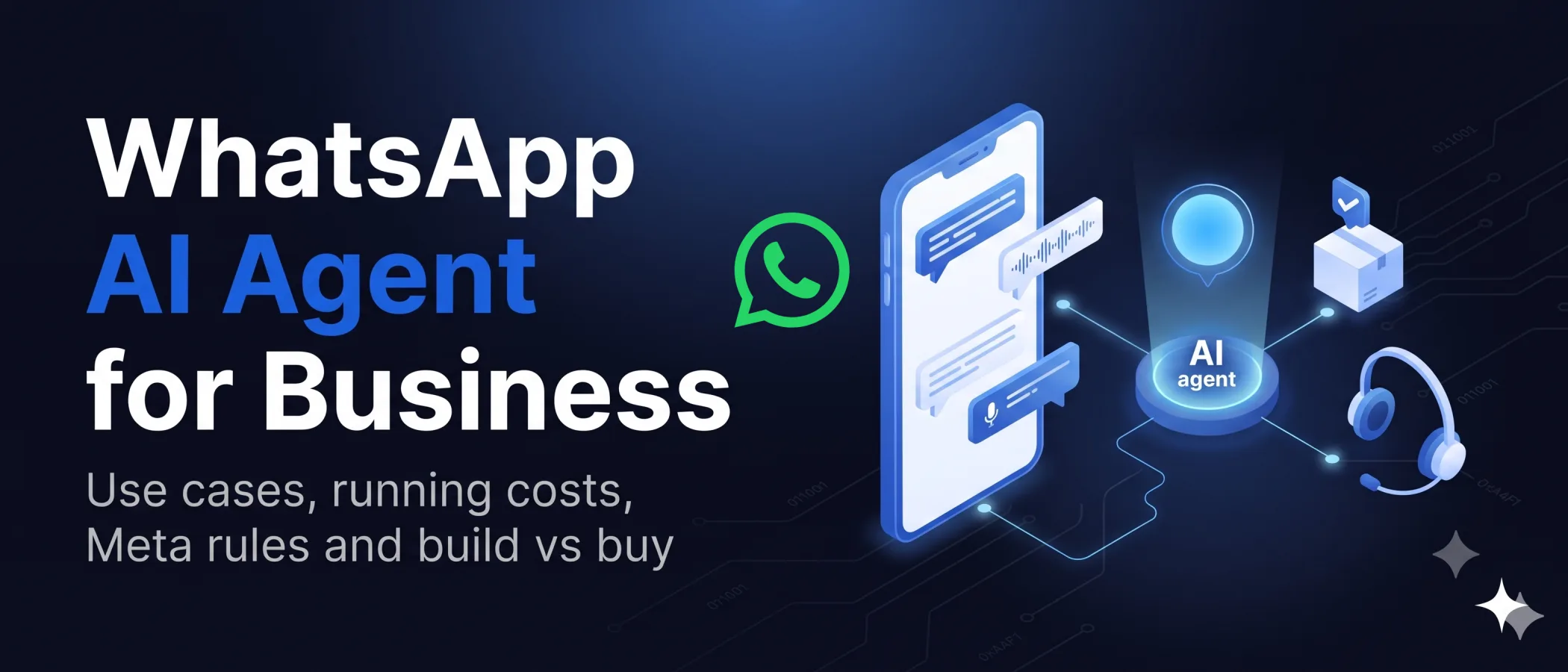
A B2B courier and logistics operator in India served repeat business customers on WhatsApp, the channel they already used, and routine inquiries were tying up human agents. We built WhatsApp agents for Quick Couriers on their existing Laravel and Postgres platform. A voice agent answers status, pickup window and billing questions and hands off to a person with context when needed. An ordering agent recognizes returning business customers and confirms each order before pushing it into the platform. Both agents are live.
The WhatsApp Business Messaging Policy lets you automate replies in the 24 hour window only if you also offer a prompt, clear and direct escalation path. Our WhatsApp agents guide covers that handoff.
AI Agents in Retail and Ecommerce
Retail agents build the basket, and the shopper still pays. Walmart describes Sparky as its AI shopping agent, turning a photo of a handwritten list into a ready to go cart for US customers. On October 21, 2026 it announced Agent Profiles, with customers approving outside agent purchases by default or setting a spending limit such as $50, $100 or $200. Amazon sued Perplexity over its shopping agent. On August 4, 2026 the Ninth Circuit vacated the preliminary injunction, so whether an outside agent may shop a retail site is still undecided. California Business and Professions Code 17941 bars using a bot online to mislead people in California about its artificial identity to drive a sale, unless the bot is disclosed.
AI Agents in Real Estate
In real estate, leasing is the agent use case with published results. Zillow Rentals launched AI Assist in October 2025 to answer renter questions, book tours and hand off to the leasing team. EliseAI powers it, and EliseAI and Zillow Rentals report that renters who engaged were on average 43% more likely to apply than leads at buildings without it, which does not prove cause. HUD withdrew its 2024 guidance on housing ads on digital platforms, effective September 17, 2025, but the Fair Housing Act still applies.
We built the AI property operations platform for Sergo in New Zealand, where AI ticket triaging routes guest requests and maintenance issues to the right person automatically.
AI Agents in Travel and Hospitality
Airline service agents are in production, and they must get policy right. Microsoft reported in November 2024 that Air India AI.g, launched in May 2023, had handled nearly 4 million customer queries, 97% with full automation, escalating to contact center staff when needed. For US flights, refund answers must match 14 CFR 260.6, which requires a full and prompt refund when a flight is canceled, or significantly delayed or changed, and the passenger declines rebooking or a voucher. The Department of Transportation has paused enforcing the refund rule until July 7, 2027 for flights that are only renumbered and run without a significant change or delay.
Hotel agents are live too, mostly on the phone. Canary Technologies said in December 2025 that it had made its AI Voice agent available to thousands of Wyndham franchisees after a pilot at more than 700 Wyndham hotels. It says the agent answers every call, with instant answers and booking support.
AI Agents in Manufacturing
Agentic AI in manufacturing is moving from copilots to agents. In November 2024 Siemens said thyssenkrupp Automation Engineering would use its Industrial Copilot to help engineers write PLC control code, and in May 2025 it said the technology was being rolled out globally there. In April 2026 Siemens made its Eigen Engineering Agent available to the more than 600,000 users of its TIA Portal engineering software, after pilots with more than 100 companies in 19 countries. Siemens says the agent plans, writes and validates automation code until it meets set benchmarks, then hands engineers a ready to use result. The EU Machinery Regulation applies from 20 January 2027 and requires third party assessment for safety components with self evolving machine learning behavior.
AI Agents for Customer Service
In Table 1, customer service is where agents most often act alone, and where customers push back. Gartner predicts that agentic AI will autonomously resolve 80% of common customer service issues by 2029, yet 87% of customers surveyed in early 2026 told Gartner that companies using GenAI must offer a way to reach a human agent. Gartner says GenAI helps most when it attempts resolution only when confidence is high, with a clear path to human support. In a separate Gartner survey of 321 service leaders, 85% are adding tasks to frontline roles.
We set a confidence threshold and clear escalation rules, so routine questions are resolved end to end while anything sensitive, ambiguous, or high value is handed to a human agent with the full conversation history attached.
AI Agents for IT and Back Office
Inside companies, IT questions and documents make good first agents. In the same August 2025 release, Bank of America says Erica for Employees cut calls into its IT service desk by 50%. Documents suit a first back office agent because a person signs what the agent prepares, as with customs. Under Article 6(3) and Recital 53 of the EU AI Act, an Annex III system that poses no significant risk of harm, for example because it only does a narrow procedural task such as classifying incoming documents, does not count as high risk unless it profiles people, and the provider must document that assessment.
AI Agent Use Cases That Are Not Ready
Final credit decisions, coverage and claim denials, life and health pricing, tenant and job screening, and legal advice are not ready for an agent acting alone. Of the four public cases below, two ended in orders to pay and two are allegations still in court.
Four public cases to learn from
- Air Canada, February 14, 2024. A British Columbia tribunal held the airline responsible for its chatbot saying a bereavement fare could be claimed after travel, and ordered it to pay 812.02 Canadian dollars (Moffatt v. Air Canada).
- UnitedHealth, February 13, 2025. Plaintiffs allege the nH Predict model replaced physicians in coverage decisions, which UnitedHealth denies, and a Minnesota federal court let contract claims proceed (Estate of Lokken v. UnitedHealth).
- Workday, May 16, 2025. A California federal court preliminarily certified a collective of applicants aged 40 and over who allege its AI screened them out, which is not a finding of discrimination (Mobley v. Workday).
- DoNotPay, February 11, 2025. The FTC finalized a $193,000 order after alleging the company never tested whether its AI lawyer matched a human lawyer (FTC order).
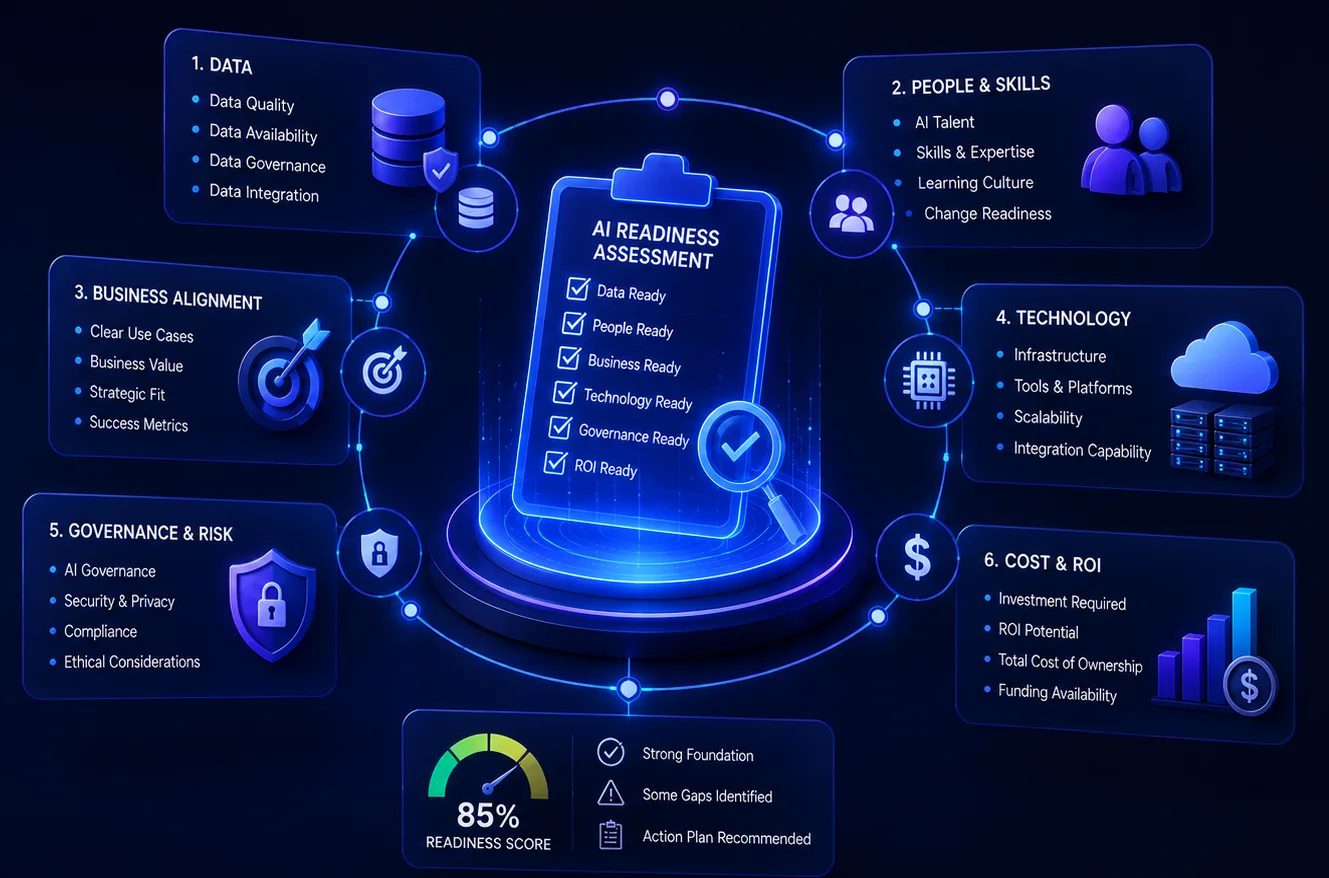
Medicare Advantage plans must base medical necessity decisions on the individual record, including clinical notes (42 CFR 422.101). In Colorado, SB26-189 applies from January 1, 2027 to automated decision-making technology (ADMT) that materially influences a consequential decision about an individual in education, employment, housing, financial or lending services, insurance, health care services, or essential government services and public benefits. A federal court order of April 27, 2026 in xAI v. Weiser bars the Colorado Attorney General from enforcing it for conduct up to 14 days after the court rules on a preliminary injunction. Have counsel check that status, then score the use case with our AI readiness assessment.
How to Choose Your First AI Agent Use Case
Pick by how cheap a mistake is to catch and undo. Gartner says many use cases sold as agentic do not need an agent, and advises agents where decisions are needed, automation for routine workflows and assistants for simple retrieval. The right first target is a workflow that is too varied for fixed rules but repetitive enough that your team resents doing it by hand.
49%
of leaders at large US companies have defined high risk use cases where agents may not decide alone
20%
of US executives trust agents with financial transactions, against 38% for data analysis
- Volume. The job repeats often enough that a weekly sample shows whether the agent is right.
- Error cost. A wrong step costs minutes or a small refund, never a denied claim, loan or job.
- Reversibility. A person can undo the action, or the agent stops at a human approval step before anything that cannot be undone.
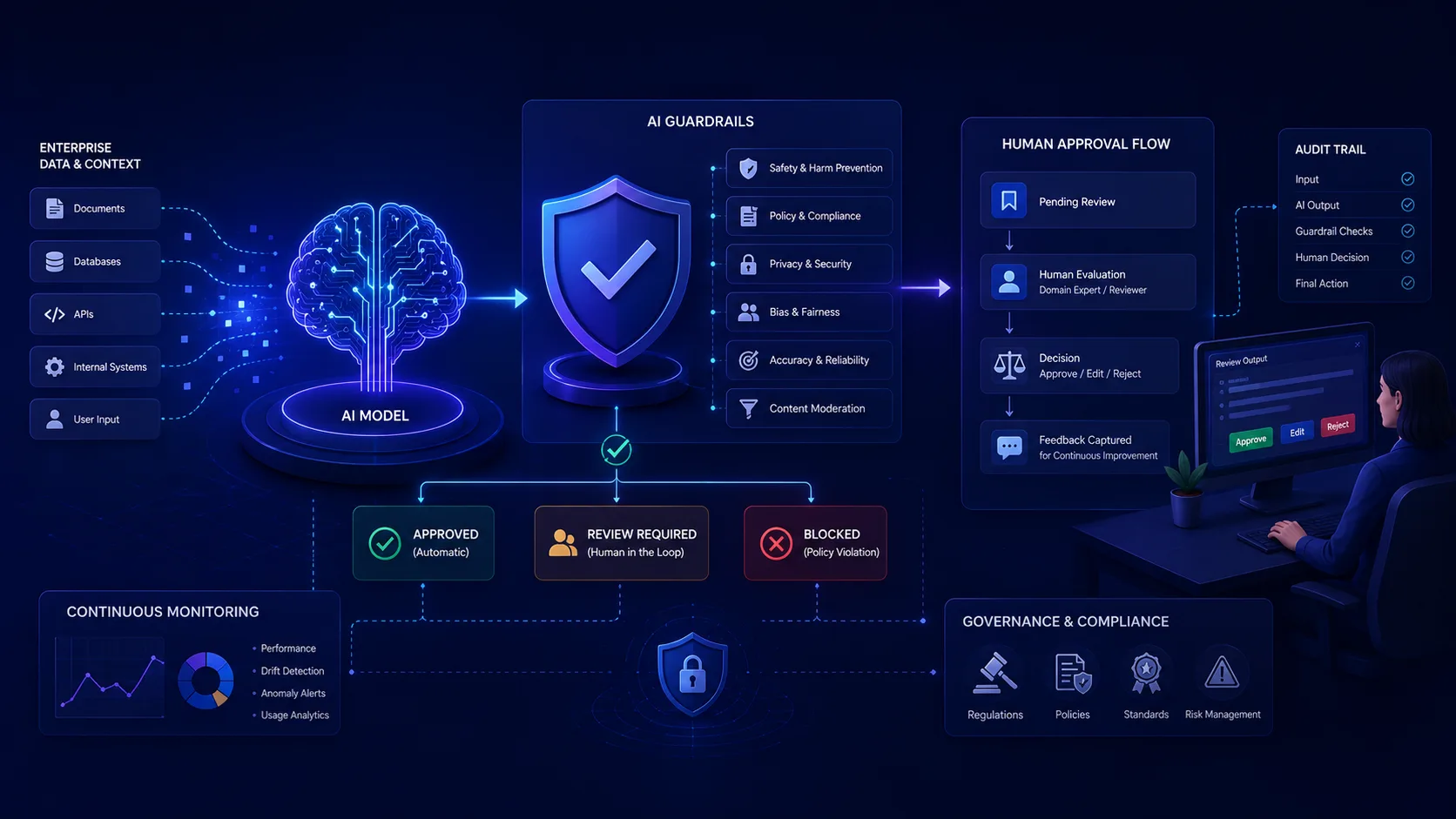
- Data access. Each system is reachable through an API with scoped agent credentials, as in governing AI agents at scale.
- One owner. One team owns the workflow, reviews samples and decides when autonomy goes up.
Price a use case that passes all five tests with our AI agent cost guide.
In the McKinsey 2026 survey, respondents at technology companies report the most agent use, and size matters. Large organizations scaling AI agents in one or more functions rose from 27% to 40% year over year. Among smaller organizations the share stayed roughly flat at 22%.
Mid sized company, first agent
- One workflow, one system of record, a person already checking the output
- Support triage, order status, quotes or document classification
- Start at assists or with approval
Enterprise, next agent
- Move a proven use case up one level before starting another
- Add customer service where a route to a person exists
- Build approval, audit and credentials once for every agent
Regulated decision, any size
- Credit, coverage, pricing, tenant and hiring calls stay with a person
- Record the reason behind each decision
- Check Regulation B, the NAIC bulletin, CMS rules or Annex III first
How Unico Connect Builds a First Agent
Unico Connect builds production AI agents, from choosing the use case to approval steps and monitoring. We scope exactly which tools an agent can call and what it is allowed to do with each, put human in the loop approval in front of anything irreversible, and build in retries and graceful degradation so a failure escalates rather than silently corrupts data. Our agentic AI development services page explains how a first agent reaches production.
Frequently Asked Questions
Which industries have the most AI agents in production?
In the McKinsey 2026 survey, respondents at technology companies report the most agent use. Outside tech, named production agents run customer service at Klarna, freight quotes at C.H. Robinson, patient calls at WellSpan, renter questions at Zillow Rentals, hotel calls at Wyndham and, as reported in 2024, airline queries at Air India.
Can an AI agent approve a loan or an insurance claim on its own?
An AI agent can prepare a loan or claim decision, and we advise that a person make the final call. Regulation B and the NAIC bulletin do not ban automated decisions, but both put duties on the lender or insurer. Under Regulation B, the reasons for an adverse action must be specific and name the principal reasons. As of November 3, 2026, the NAIC model bulletin on AI use by insurers had been adopted in 27 states, the District of Columbia and Puerto Rico. It expects a written program for AI systems that make or support regulated insurance decisions. Allianz says Project Nemo never automates the payout decision.
Is a company responsible for what its AI agent tells a customer?
One Canadian tribunal has said yes. In Moffatt v. Air Canada (February 14, 2024), a British Columbia small claims tribunal held Air Canada responsible for a wrong bereavement fare answer from its chatbot, saying it makes no difference whether information comes from a static page or a chatbot.
Which AI agent use cases are still early in 2026?
We found no named production deployment at a primary source on November 11, 2026 for fraud alert summaries or a retailer gateway for outside shopping agents. Treat vendor claims in these areas as pilots until a company names a live deployment. Hotel agents are live, but they mostly answer calls so far.
What is a good first AI agent use case for a mid sized company?
Pick a job where a wrong step is cheap and easy to undo, such as order status or quote requests, on one system of record that a person already checks. Start at assists or with approval, and raise autonomy one level after a clean run of reviewed samples.
Do AI agents replace customer service teams?
Mostly they change the work. In the Gartner survey of 321 service leaders, 85% are adding tasks to frontline roles and 75% are moving human agents into new roles, though 31% have implemented or plan AI driven layoffs through the first quarter of 2027. Klarna says its assistant handled 80% of customer service chats in 2025, and every customer can still reach a person.