







Built cloud-native smart metering infrastructure monitoring 1,500+ meters in real time at 99.9 percent uptime
A cloud and DevOps engagement for a smart metering technology provider deploying smart gas meters across commercial zones as part of a public-sector modernisation initiative, with real-time ingestion, SAP-integrated automated billing and utility dashboards.
Key Takeaways
Spectron is a technology provider specialising in smart metering infrastructure for utilities, operating as part of a public-sector modernisation initiative that deployed smart gas meters across commercial zones. Unico Connect built the cloud-native backend powering the platform — real-time ingestion of meter data, monitoring and alerting, SAP integration for automated billing, and dashboards for utility teams.
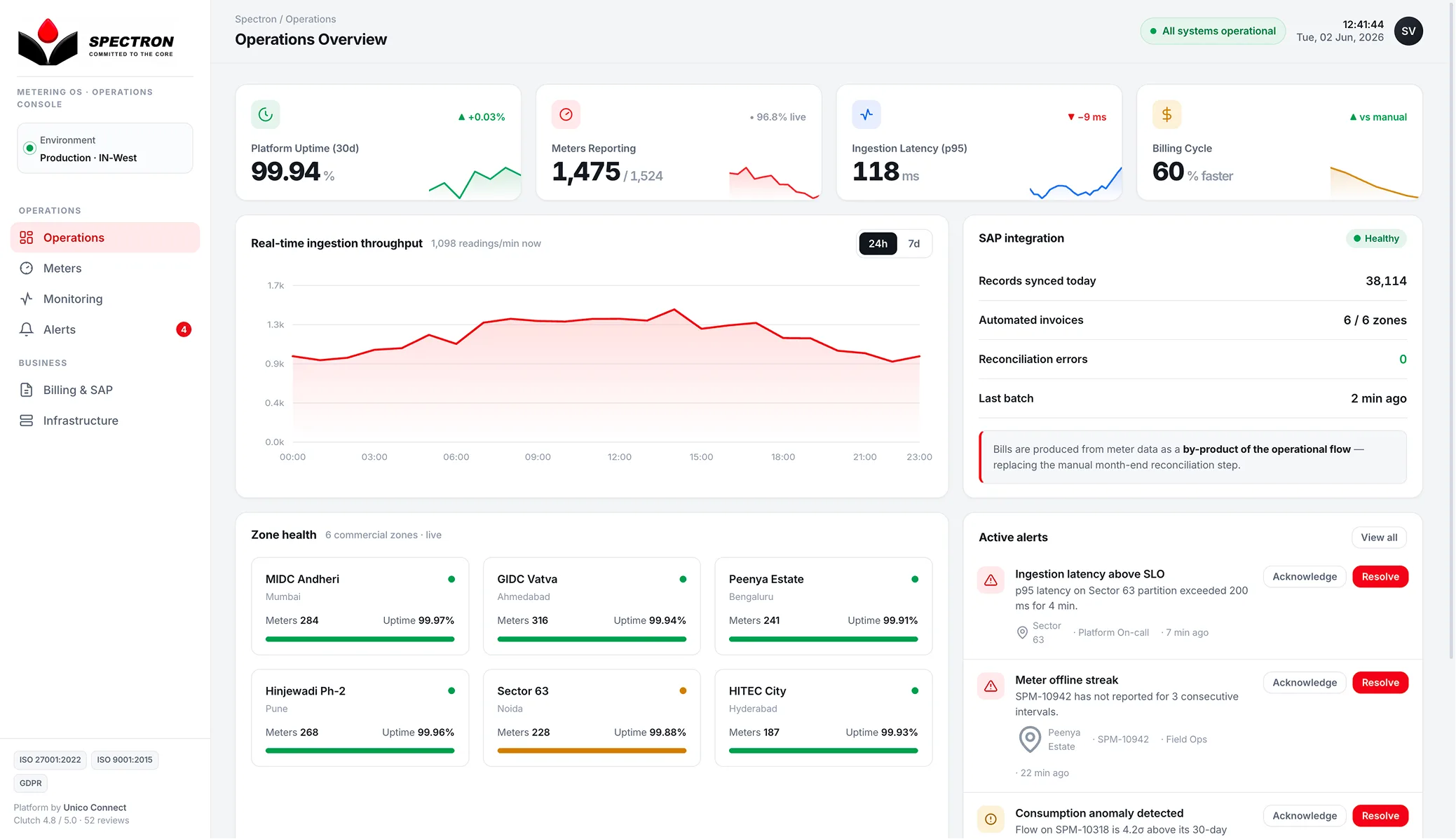
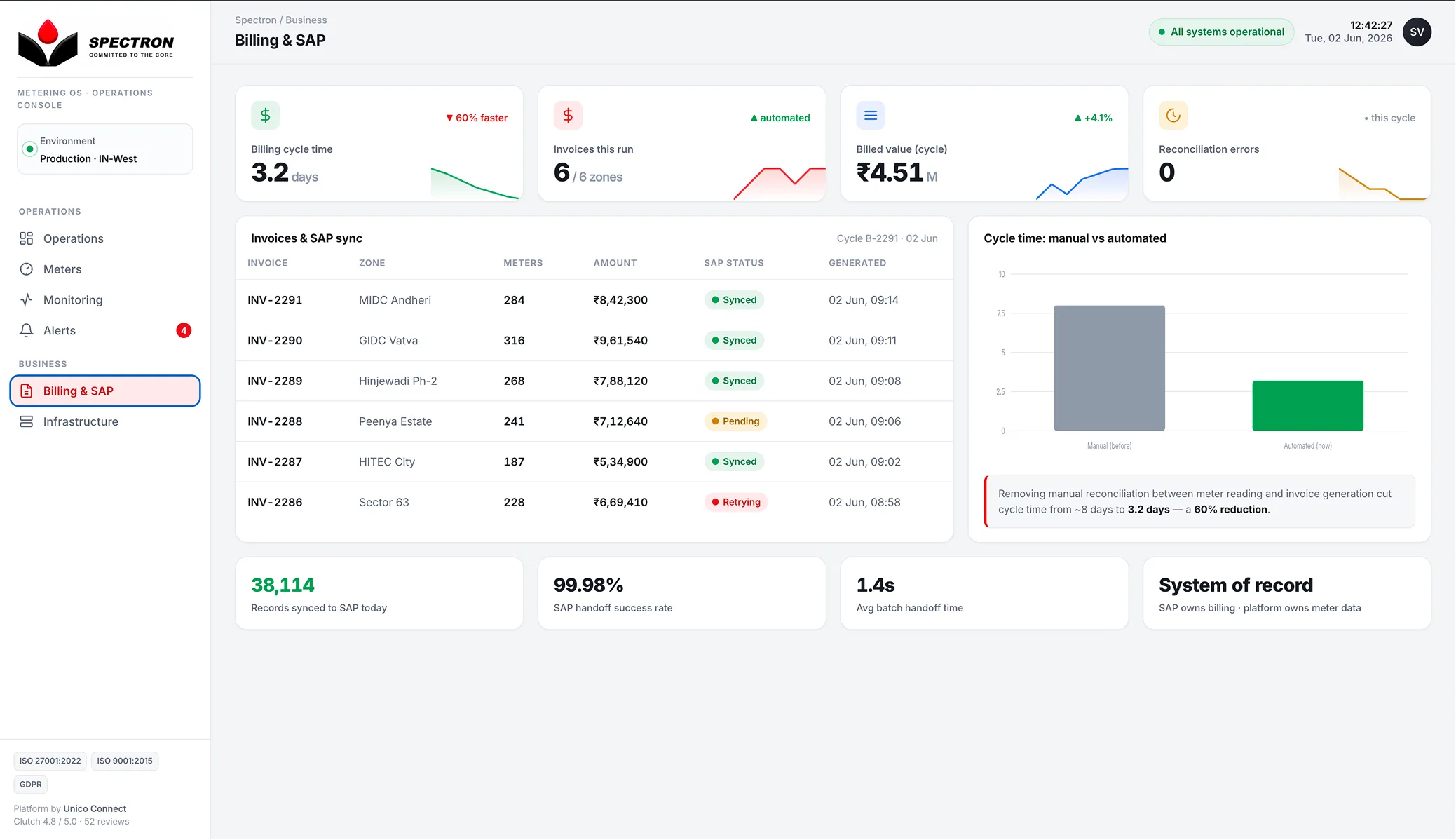
The platform monitors 1,500+ meters at 99.9 percent uptime with 60 percent faster billing cycles than the manual workflow it replaced.

The Challenge
Spectron operates in a category where the platform underneath the business either works reliably or it does not, with very little middle ground. Smart metering deployed across commercial zones produces continuous data, and that data has to land in operational systems the utility customer already runs (typically SAP) without packet loss, latency or reconciliation errors. Every downstream process — billing, customer reporting, operational decisions — is built on top of it.
Spectron was operating as part of a public-sector modernisation initiative, which raised the bar: significant deployment scale with no tolerance for the platform going down or losing data, a specific requirement for clean SAP integration so billing could be automated rather than reconciled at month-end, and a tight compliance environment with obligations on data integrity, security and operational continuity that consumer products do not carry.
Before the rebuild, meter readings flowed through manual reconciliation, billing was slow because data had to be cleaned and validated before invoices, and there was no real-time visibility into meter performance. Spectron came to Unico Connect to build the cloud platform that could carry this load at 99.9 percent uptime, integrate cleanly with SAP for automated billing, and surface meter performance in real time — cost-aware, because utility infrastructure is a long-cycle business where cloud spend compounds over years.
Our Approach

We engaged as a cloud and DevOps partner, covering the backend architecture, the ingestion pipeline, the SAP integration and the operational monitoring layer. Discovery was unusually focused, because the architectural decisions on a metering platform shape the operational economics for years — we aligned first on what the platform had to do, what scale it had to operate at, and where the cost-performance trade-offs sat.
Key decisions:
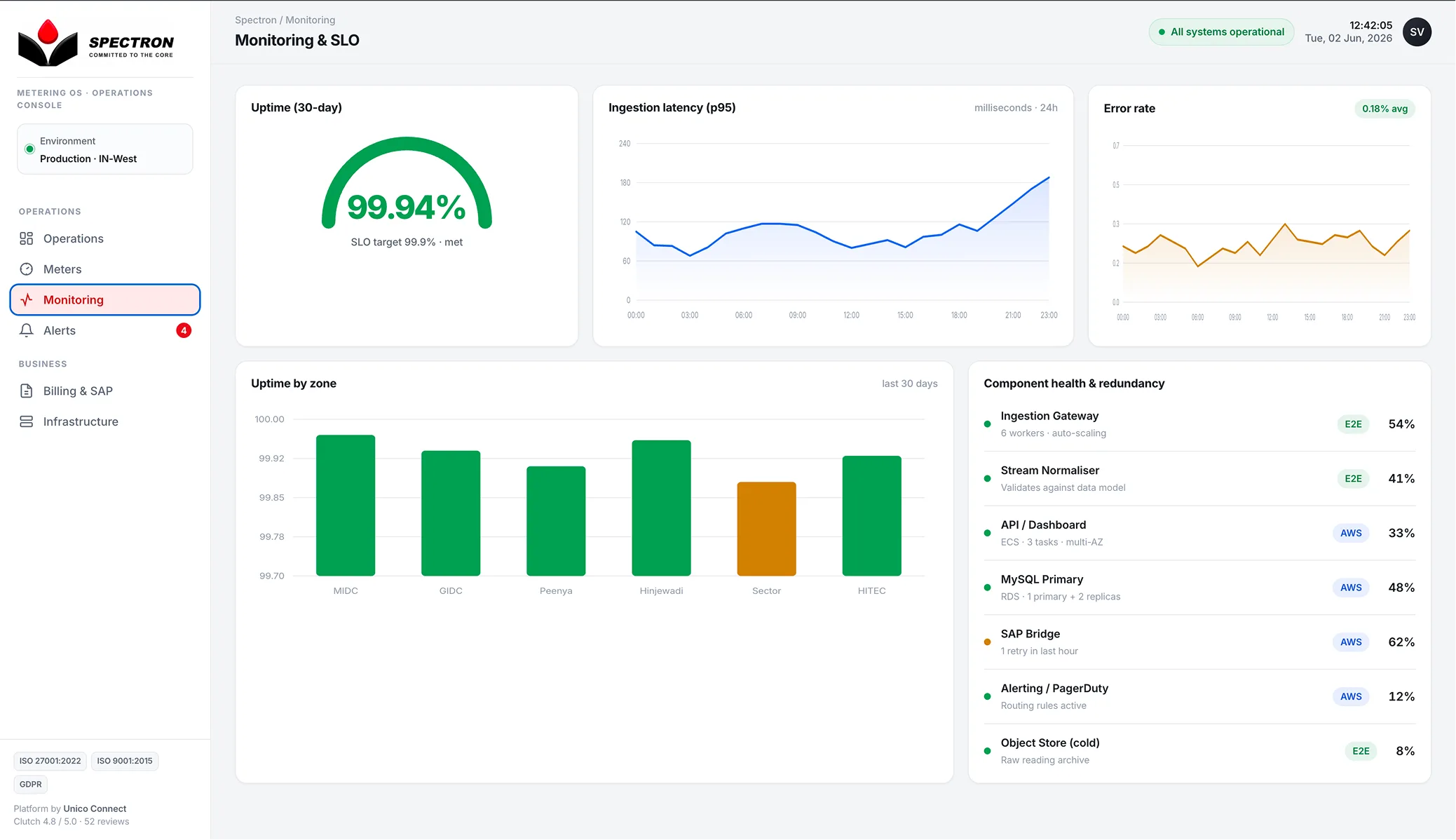
AWS + E2E split for cost-performance
Some workloads run on AWS where managed services make sense; others on E2E where the cost-performance ratio is better — a trade that materially affects total cost of ownership over a long-cycle utility platform.
Ingestion designed for the real world
Connectivity drops, meter clock drift, payload anomalies and buffered batch delivery are the operating reality, not edge cases — the pipeline handles them without losing data or corrupting the downstream record.
SAP as a system-of-record handoff
The metering platform owns meter data, SAP owns billing; the integration moves data cleanly in the form each system expects, which is what made automated billing possible. Monitoring was built in from day one.
The solution we built
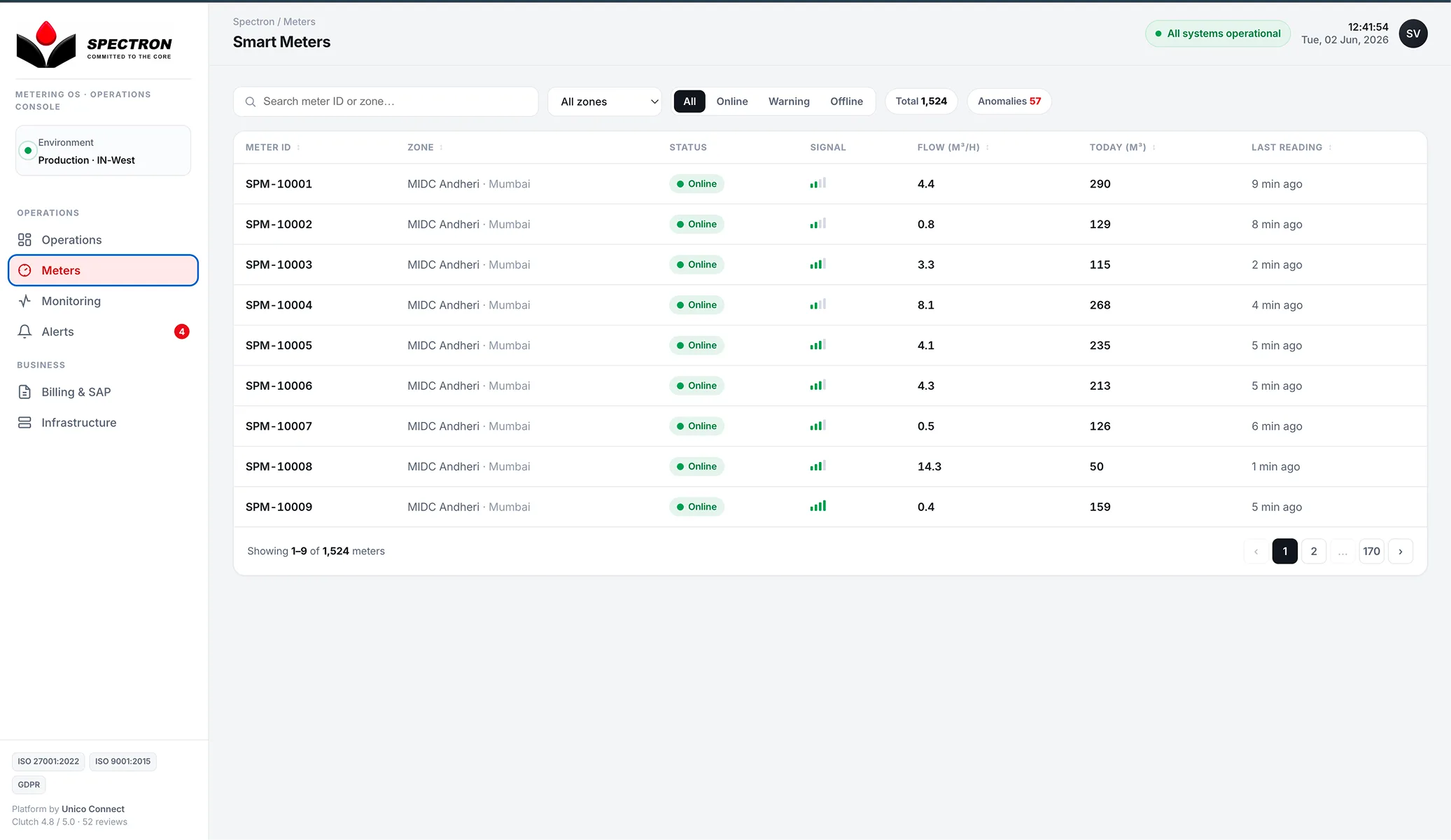
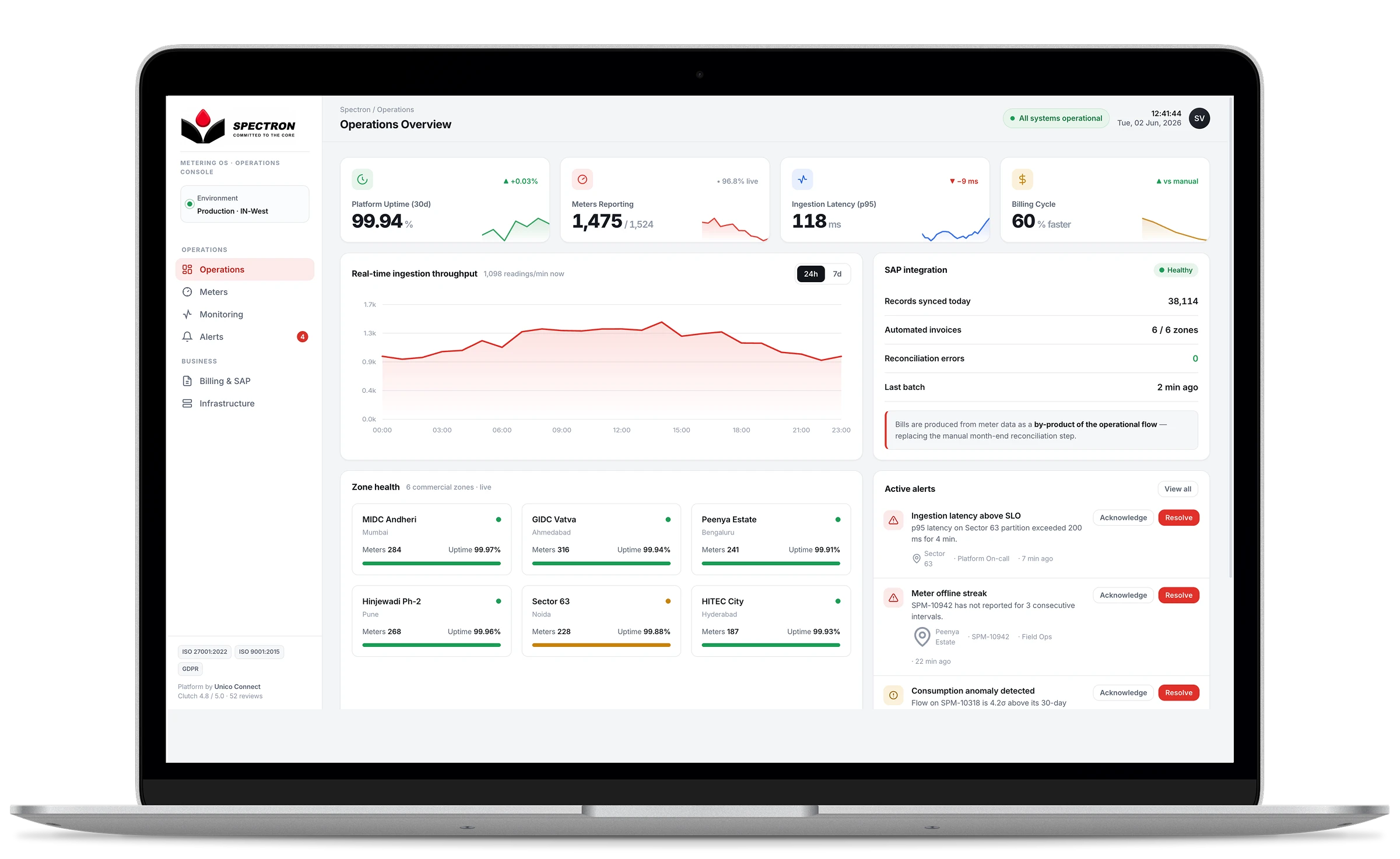
A cloud-native backend on Node.js and MySQL managing 1,500+ smart meters with real-time ingestion, spanning AWS and E2E. Data flows from meters into the ingestion pipeline, gets normalised and validated, then lands in the operational data layer available to SAP, the dashboards and the monitoring system simultaneously.
Real-time ingestion
Continuous data from 1,500+ deployed meters absorbed at scale, normalised and validated against the data model of the platform before it reaches any downstream system.
SAP-integrated automated billing
Meter data flows into the utility customer’s SAP billing and customer systems, so bills are produced as a by-product of the operational flow rather than a separate reconciliation task.
Utility dashboards
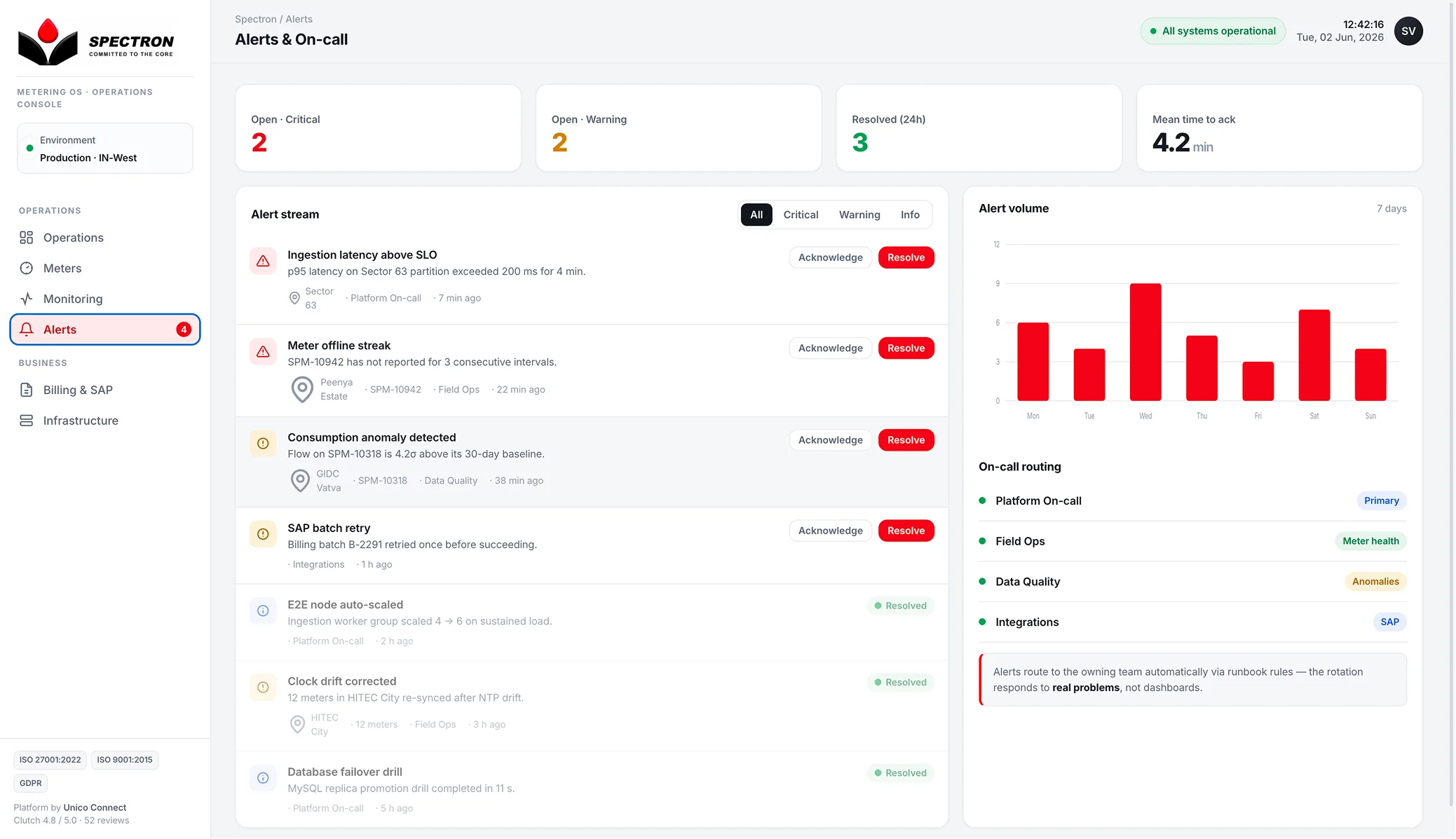
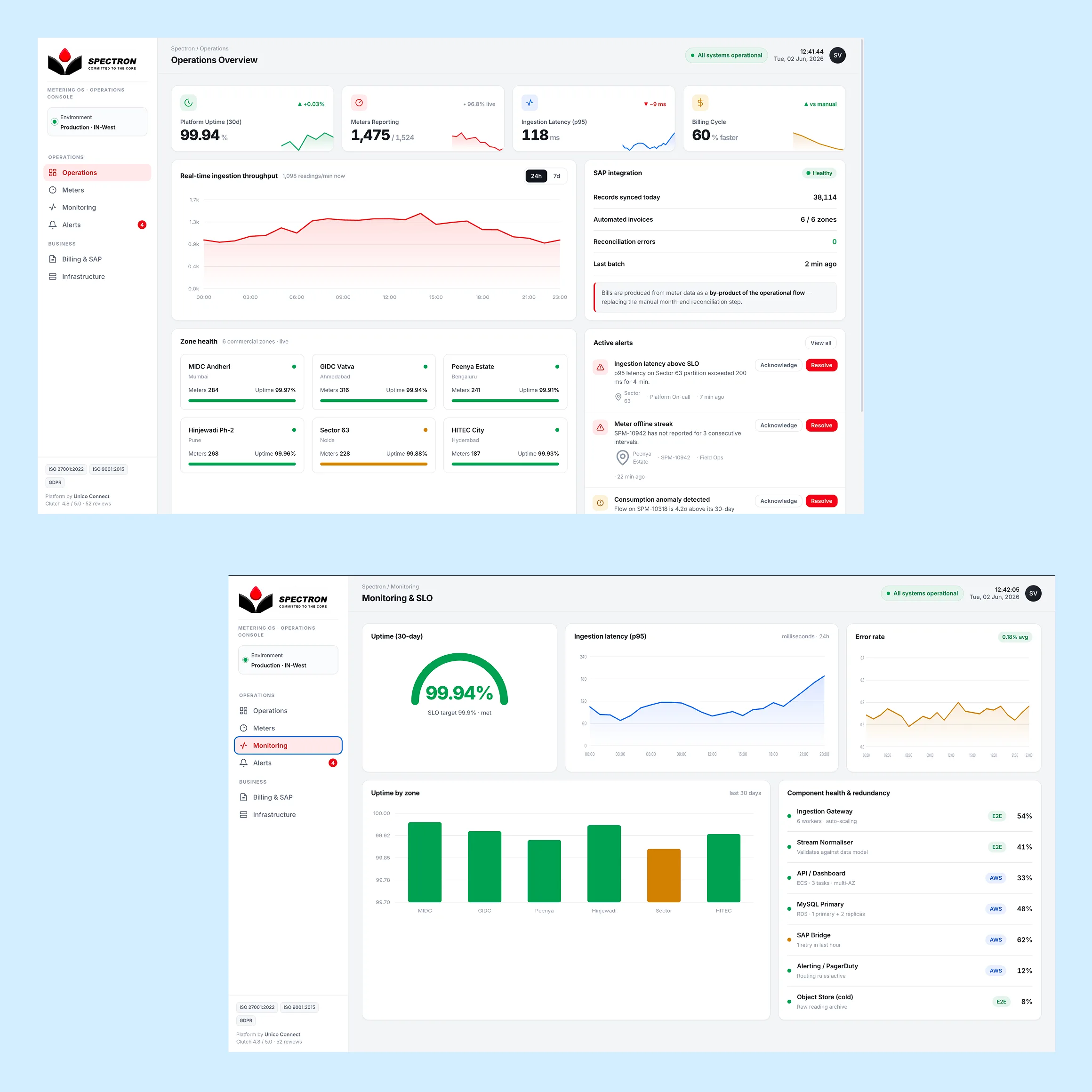
Operators see meter performance, anomalous devices and the signals that matter (uptime by zone, anomaly counts, ingestion latency) surfaced clearly, with alerting routed to the right team automatically.
Monitoring and 99.9% uptime
Redundancy at the ingestion and database layers, alerting that catches anomalies before they cascade, and operational runbooks that make on-call response repeatable.
Tech stack



Outcomes & impact
99.9%
Platform uptime under utility-grade conditions
1,500+
Smart meters monitored in real time
60%
Faster billing cycle via SAP integration
What Our Clients Say
Spencer Varghese
Joint Managing Director, Spectron Engineers
They've contributed a significant amount of time and resources to come up with satisfying solutions.
Trusted and verified by our clients


 ISO/IEC 27001:2022
 ISO 9001:2015
 GDPR compliant
Frequently Asked Questions
Let's Build Your Team
Tell us about your platform, the data you carry and where you want it to be in twelve months. We reply within one business day with next steps.
Prefer to book directly?
🗓️ Schedule on Calendly →Or email us:
✉️sales@unicoconnect.com