










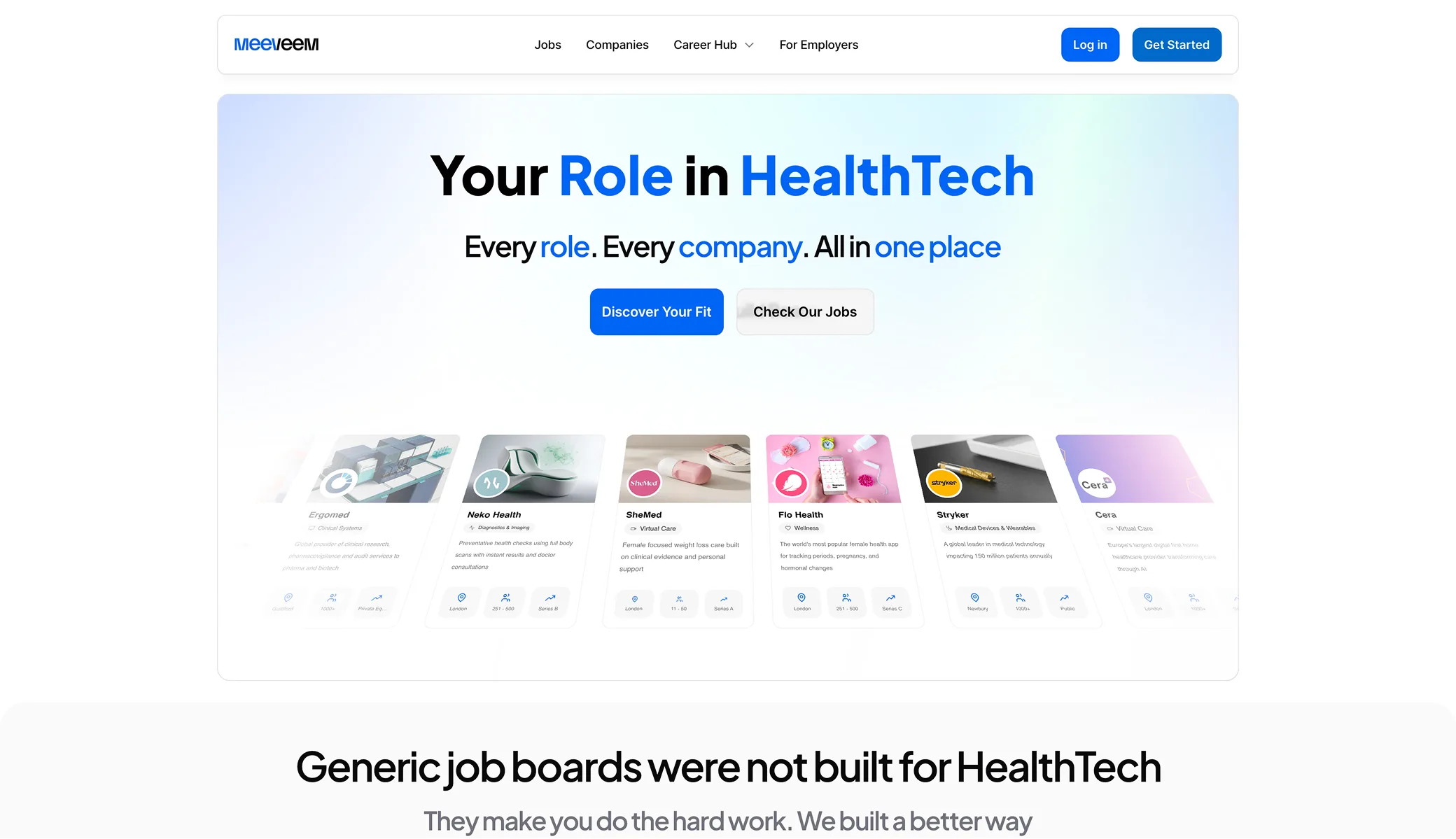
Built a healthtech jobs marketplace that connects candidates with employers through AI-matched opportunities and SEO-first job pages
A two-sided platform for the healthtech hiring market, combining candidate-side job discovery and applications with employer-side job management, plan-based subscriptions and HR-AI matching, delivered on a stack tuned for performance, SEO and Google Jobs visibility.
Key Takeaways
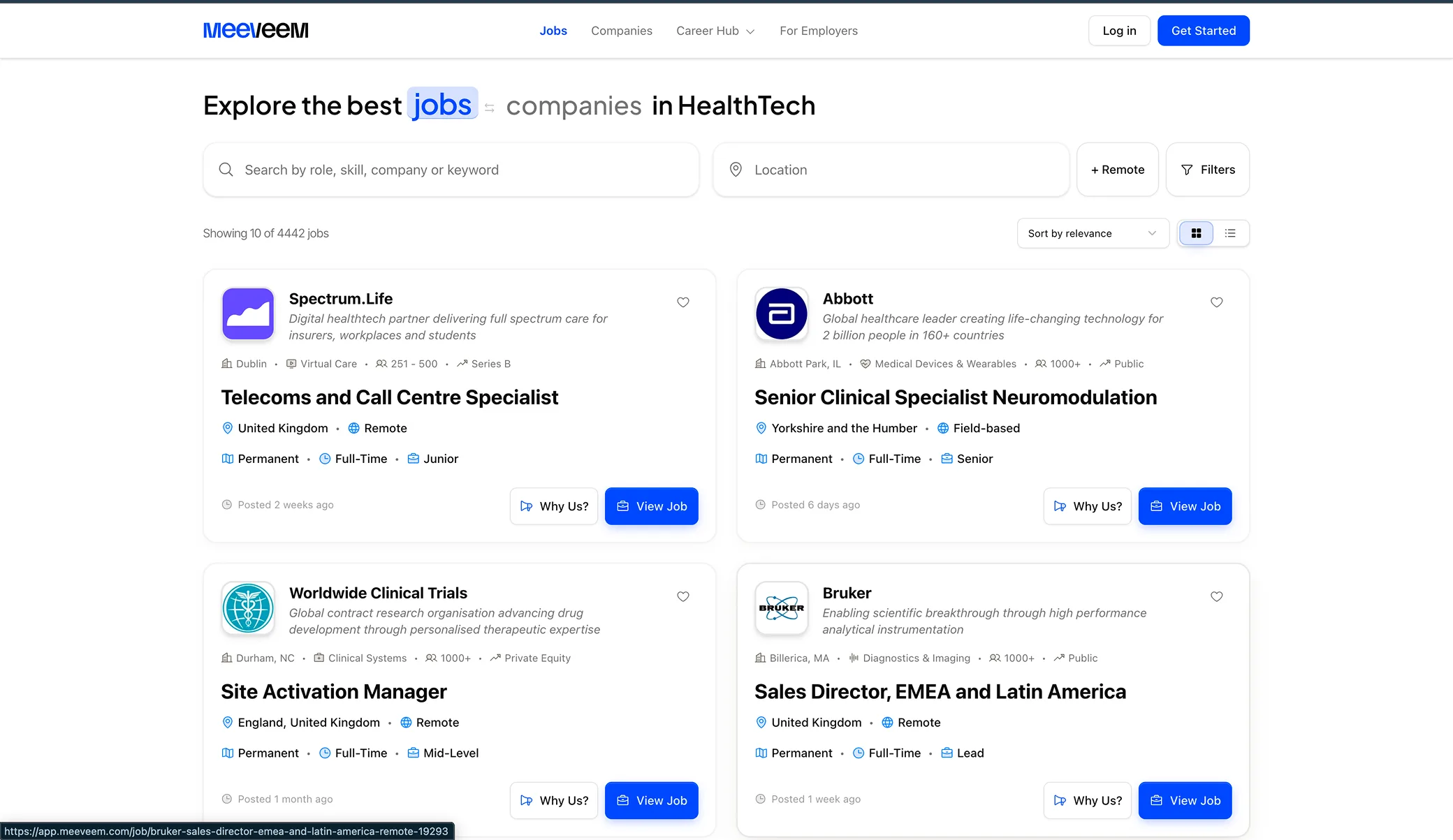
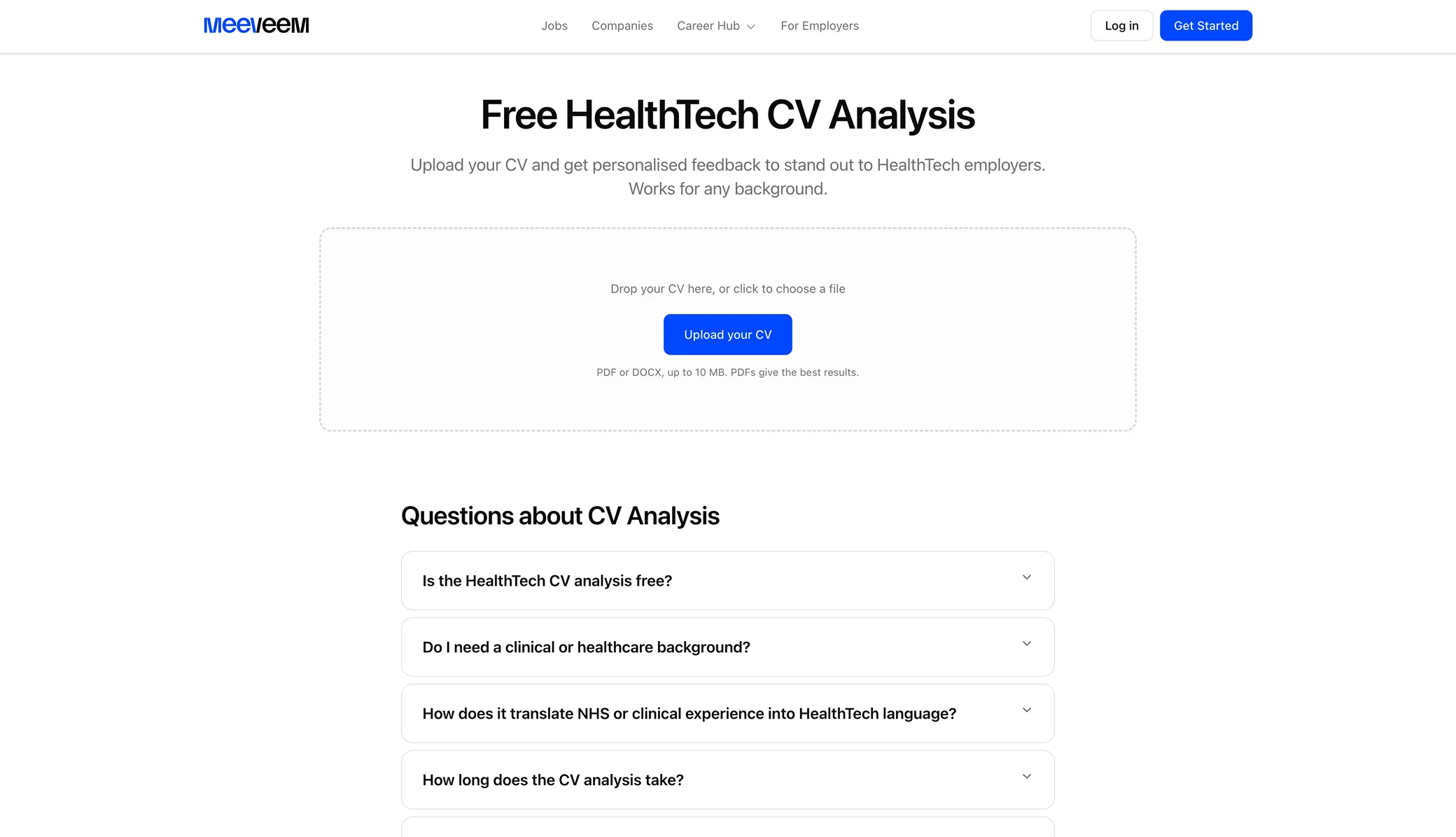
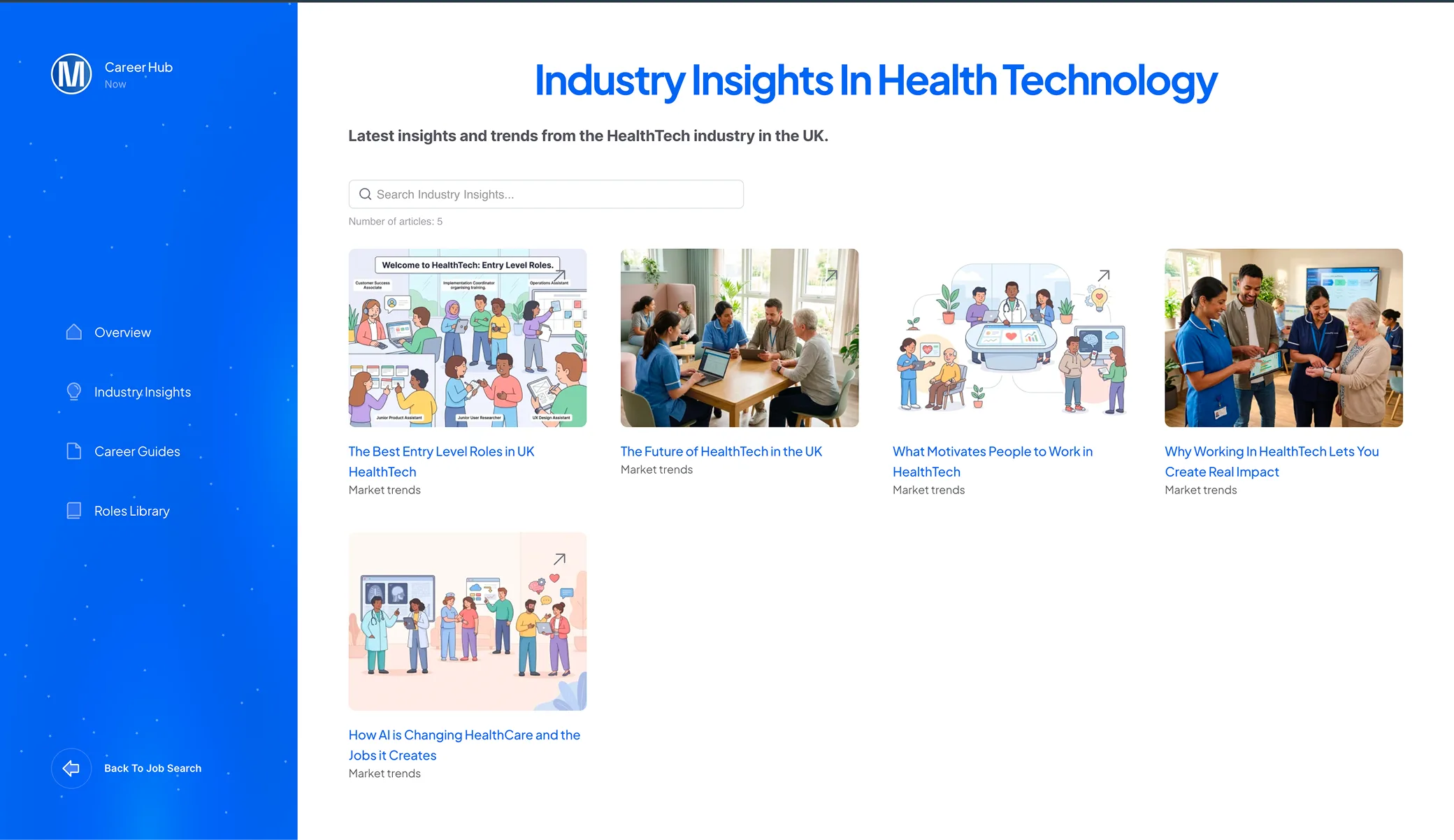
Meeveem set out to rebuild healthtech hiring around AI-matched opportunities rather than keyword search and form submissions. Unico Connect built the platform end-to-end: a candidate web application with profile, applications and AI-matched job discovery; an employer web application with job management, applicant tracking and plan-based subscriptions; and a backend with Auth0, Stripe and HRFlow.ai.
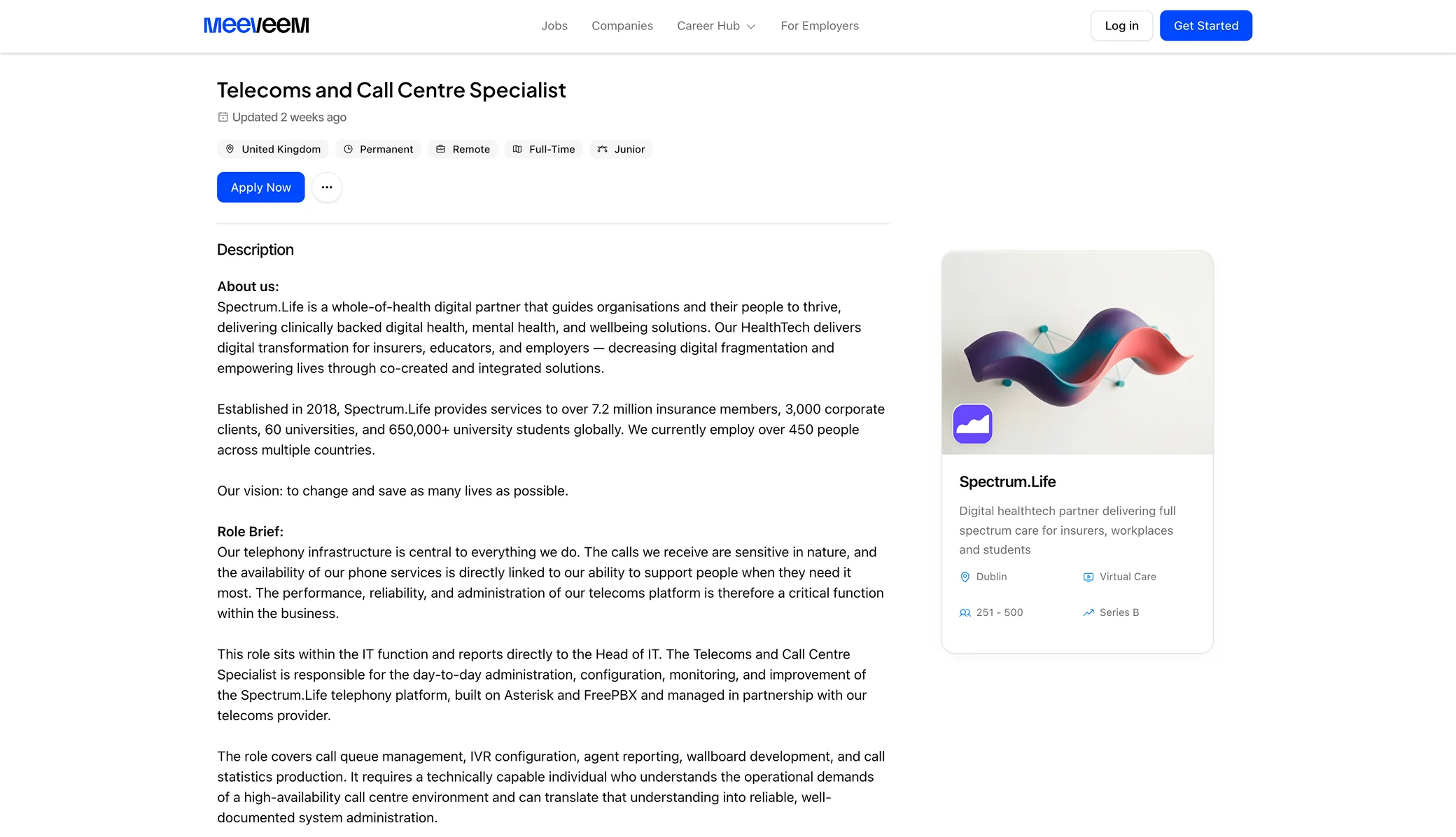
The platform is built SEO-first, with structured data for Google Jobs on every job page and Pagespeed targets baked into the engineering work.

The Challenge
HealthTech hiring carries a structural inefficiency that existing platforms have not solved well. Candidates qualified for a specific role are buried under candidates who applied to many roles. Employers spending time on a hiring pipeline cannot tell which applicants are likely to be a fit until they have already invested time reviewing them. Both sides feel like they are working harder than the outcome justifies — and that inefficiency is what Meeveem was set up to solve.
The team came to Unico Connect with a clear thesis: healthtech hiring should work like a marketplace where AI does the matching work humans were doing manually. Candidates should see jobs with a match score, not just a title. Employers should see applicants ranked against the actual fit factors of the role. The matching technology was available (HRFlow.ai’s healthtech-aware engine) but the platform to bring it to market did not exist. Meeveem needed an engineering partner who could build that platform end-to-end.
Three things had to work together: a candidate experience that feels like a modern jobs platform, an employer experience that supports the hiring workflow without driving recruiters back to spreadsheets, and SEO-first architecture with structured data and the Pagespeed numbers that determine whether Google Jobs surfaces a listing. The constraint was time — the design was already defined in the team’s prototypes, so the engagement was about building on those foundations rather than redesigning from scratch.
Our Approach

We engaged as a product partner, structured around delivering the platform end-to-end across the candidate web application, the employer web application, the backend and the third-party integrations. The first phase was discovery against the existing prototypes and the product requirements document — the design direction was set, and our job was to take it from prototype to production without losing the design intent.
Key decisions:
SEO-first, with a conversion hook
Public job pages carry Google Jobs structured data; the match score is blurred until sign-in, preserving SEO value while creating the natural conversion event that turns visitors into registered candidates.
Clean plan-based feature gating
Free, Growth and Scale plans wired into the architecture so the upgrade path is handled cleanly rather than a place where billing bugs and edge cases accumulate.
Deep but replaceable matching integration
HRFlow.ai is integrated deeply enough that match scores are part of every interaction, while the integration layer stays clean enough that it could be extended or replaced without re-architecting.
The solution we built
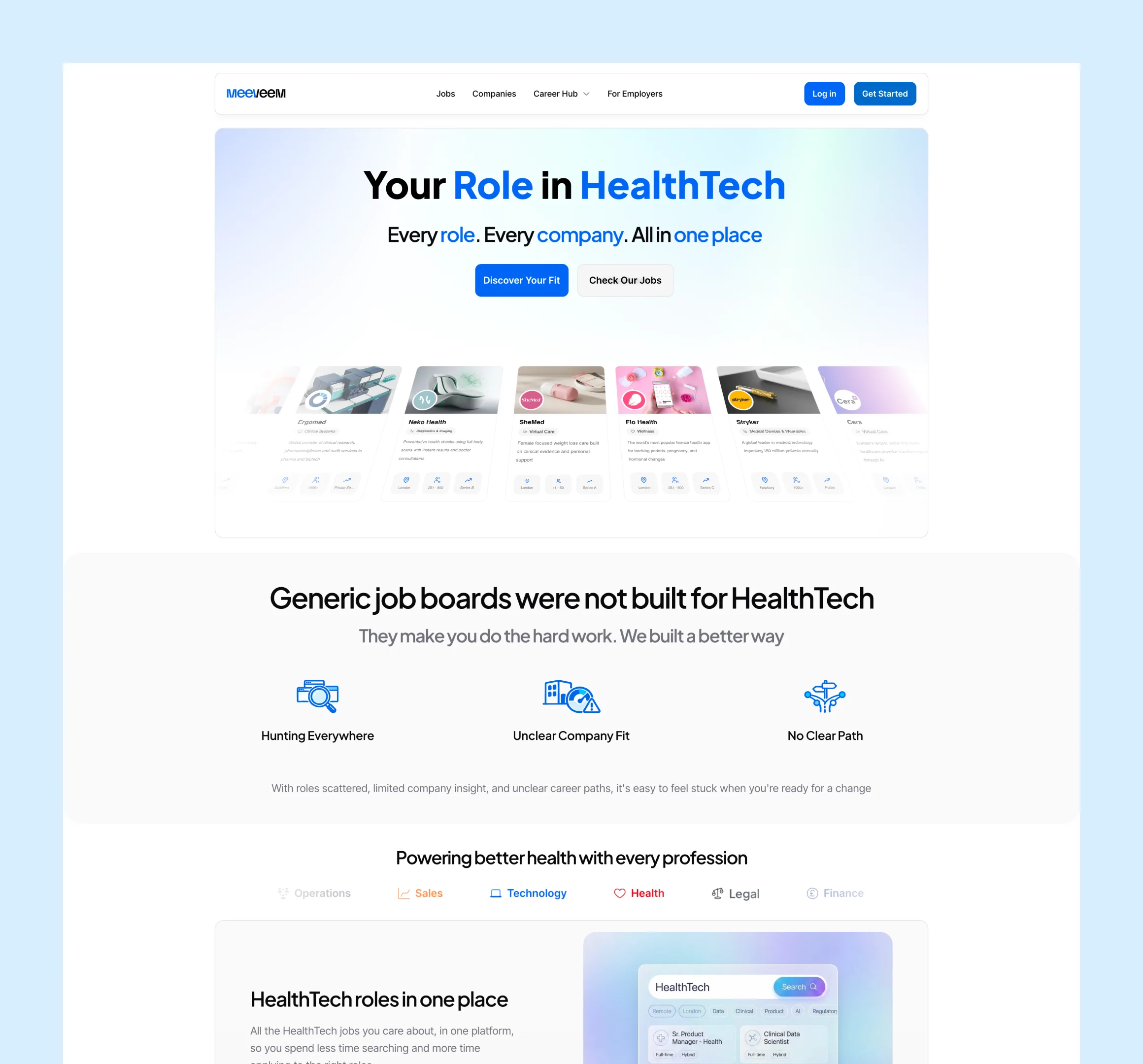
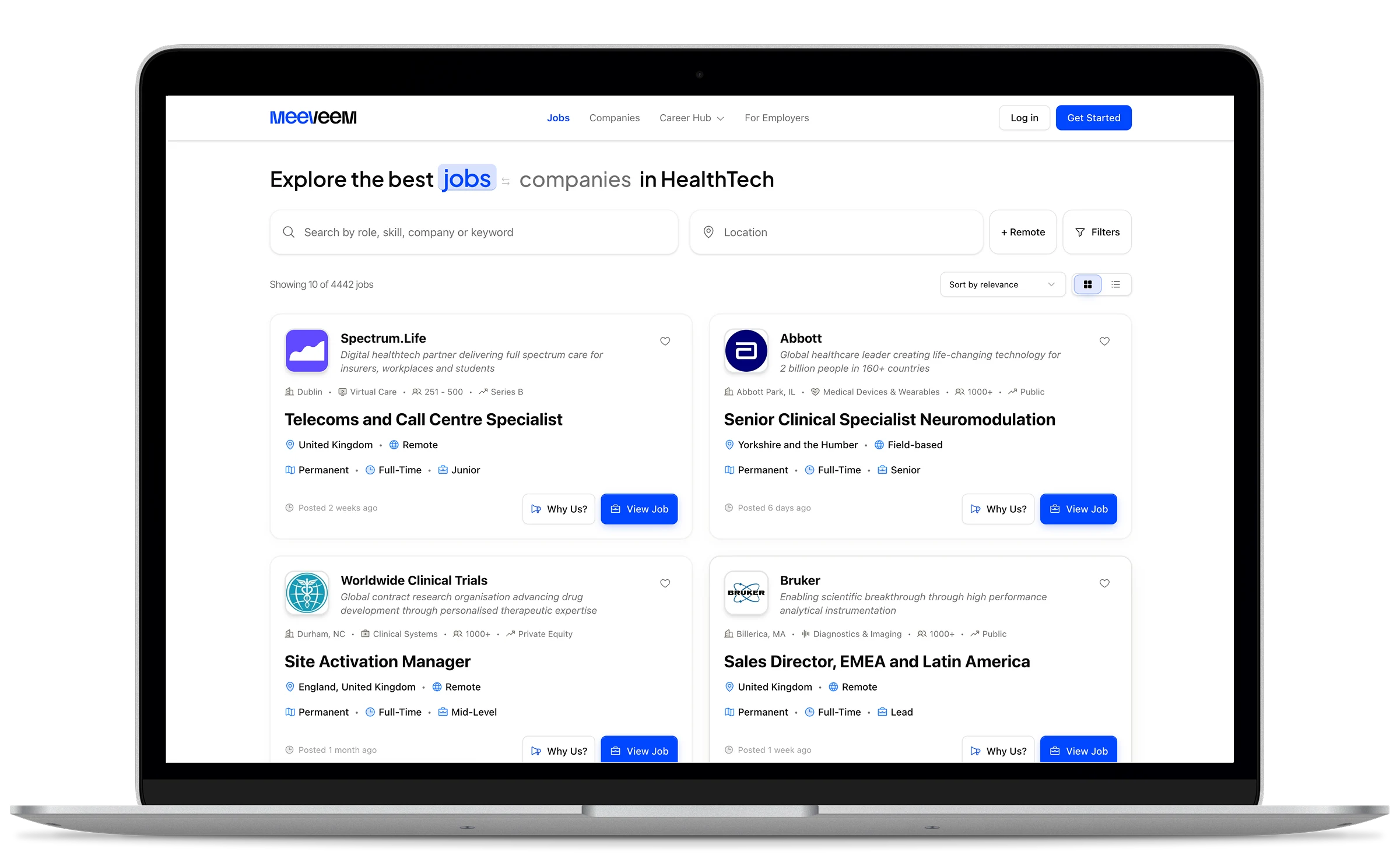
A two-sided marketplace on a modern web stack with Xano as the backend and Auth0 plus Stripe carrying authentication and payments — public, SEO-optimised job pages for discovery, and fast, secure authenticated surfaces for candidates and employers.
Candidate web application
Public SEO job pages with a teaser match score, then CV upload, profile, AI-matched discovery, applications tracking and opportunities pushed by employers after sign-in.
Employer web application
Company profile, job create/edit/publish workflows, a Kanban-style applicant review board and subscription management across Free, Growth and Scale plans.
HRFlow.ai matching
A healthtech-aware engine scores every job-candidate pair, so candidates see which roles are worth their time and employers see applicants ranked by fit.
SEO-first job pages
Google Jobs structured data on every published role and Pagespeed targets (≥90 public, ≥95 SEO audits) treated as engineering requirements, so listings surface in search.
Tech stack



Outcomes & impact
AI-matched
Match scores on every job-candidate pair
Google Jobs
Structured data across all job pages
Plan-based
Employer subscriptions with full lifecycle
Trusted and verified by our clients


 ISO/IEC 27001:2022
 ISO 9001:2015
 GDPR compliant
Frequently Asked Questions

Let's Build Your Team
Tell us about your platform, the matching or workflow logic you need and where you want it to be in twelve months. We reply within one business day with next steps.
Prefer to book directly?
🗓️ Schedule on Calendly →Or email us:
✉️sales@unicoconnect.com