









Built a unified sales and finance platform replacing fragmented systems across the distribution network of a diversified manufacturer
A unified digital platform for a leading manufacturer of consumer electronics, home appliances and personal care products, consolidating channel finance, inventory and order management across distributors and internal teams into one operational source of truth.
Key Takeaways
A leading manufacturer producing consumer electronics, home appliances and personal care products came to Unico Connect to replace the fragmented systems holding the business back. Sales orders lived in one system, accounting in another, inventory in a third — and reconciliation lived in the gaps between them.
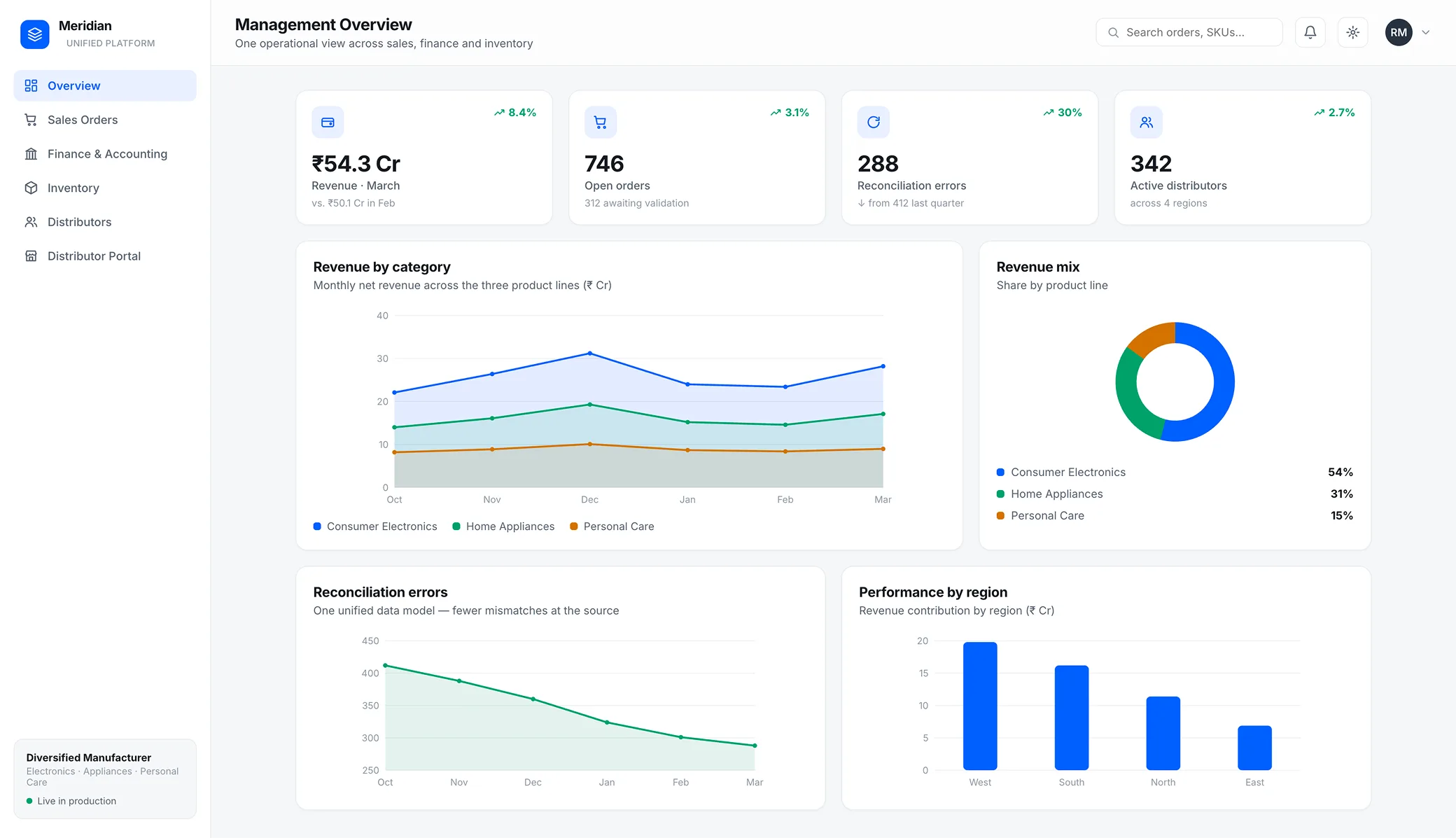
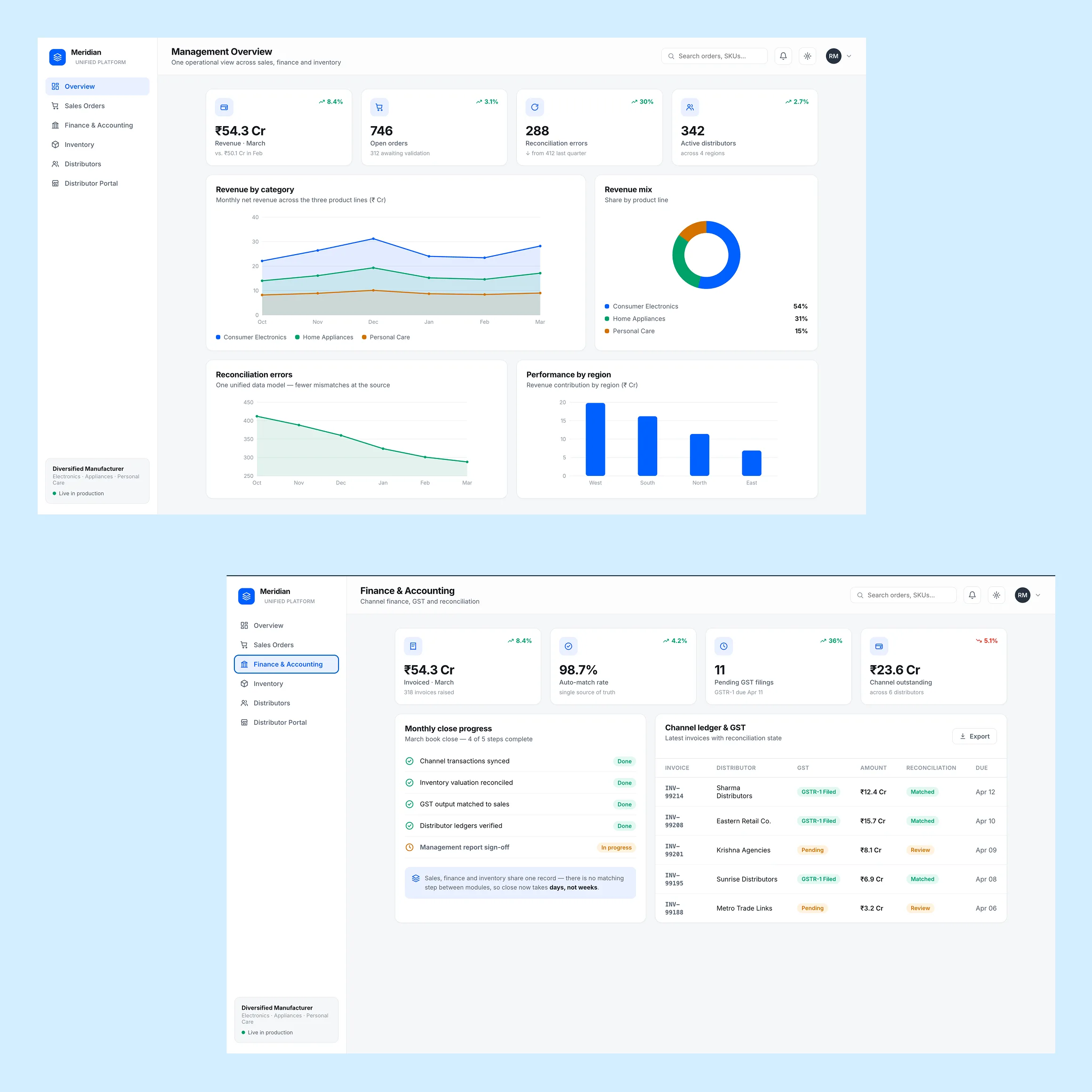
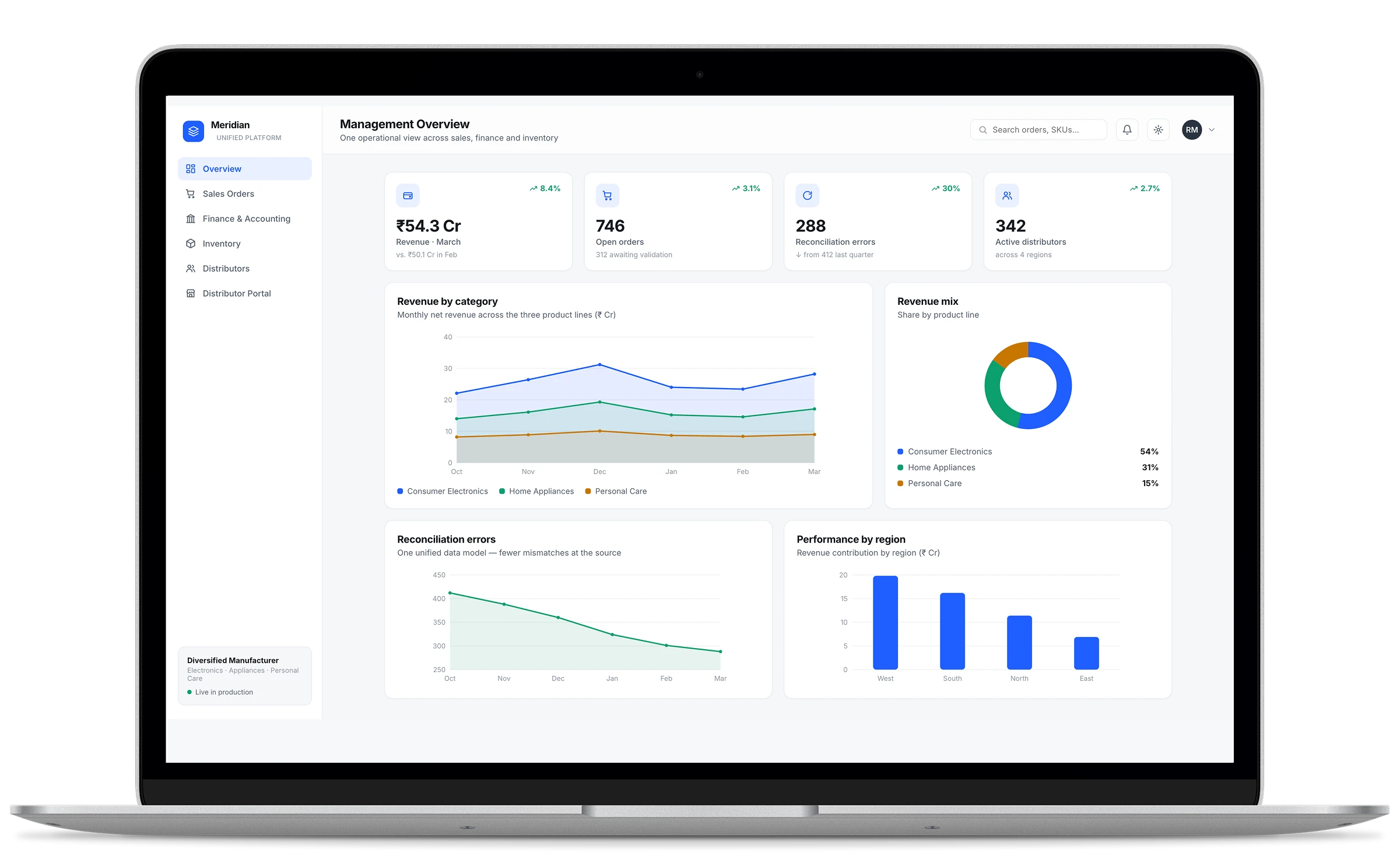
We built a unified sales and finance platform that consolidates all of this into a single operational view, with self-service workflows for distributors and dashboards that give finance and accounting the visibility they were missing — cutting reconciliation errors by 30 percent.

The Challenge
The client operates as one of India’s diversified manufacturing groups, producing across three product categories that share distribution infrastructure but have different commercial dynamics. Consumer electronics, home appliances and personal care each have their own seasonality, channel mix and pricing logic. What they shared was an operational reality that had become genuinely difficult to manage: every category was run through systems that did not talk to each other.
Sales orders flowed through one system, accounting and finance through another, inventory through a third. None shared a clean data model, so the same transaction looked subtly different in each. The reconciliation work between them was substantial and constant, with finance spending more time matching numbers across systems than analysing what they meant. Errors crept in because manual reconciliation is error-prone, and every error meant a downstream conversation with a distributor, a tax authority or an internal stakeholder.
The client wanted a unified platform covering sales orders, finance, accounting and inventory in one place, with distributor-facing workflows that let the channel operate self-service rather than through manual coordination, and dashboards that gave finance and operations the visibility to manage the business rather than chase the data — accommodating the diversity of the portfolio without becoming a generic compromise.
Our Approach

We engaged as a product partner, structured around three things at once: the platform architecture, the workflow redesign and the data migration from the legacy systems. The first phase was understanding how the business actually flowed across sales, finance and inventory — working with the regional sales teams, the finance team, the operations team and a sample of distributors, on the ground rather than at a desk.
Key decisions:
One unified data model, not integration
Rather than keep three systems and put an integration layer between them, we built a unified model so the platform speaks in one voice — removing the reconciliation work rather than just automating it.
Distributor surface as first-class
Order placement, transaction validation, inventory visibility and billing are accessible directly rather than mediated through the back office — escaping the experience the client was trying to leave behind.
Practical dashboards teams actually use
Reliability and data discipline over novelty — interfaces operations teams use day-to-day rather than ones that impress in a demo but get bypassed for spreadsheets.
The solution we built
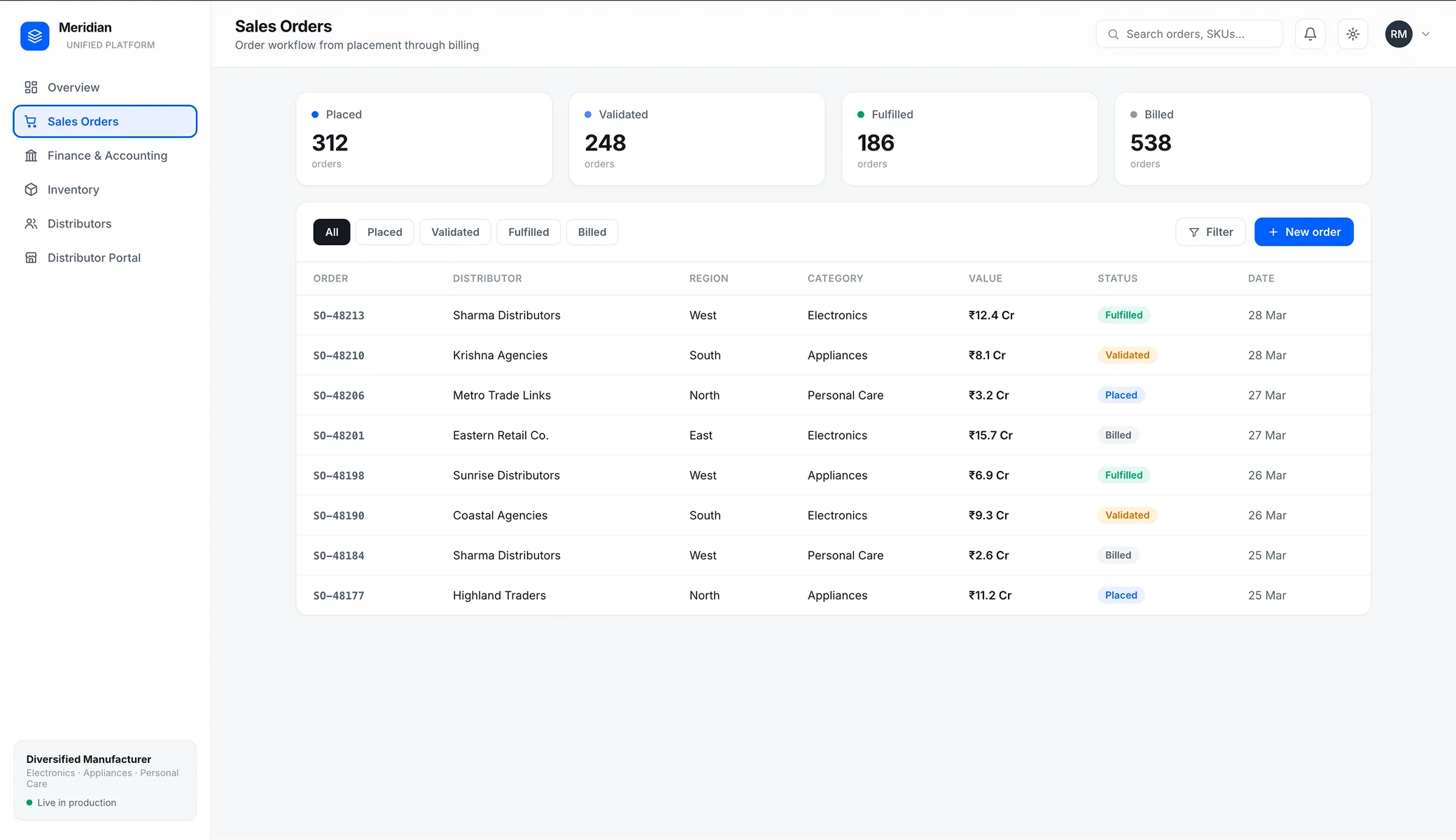
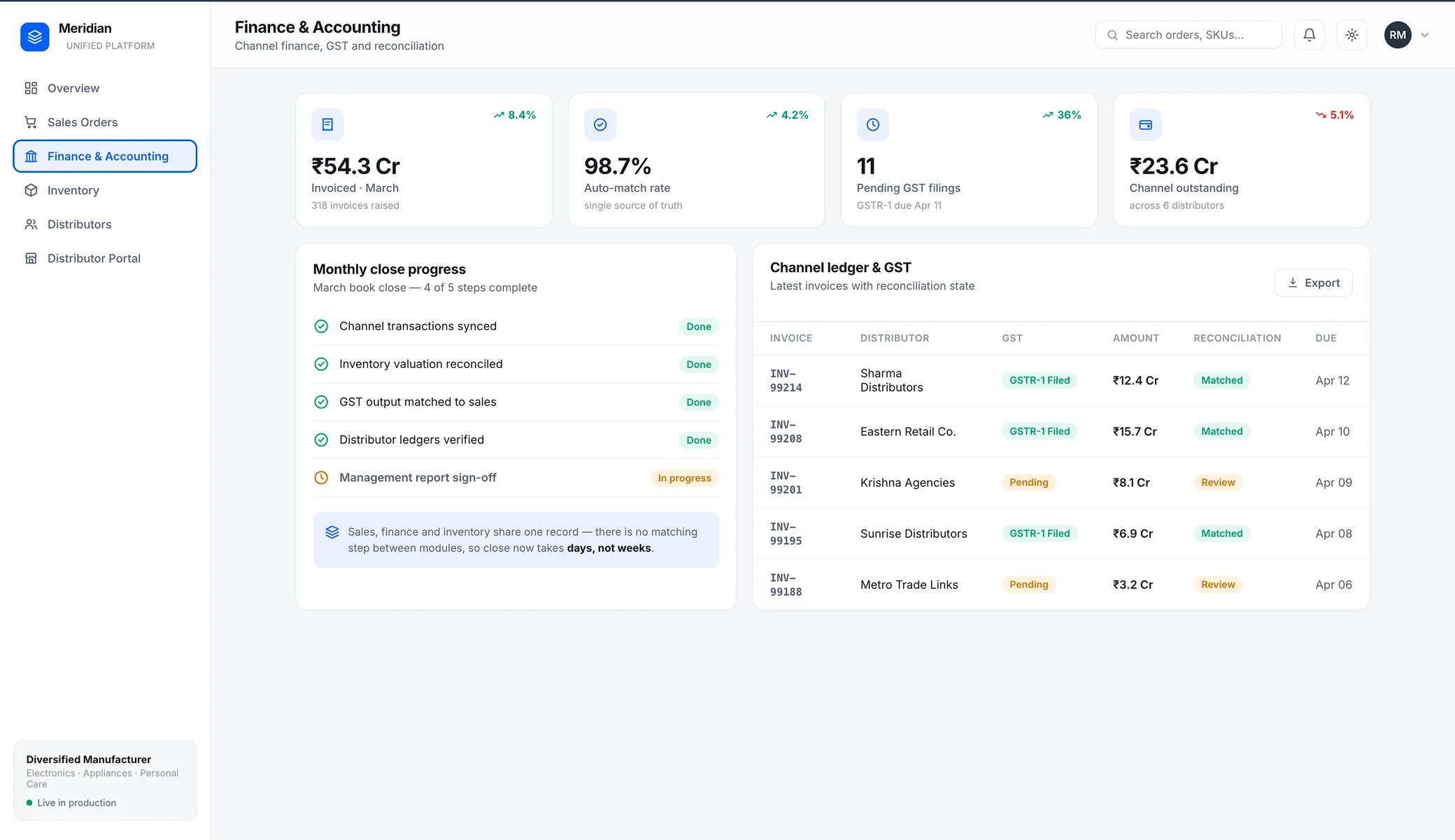
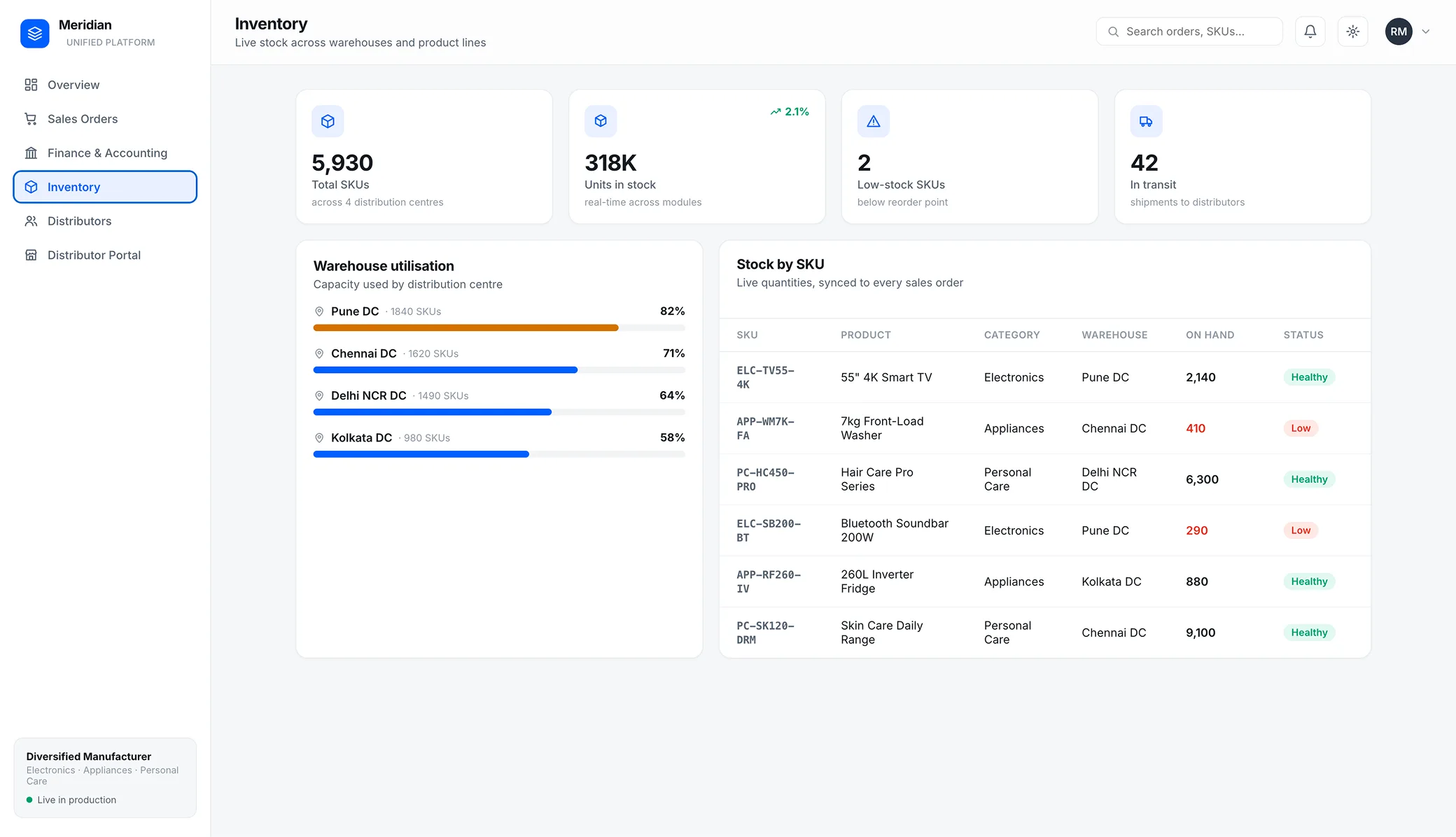
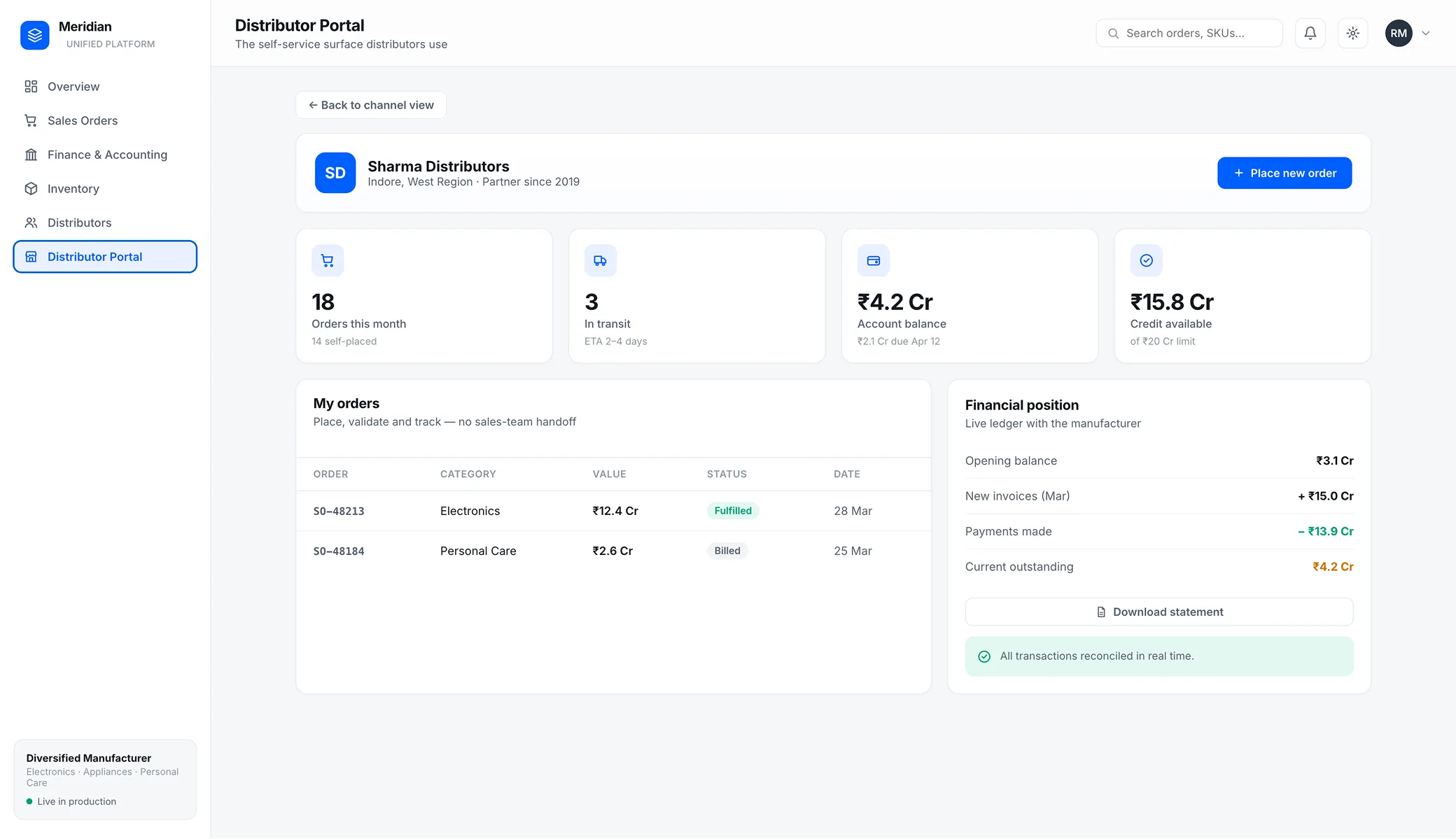
Four integrated modules sharing a unified data layer — so a sales order is the same object across sales, finance and inventory, with no reconciliation step between them because they are working from the same record.
Sales order module
The full order workflow from distributor placement through validation, fulfilment, billing and post-sale tracking.
Accounting & finance
Channel finance, GST workflows, reconciliations and the financial reporting the finance team uses to close the books.
Inventory module
Stock state across warehouses and product lines, making fulfilment and replenishment decisions data-driven rather than experience-driven.
Distributor portal
Distributors place orders, see history, validate transactions, track shipments and view their financial position from a single surface — removing the sales team as a coordination intermediary.
Tech stack




Outcomes & impact
Unified
Sales, finance and inventory on one platform
30%
Reduction in reconciliation errors
Self-service
Distributor order processing
Trusted and verified by our clients


 ISO/IEC 27001:2022
 ISO 9001:2015
 GDPR compliant
Frequently Asked Questions


Let's Build Your Team
Tell us about your business, the systems you run today and where you want the platform to be in twelve months. We reply within one business day with next steps.
Prefer to book directly?
🗓️ Schedule on Calendly →Or email us:
✉️sales@unicoconnect.com