










An AI recommendation engine decides what to show each person next, out of a catalogue too large for anyone to browse. It reads what a user has done, compares it against what the catalogue contains, and ranks the handful of items most likely to be useful right now.
Unico Connect builds recommendation engines that run in production rather than in a notebook, grounded in your own catalogue and behaviour data, with the business rules that decide what is allowed to surface kept under your control. We have shipped them for ecommerce and retail catalogues, media and wellness content, B2B SaaS and marketplaces, and regulated fintech and healthcare products where every suggestion has to be explainable.
Why Most Recommendation Projects Stall
The gap between a model that scores well offline and an engine people trust in production is data, rules and ownership. Here is how we close it.
A Typical Recommendation Attempt
Model first, data later
A model is chosen before anyone checks whether the catalogue and event data can support it.
No cold start plan
New users and new items get an empty carousel, which is where most of the traffic actually is.
Business rules bolted on
The engine recommends items that are out of stock, off contract or below margin.
Clicks treated as success
Nobody measures whether behaviour changed, so relevance never improves after launch.
No owner after go live
Relevance drifts because no one inside the business is responsible for tuning it.
How Unico Connect Builds Them
Readiness Test first
Five checks on data, catalogue, feedback, ownership and cold start before we quote a build.
Hybrid from day one
Content matching works immediately, behavioural signals improve it as they accumulate.
Rules layer you control
Stock, margin, contracts and regulatory limits applied above the scoring, not hidden inside it.
Measured on behaviour
Evaluation that asks whether recommendations changed what people did, not just what they clicked.
Built to be owned
Monitoring, fallbacks and documentation so your team can tune relevance after we hand over.
AI Recommendation Engine Services

Product Recommendation Engines
Ranking products across a retail or ecommerce catalogue, with stock, margin and merchandising rules respected above the model.

Content and Session Recommendations
Choosing what someone sees or plays next, blending stated preferences with what they actually engage with.

Marketplace Matching and Ranking
Matching demand to supply where ranking quality is the product rather than a feature of it.

Next Best Action for B2B SaaS
In product suggestions that move a user toward the action that matters, grounded in account level signals.

Evaluation and Relevance Tuning
Measuring whether recommendations changed behaviour, and giving your team the tooling to keep tuning after launch.

Explainable and Compliant Ranking
Recommendations you can justify to a reviewer, for fintech and healthcare products where explainability is a requirement.
Our Recommendation Engine Stack





Recommendation Engines We Have Shipped
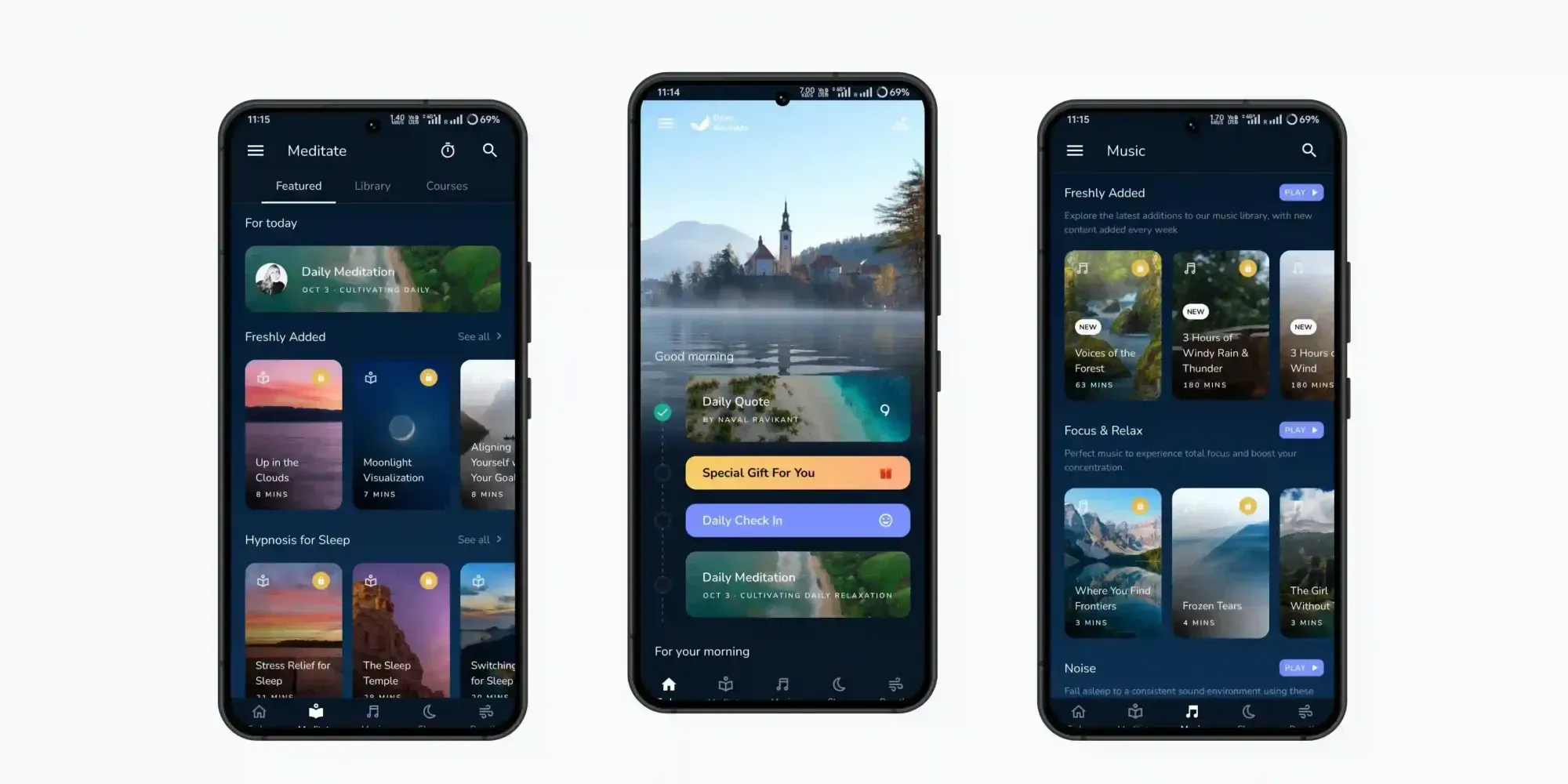
A hybrid recommendation engine shipped in the launch build of Deep Meditate
+60%
Engagement lift
3x
Session retention
500K+
Downloads

What is an AI recommendation engine?
An AI recommendation engine is a system that ranks items from a catalogue for one specific person at one specific moment. It takes signals about what someone has viewed, bought, played or skipped, combines them with what the catalogue itself says about each item, and returns an ordered shortlist. The difference between a recommendation engine and a search box is that the user does not have to know what to ask for.
Most engines blend two approaches. Behavioural signals learn from what people actually do, which is powerful once you have volume. Content matching compares item attributes, which works from day one because it needs no history. Unico Connect builds hybrid engines because the blend is what survives contact with a real catalogue, where some items are brand new and some users have never visited before.
How does the Unico Connect Recommendation Readiness Test work?
Most recommendation projects fail before a line of code is written, because the data was never going to support the ambition. Before we quote a build, we run five checks. We publish them so you can run them yourself.
1. Event volume. Do you have enough recorded behaviour for a model to learn from, or do we start with content matching and earn the behavioural layer later? This single answer changes the shape and the cost of the whole build.
2. Catalogue quality. Are your items described well enough to match on attributes? A catalogue with thin or inconsistent tagging caps relevance no matter how good the model is, and fixing it is usually cheaper than a bigger model.
3. Feedback loop. Can the engine see what happened after it made a recommendation? Without that, relevance never improves, and you are shipping a guess that stays a guess.
4. Relevance owner. Who inside your business decides what good looks like and tunes it after launch? An engine with no owner drifts. This is a staffing question, not a technical one, and it is the one most teams have not answered.
5. Cold start plan. What does a brand new user see on day one, and what happens to an item added this morning? Every engine has a cold start. The good ones have a deliberate answer rather than an empty carousel.
If the first three checks come back thin, we will tell you to fix the data before paying us to build a model on top of it.
What does Unico Connect actually build?
The engine itself is a ranking pipeline rather than a single model. Vector databases hold embeddings of your catalogue so similar items can be found fast. Retrieval grounds suggestions in your own data rather than in the general knowledge of a model, which is what stops an engine recommending something you do not stock. A rules layer applies the constraints your business actually has, such as margin, stock, contractual placement or regulatory limits. Behavioural signals from your existing database feed the scoring, so the engine learns from the data you already own.
Around that sits the part most teams skip. Evaluation that measures whether recommendations changed behaviour rather than merely got clicked. Monitoring that shows what the engine served and why. A fallback path for the moment the model is unavailable, so a slow day never becomes an empty page.
Where do recommendation engines actually pay off?
They pay off where a catalogue is larger than a person will browse and where the cost of showing the wrong thing is real. Ecommerce and retail, where the question is what to put next to the item someone is already looking at. Media and content, where the next session decides whether someone comes back tomorrow. Marketplaces, where matching supply to demand is the product. B2B SaaS, where the recommendation is a next best action rather than a product. Regulated products in fintech and healthcare, where a suggestion has to be explainable to a reviewer as well as useful to a customer.
Should you build a recommendation engine or buy one?
Often you should buy. A managed service is the right answer when your catalogue is standard, your rules are simple, and nobody internally wants to own relevance. Building earns its cost when the business rules are genuinely yours, when the signals that matter live in systems a managed tool cannot see, or when explainability is a requirement rather than a nice to have. We have talked clients out of a custom build more than once. Our guide to AI product recommendations works through the decision in full, including the cost comparison.
How long does a recommendation engine take to build?
A focused engine over a clean catalogue with usable event data is a matter of weeks rather than quarters. The timeline stretches when the data has to be fixed first, when the engine has to integrate with several systems, or when the relevance bar is high enough to need a real evaluation suite before launch. We scope against your answers to the Readiness Test above rather than against a generic estimate.
To go deeper, see how AI recommendation engines work in practice, our AI development services, and the AI development cost guide for how we price this work.

Not sure your data is ready for this?
Run the Readiness Test with usPRICING
Transparent pricing, published
$15,000 to $50,000
focused engines and pilots
$50,000 to $150,000
production engines with evaluation and monitoring
Published estimate ranges at a blended AI engineering rate of $30 to $60 per hour. Every project is scoped individually before any number becomes a quote.
See the full AI cost guide + calculatorAI Recommendation Engine FAQs
An AI recommendation engine ranks items from a catalogue for one person at one moment, using signals about what they have done and attributes describing what the catalogue contains. Unlike a search box, it does not require the user to know what to ask for. Most production engines are hybrid, blending behavioural signals with content matching so they still work for brand new users and brand new items.
AI and Personalisation Insights
View all blogs



Tell us what your catalogue looks like
Send us the shape of your catalogue and your event data. We will tell you honestly whether to build, buy or fix the data first.
Prefer to book directly?
🗓️ Schedule on Calendly →Or email us
✉️sales@unicoconnect.com