











Built a location-first property discovery platform for buyers, brokers, sellers and agencies
A no-code-led platform on Xano and WeWeb covering buy, rent, sell and lease, with interactive map-based search, advanced filtering and multi-user functionality across one of Central America’s busiest property markets.
Key Takeaways
A Guatemala-based property platform operator needed a system that could serve four distinct user groups — buyers, brokers, sellers and agencies — with the operational reach to scale across the country. Unico Connect built the platform on Xano and WeWeb with location-based search on interactive maps, advanced filtering, real-time listings and multi-user functionality.
The result is a 30 percent rise in engagement, 20 percent growth in listings and 35 percent faster transaction handling.

The Challenge
The client operates in one of Central America’s most active property markets, where the way people search for a home is unmistakably geographic. Buyers think in neighbourhoods before price brackets. Brokers carry territories the way other professionals carry portfolios. Sellers price against streets, not square footage. The platform they wanted to build had to reflect that reality, and the platform they had been working with did not.
The existing setup limited them on two fronts. The connection between buyers and sellers was anchored to lists rather than maps, so the most natural way to find a home — by looking at where it is — required extra steps and lost users before they reached a listing. And the platform was struggling to scale: as listings grew and more brokers and agencies came on board, performance dropped, multi-user workflows broke down, and the operations team spent more time managing the platform than it saved them.
The brief was clear in spirit: a platform that worked the way the market worked, with maps and locations at the centre, able to handle four distinct user types without confusing any of them, on an architecture that could absorb growth without a rebuild in eighteen months — and a stack where the team could keep moving on their own, with engineering reserved for the harder problems.
Our Approach

We took the engagement on as a product partnership, working alongside the client’s team on discovery, architecture and delivery. The first phase was framing the platform around the way the local market actually operates — which sounds obvious until you see how often property platforms get designed against a generic e-commerce template that does not fit the category.
Key decisions:
No-code-led on Xano + WeWeb
A custom stack would have delivered the same product at a cost-to-launch and maintenance burden that did not match the business — Xano and WeWeb gave the data-model discipline and API layer for the hard integration work while letting the team make routine changes without queueing behind an engineer.
Every journey anchored to the map
We inverted the convention and made the map the primary surface for all four journeys rather than a secondary filter, because that matched how the client’s customers actually behaved.
Multi-user from the schema up
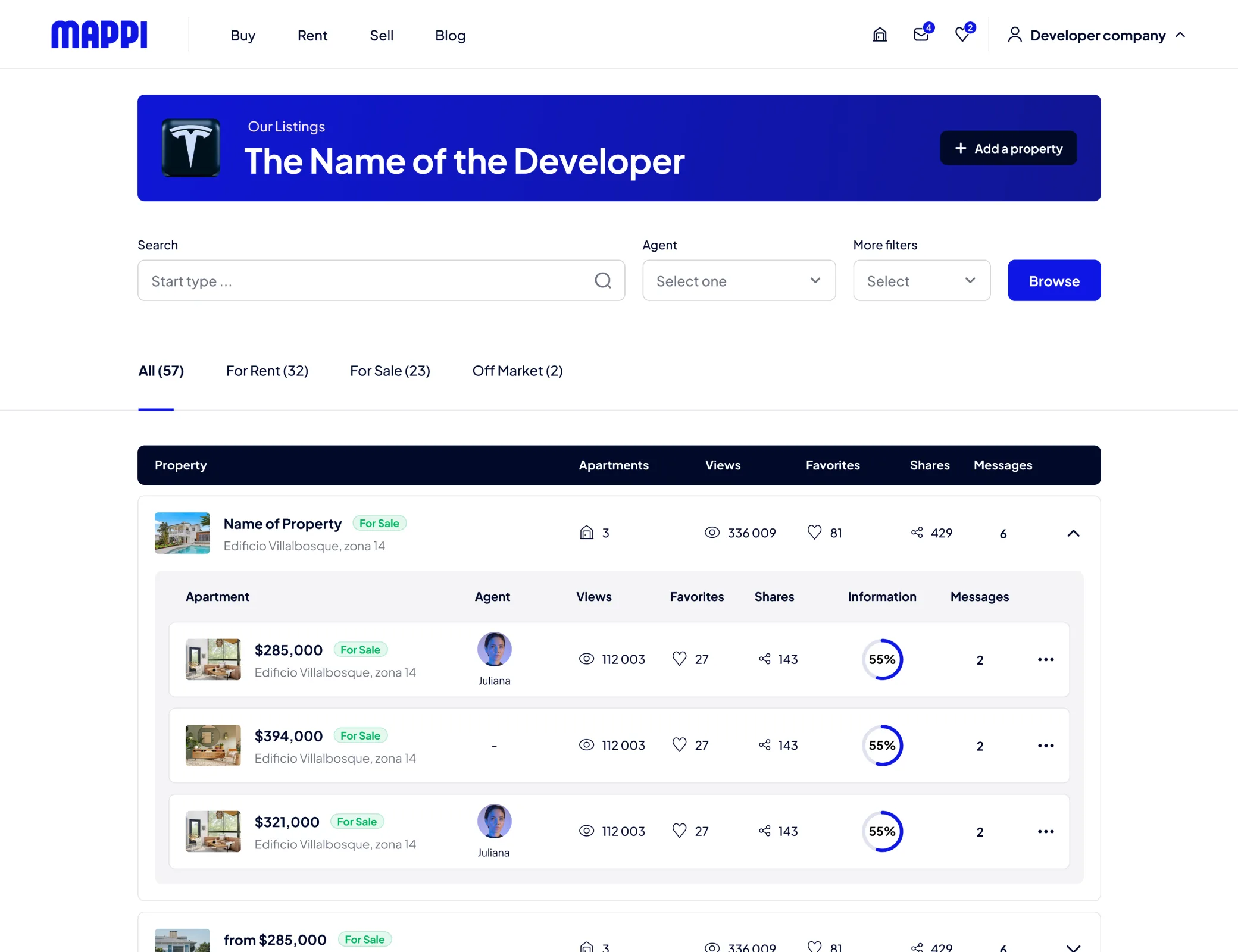
Designed for multi-user from the start so an agency managing brokers, a broker managing listings and a buyer saving searches across devices all work cleanly without role conflicts.
The solution we built
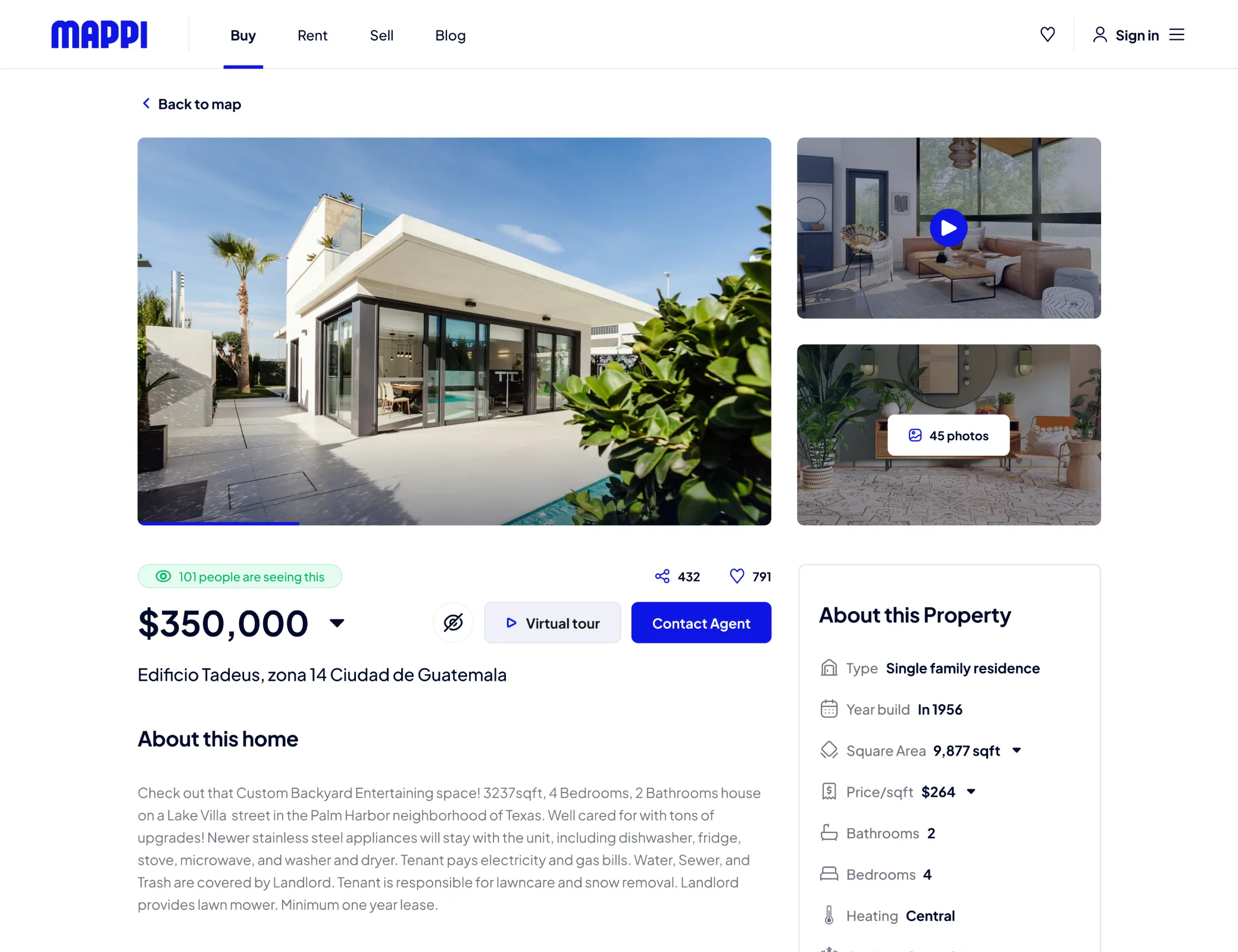
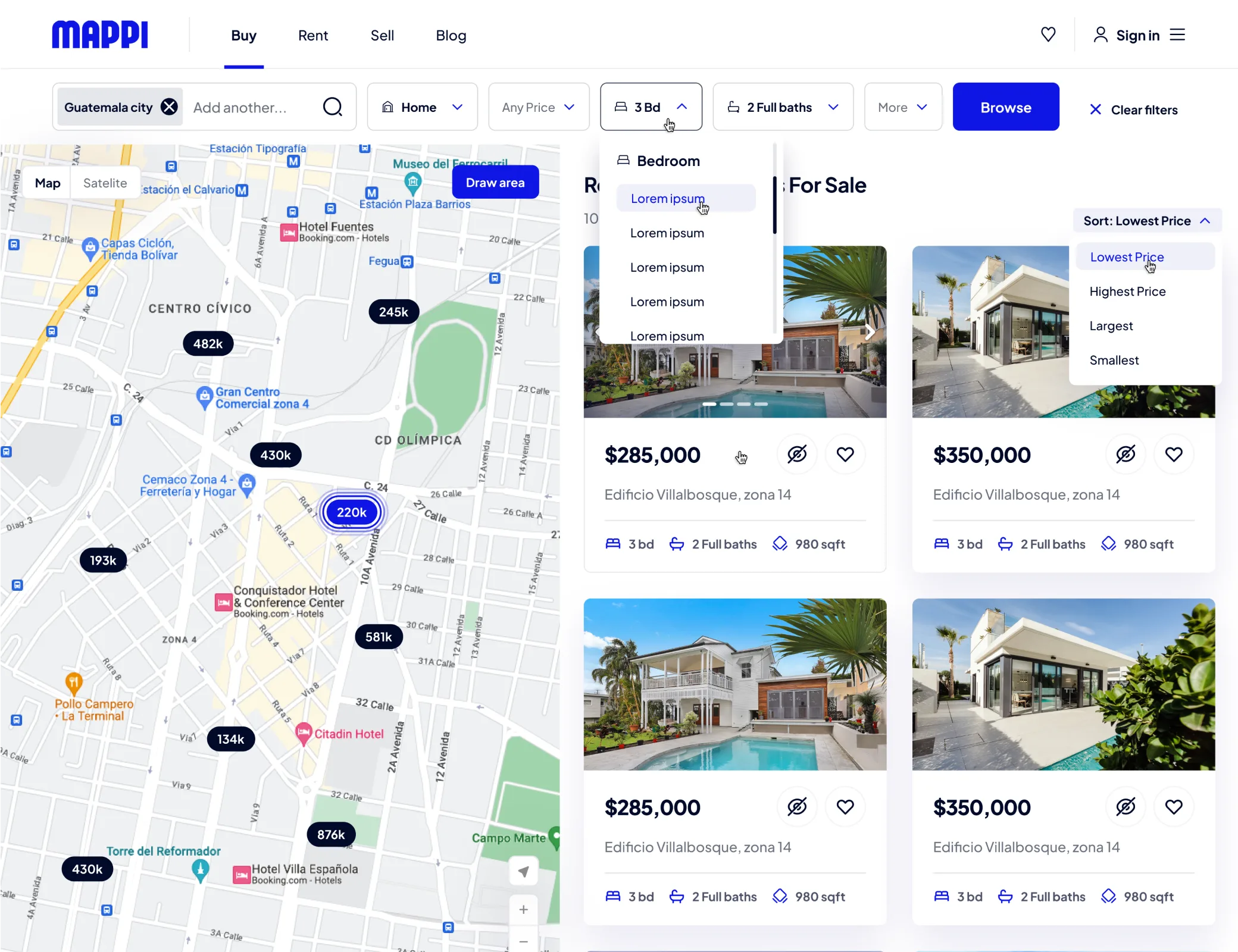
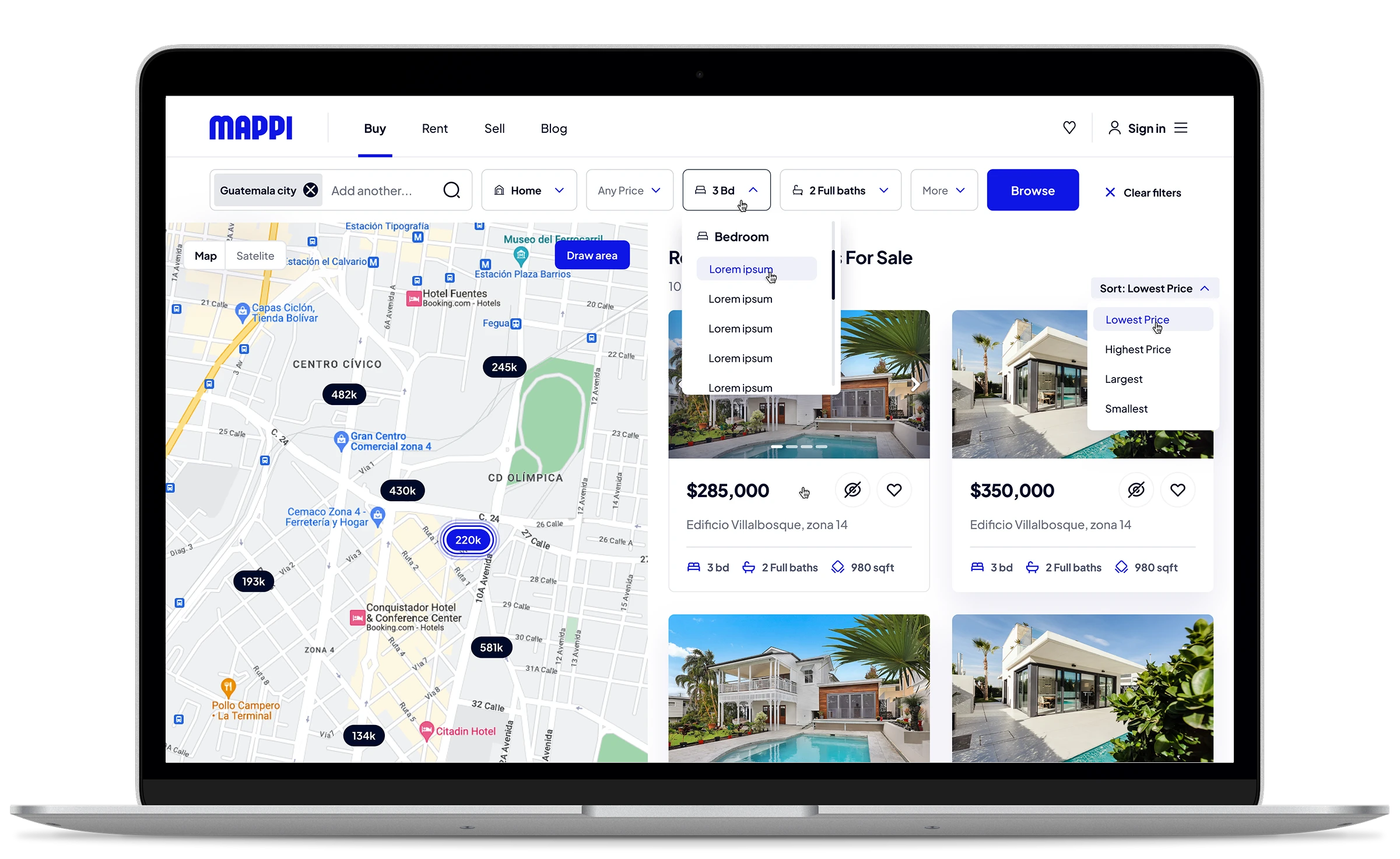
Built on Xano for the backend and WeWeb for the front end, with the data model designed around properties, parties (buyers, brokers, sellers, agencies) and transactions — and the interactive map as the primary surface.
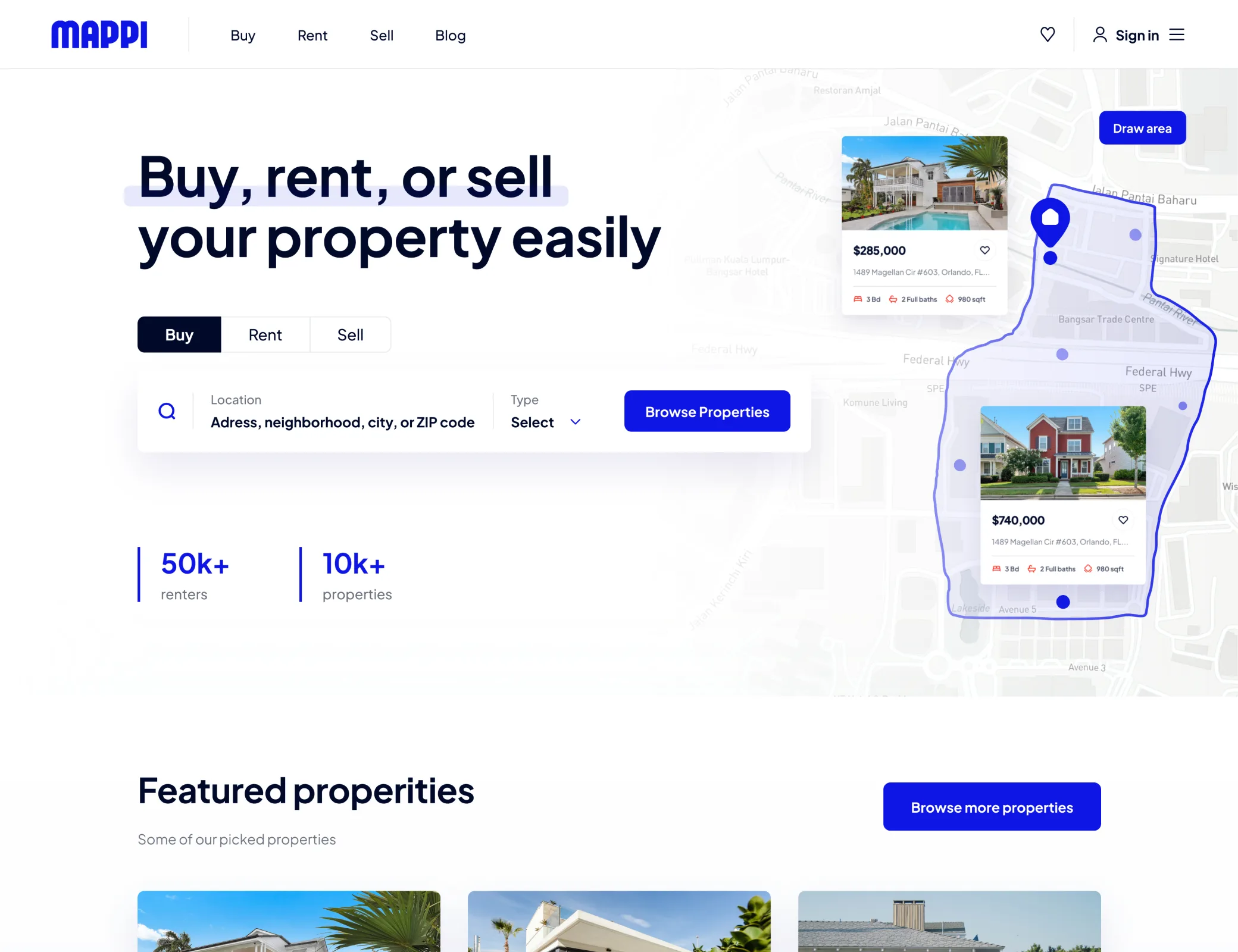
Map-first discovery
The experience starts on an interactive map, with properties surfacing as the user pans and zooms, and filtering layered on top of the map rather than replacing it.
Advanced filtering
Neighbourhood, property type, price, bedrooms, parking, amenities and proximity to schools, commercial zones or transit — combinable and saveable so a weeks-long search does not restart each session.
Listing management
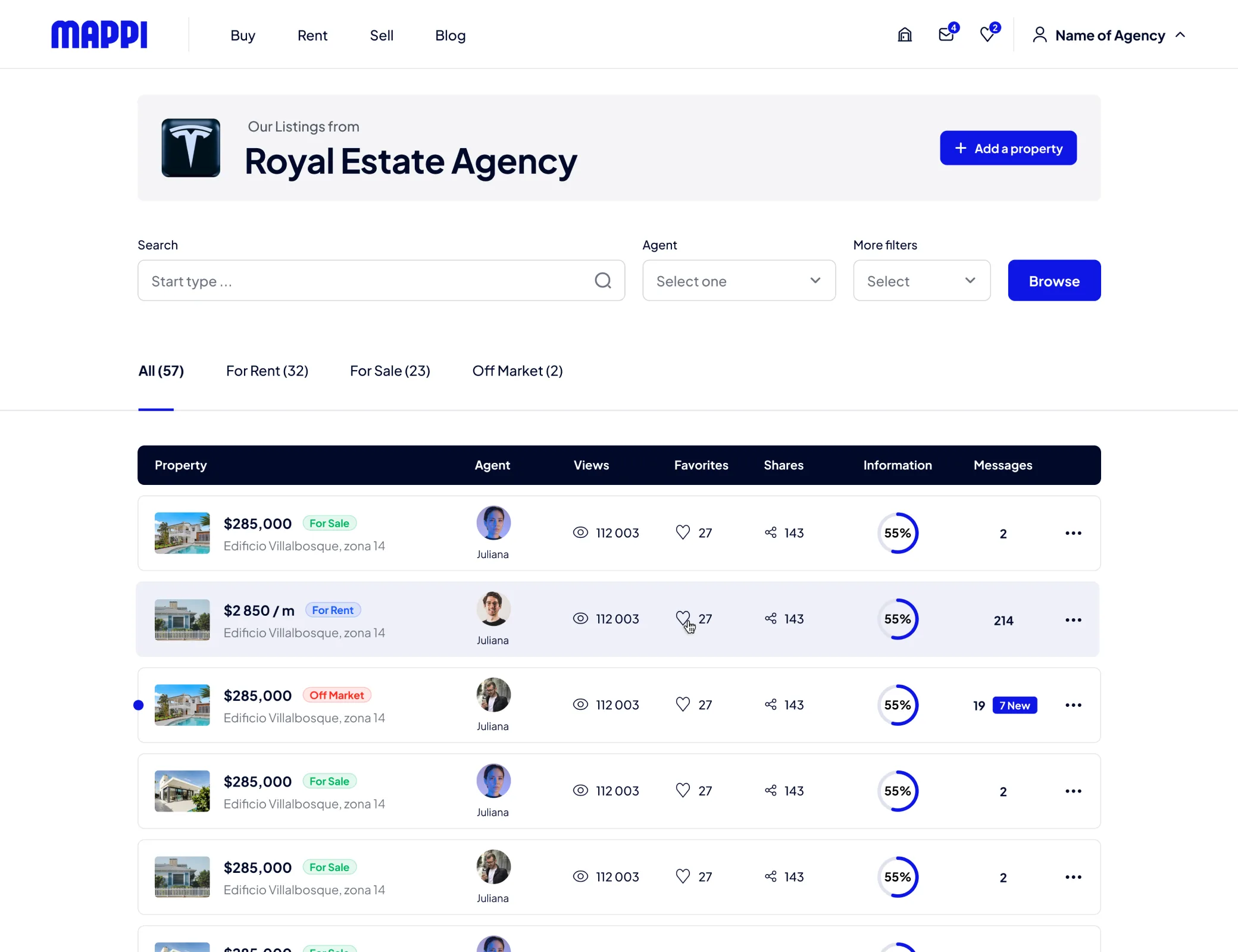
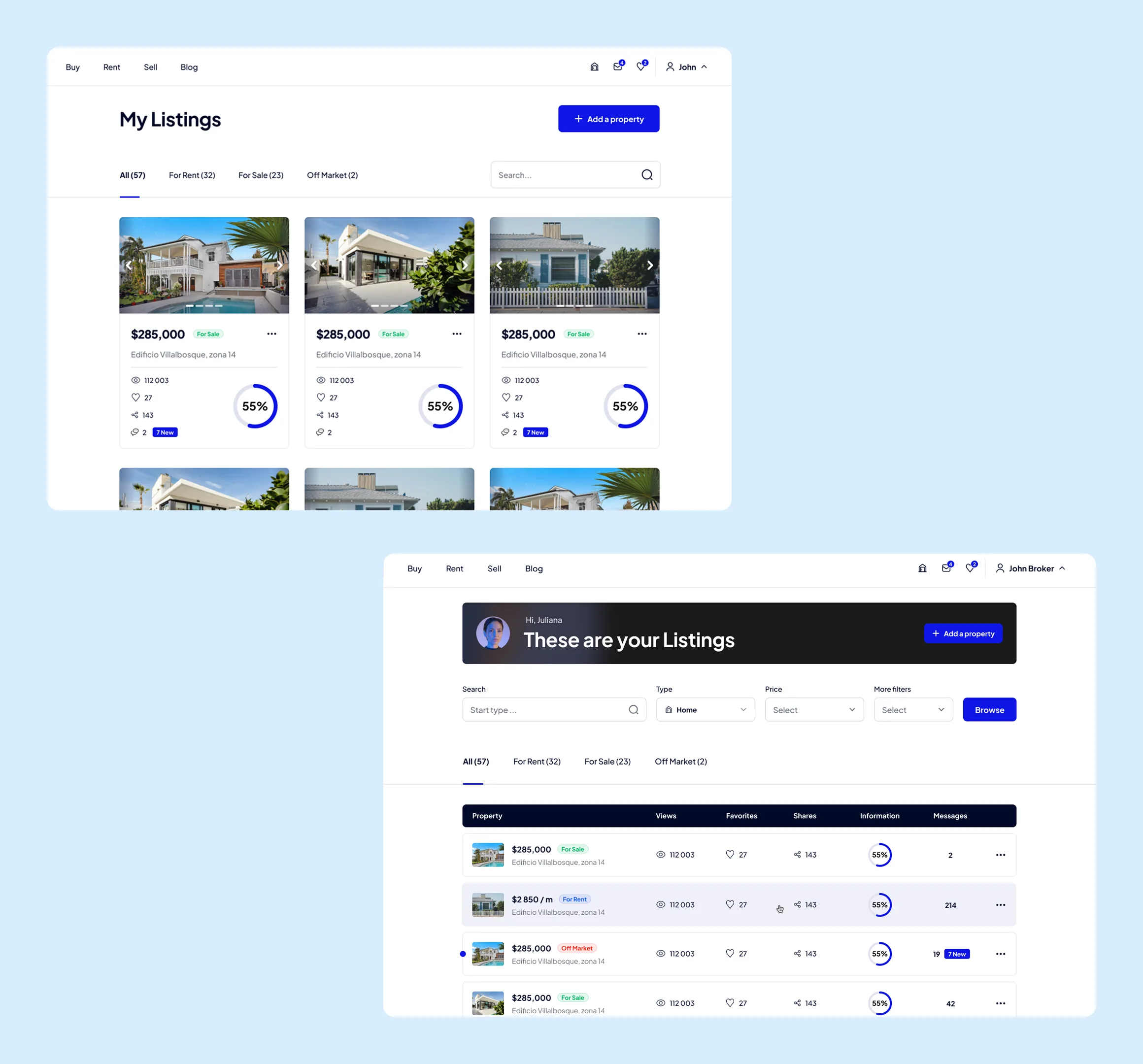
Brokers and sellers list, edit, mark sold or pause without administrative intervention, with listing performance (views, saves, inquiries) visible at a glance.
Multi-user and agencies
Buyers, brokers, sellers and agencies each get tailored surfaces and role-based access, so an agency principal sees the full network while individual brokers see only their portfolios.
Tech stack


Outcomes & impact
30%
Increase in user engagement
20%
Growth in property listings
35%
Faster transaction processing
Trusted and verified by our clients


 ISO/IEC 27001:2022
 ISO 9001:2015
 GDPR compliant
Frequently Asked Questions


Let's Build Your Team
Tell us about your platform, the user groups you serve and where you want it to be in twelve months. We reply within one business day with next steps.
Prefer to book directly?
🗓️ Schedule on Calendly →Or email us:
✉️sales@unicoconnect.com