

Built an online dispute resolution SaaS platform that turned an ADR consultancy into a category-leading product business for mediators, tribunals and arbitration centres globally
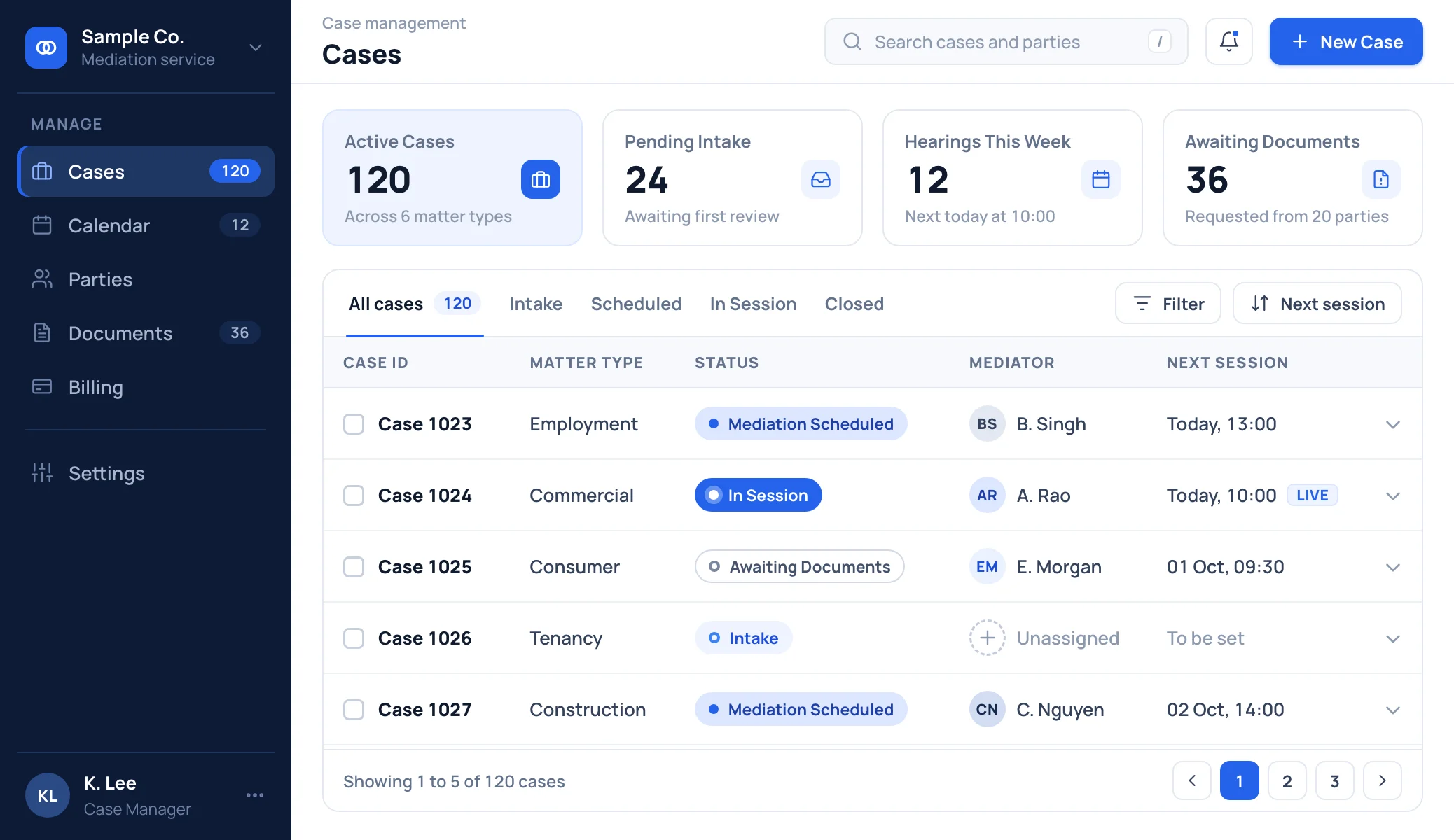
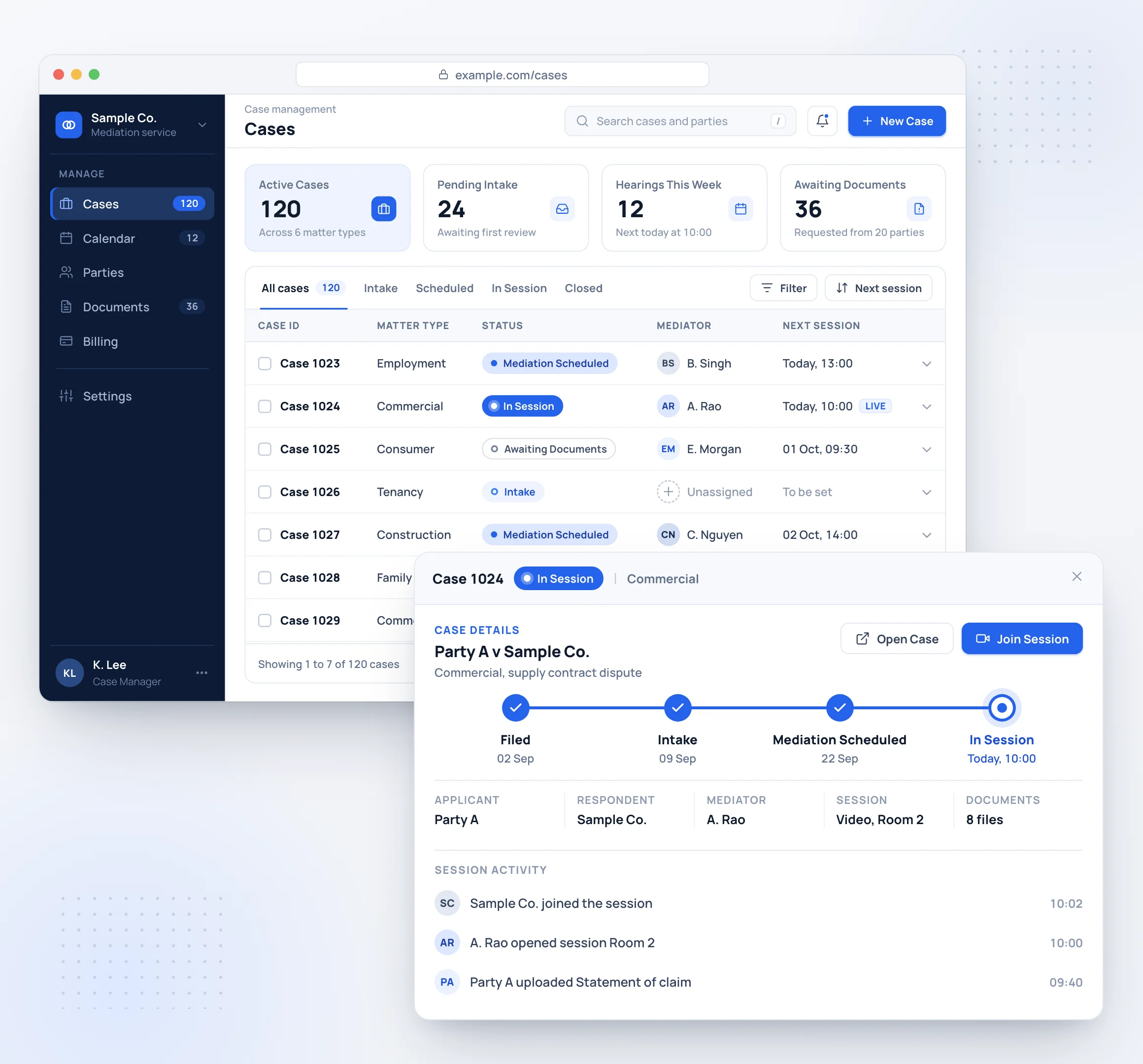
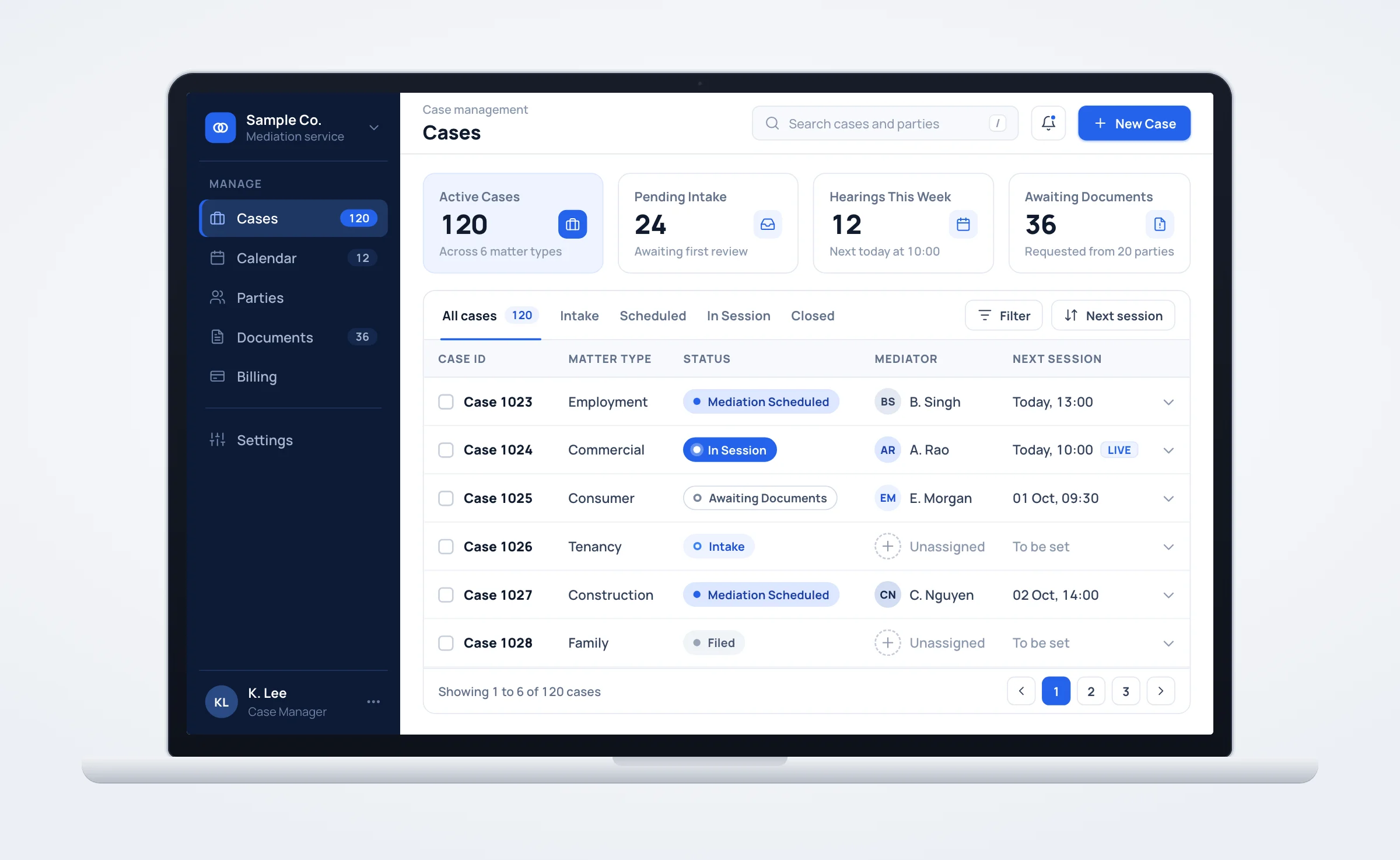
A comprehensive ADR SaaS covering case management, panel management, financial workflows, automated intake, secure video rooms and white-label branding, designed for everything from sole mediators to large arbitral tribunal centres and accrediting bodies across multiple regions.


Key Takeaways
An ADR technology company came to Unico Connect to turn a working concept into a category-leading SaaS platform for the online dispute resolution market. We built a comprehensive system covering case management, panel management, financial workflows, automated intake, secure video rooms and white-label branding.
The platform is in production with global customers ranging from sole mediators to large arbitral tribunal centres and accrediting bodies, with integrations into legal practice systems and a flexible architecture that supports the diverse use cases this category requires.

The Challenge
Alternative dispute resolution is a category where the operational reality is much harder than the public-facing description suggests. A mediation or arbitration case carries documents, parties, neutrals, schedules, notifications, e-signatures, financial transactions and a procedural workflow that varies by jurisdiction, by case type and by the institution running it. Most ADR practitioners run their case management on a combination of email threads, document folders, separate scheduling tools, separate billing systems and separate video conferencing. The cumulative cost of this fragmentation is significant. Cases move slower than they should, documents go missing, billing is reconciled in arrears, and the institutions handling high volumes spend a disproportionate share of their time on coordination rather than on the substantive ADR work.
The client came to Unico Connect with a clear thesis. ADR needed a SaaS platform that handled the full operational lifecycle of a dispute, from intake through case management to financial reconciliation, with the depth that institutional users (arbitration centres, accrediting bodies) actually require and the simplicity that sole mediators and small firms can adopt. The platform they wanted to build was not video conferencing with a case management UI tacked on. It was a comprehensive ADR system that happened to include video as one feature among many.
The client base they wanted to serve was deliberately broad. Sole mediators handling a handful of cases at a time. Arbitration centres managing hundreds of cases concurrently. Accrediting bodies running adjudication schemes with specific procedural requirements. Industry-specific tribunals with their own workflows. Each segment had different operational demands, but they all needed the same underlying primitives: structured case records, document management, party and neutral coordination, financial workflows and the audit posture that legal-grade operations require.
The strategic challenge sat behind the operational one. The ADR category had been served by point solutions (video conferencing, document management, case scheduling) without anyone building the integrated platform that the category structurally needed. The client had identified the opportunity and the engineering work was the question. Could the platform be built deep enough to win institutional customers while staying simple enough to win sole practitioners? Could the architecture support the white-label branding that institutional customers expect for their members while keeping the underlying platform consistent? Could the platform integrate cleanly with the legal practice tools (Clio, DocuSign) that the customer base already runs on, rather than trying to replace them?
The platform had to span the full ADR customer spectrum without forcing every segment into the same template. It had to carry the procedural variation that defines the category, support the white-label branding institutional members expect, and connect cleanly to the legal practice tools customers already trust rather than trying to replace them.
Our Approach

We engaged with the client as a long-running product partner, with the engagement structured around building the platform as a category leader rather than as an MVP. The first phase was understanding the actual operational realities of ADR across the customer segments the platform would serve. We worked through how sole mediators run their practice, how arbitration centres manage their case load and how accrediting bodies design their procedural workflows, so the platform design could absorb the diversity without forcing every customer into the same template.
Key decisions:
Case as the central primitive
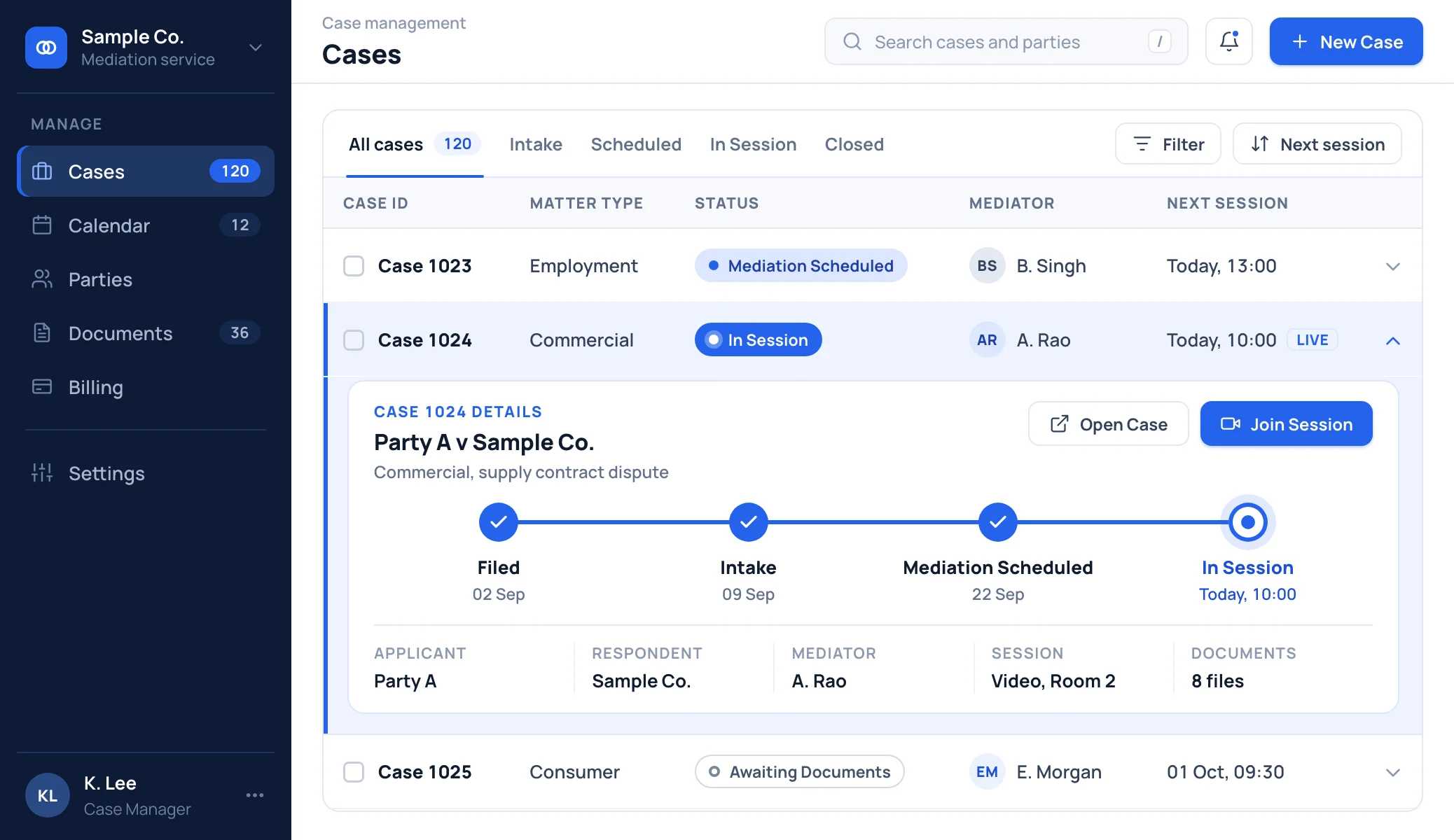
We built the platform around case management as the central object, with everything else organised around it. A case is what documents, parties, neutrals, notifications, financial transactions and audit trails attach to. Anchoring the data model on the case meant that new capabilities, from automated workflows to panel management to financial reporting, slotted into the existing structure rather than creating parallel systems.
Panel management as a real product surface
We treated panel management as a substantial product surface in its own right. Arbitration centres manage tens or hundreds of neutrals, query them on diverse criteria, create nomination lists and run the rank, strike and object procedural flow the institutional context requires. Building it as a properly engineered surface rather than a thin add-on is what made the platform credible to large arbitral tribunal centres.
Configurable workflows and clean integrations
Procedural variation is the defining feature of ADR, so the configurable workflow engine was an architectural priority and took the most engineering effort. Alongside it we built clean integrations with the tools the customer base already uses, Clio for legal practice management and DocuSign for e-signatures, on the principle that the platform should be the home for ADR-specific work while connecting cleanly to the practice infrastructure customers already trust.
The solution we built
The platform is a comprehensive ADR SaaS organised around case management, with several integrated capabilities that customers configure to their specific operational needs. Each case is the central record that connects every other surface in the platform.
Case management
Handles the full lifecycle of a dispute: case creation, party and neutral assignment, document management, case notes, chronology, tasks, notifications, e-signatures and the audit trail that legal-grade operations require. Each case is the central record that connects every other surface in the platform.
Panel management
Customer organisations onboard their panel of neutrals, with each profile carrying credentials, specialisations, availability and historical record. When a case requires neutral selection, the platform runs the nomination workflow: creating nomination lists, allowing parties to rank or strike, processing objections and recording the final selection. It also handles the neutral panel application process for new neutrals joining a panel.
Financial management
Runs end-to-end. Customers create invoices in bulk or individually, accept credit card payments, track holding accounts and download monthly reports for reconciliation against their accounting systems. For institutional customers running high case volumes, this layer removes the manual reconciliation work that previously sat between case management and financial accounting.
Automated intake and workflows
Every subscriber gets an automated intake form and a feedback form, configurable to their process and ready to deploy without engineering involvement. The configurable workflow engine lets customers tailor case workflows to their specific procedural requirements, handling the conditional logic, notifications and state management that ADR workflows actually require.
Secure video rooms
Integrated for the hearing and conferencing parts of the workflow, with customers free to use Zoom, MS Teams, Google Meet or any other video platform of their choice. The platform does not lock customers into its own video tool when they already have one that works.
White-label branding
Customer organisations apply their own logo, brand colour and notification templates so the platform looks like their own ADR system to their members. This is the structural feature that makes the platform suitable for institutional customers whose members expect a branded experience rather than a generic third-party tool.
Practice integrations
Clean integrations with Clio for legal practice management and DocuSign for e-signatures connect the platform to the practice infrastructure customers already run on, rather than trying to replace it.


Outcomes & Impact
Customer range
The platform serves the full ADR customer spectrum
Sole mediators run their practices on the platform with capabilities that previously required multiple disconnected tools. Mid-sized firms scale without proportional growth in administrative headcount. Large arbitration centres and accrediting bodies run institutional-grade operations with panel management, automated workflows and white-label branding.
Category positioning
A point-solution category now has an integrated platform
Before this platform existed, the ADR category was served by point solutions. After it, customers have a comprehensive system that handles their full operational lifecycle, shifting practitioners from coordinating separate tools to focusing on the substantive work.
Business transformation
An ADR consultancy became a category-leading product business
The customer base has grown from early adopters to a global market presence, with the platform absorbing the diversity of use cases ADR practitioners bring to it. The product evolved from an initial video conferencing tool into a comprehensive case management system as the customer base grew and the category matured.
Built to extend
The architecture is built for the long arc of the category
The platform extends with additional procedural workflows, new institutional requirements and new integration partners. Customer feedback is absorbed through routine extension rather than re-platforming, and the platform is the operating foundation of the business now rather than a product the business is wrestling with.
Trusted and verified by our clients

Frequently Asked Questions
Related insights
View AllTell us about your project
Tell us about your platform, the customer base you serve and where you want the product to be in twelve months. A 30-minute call is the fastest way to find out whether Unico Connect is the right partner.
Prefer to book directly?
🗓️ Schedule on Calendly →Or email us:
✉️sales@unicoconnect.com