








Replaced manual fleet operations with a centralised digital platform covering vehicles, drivers, maintenance and real-time tracking
A unified digital platform for a vehicle fleet management business, consolidating vehicle onboarding, driver allocation, maintenance schedules and live tracking into a single system, with the operational control and data discipline a multi-vehicle business needs to scale.
Key Takeaways
A vehicle fleet operator running manual processes across vehicles, drivers and maintenance came to Unico Connect to replace the spreadsheets-and-phone-calls workflow that was holding the business back. We built a centralised digital platform covering vehicle onboarding, driver allocation, maintenance tracking and real-time location, with dashboards that give the operations team a single view of fleet state.
The result is 40% faster onboarding, cleaner operational data and the kind of control that scales with the business rather than against it.
The Challenge
The client operates a vehicle fleet management business where the day-to-day reality runs on coordination across vehicles, drivers and operational locations — and before this engagement, that coordination was almost entirely manual. Vehicle onboarding involved physical paperwork shuttled between offices. Driver allocation ran on phone calls and WhatsApp groups. Maintenance was tracked in notebooks and reminder apps nobody trusted. Real-time location data, the most basic operational input for a fleet, simply did not exist in a usable form.
The business had grown to where these manual processes were doing visible damage. Vehicles sat idle because the dispatcher could not see where they were. Maintenance windows were missed for lack of a consolidated schedule. Allocation conflicts surfaced after the fact rather than before, so operational fires were fought in customer-facing situations rather than prevented in the back office. The team was working harder every month, but the business was not getting easier to run.
The brief was practical rather than visionary: a platform that captured the operational reality the team actually ran, replaced the manual workflows with structured ones, gave real-time visibility into where vehicles were and what state they were in, and produced the data to make decisions before problems escalated — on a stack the team could maintain, with dashboards the operations team would actually use.
Our Approach

We engaged as a product partner, structured around the operational reality on the ground rather than a generic fleet template. The first phase was understanding how the dispatchers, the maintenance team and the drivers actually moved through their day. Most fleet platforms get designed against an abstraction of the business; ours started with the moments where the manual system was breaking down, because those moments told us what the platform actually had to solve.
Key decisions:
A reliable, boring stack
Node.js and Postgres with a React dashboard, on AWS — fleet management is read-heavy and write-consistent, and the dependable stack is what an operations team will trust enough to abandon their spreadsheets for.
Preserve the workflow shape
We kept the structure close to how the team already worked, replacing manual steps with structured digital ones rather than re-imagining the process — which got adoption from day one instead of over months.
Data captured by default
Every operational action generates a structured record by virtue of using the platform, so dashboards returned useful information from week one rather than after a long accumulation period.
The solution we built
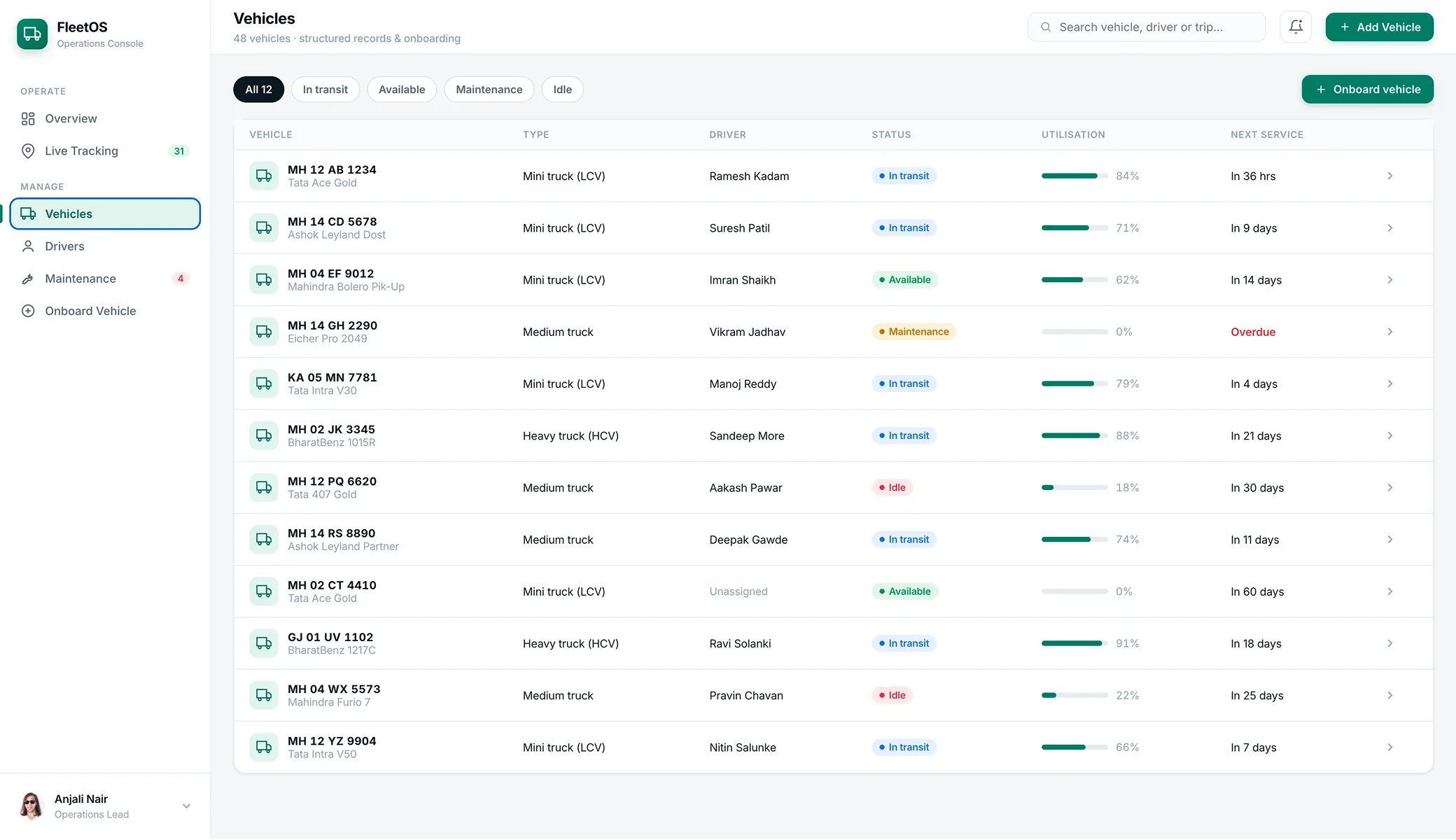
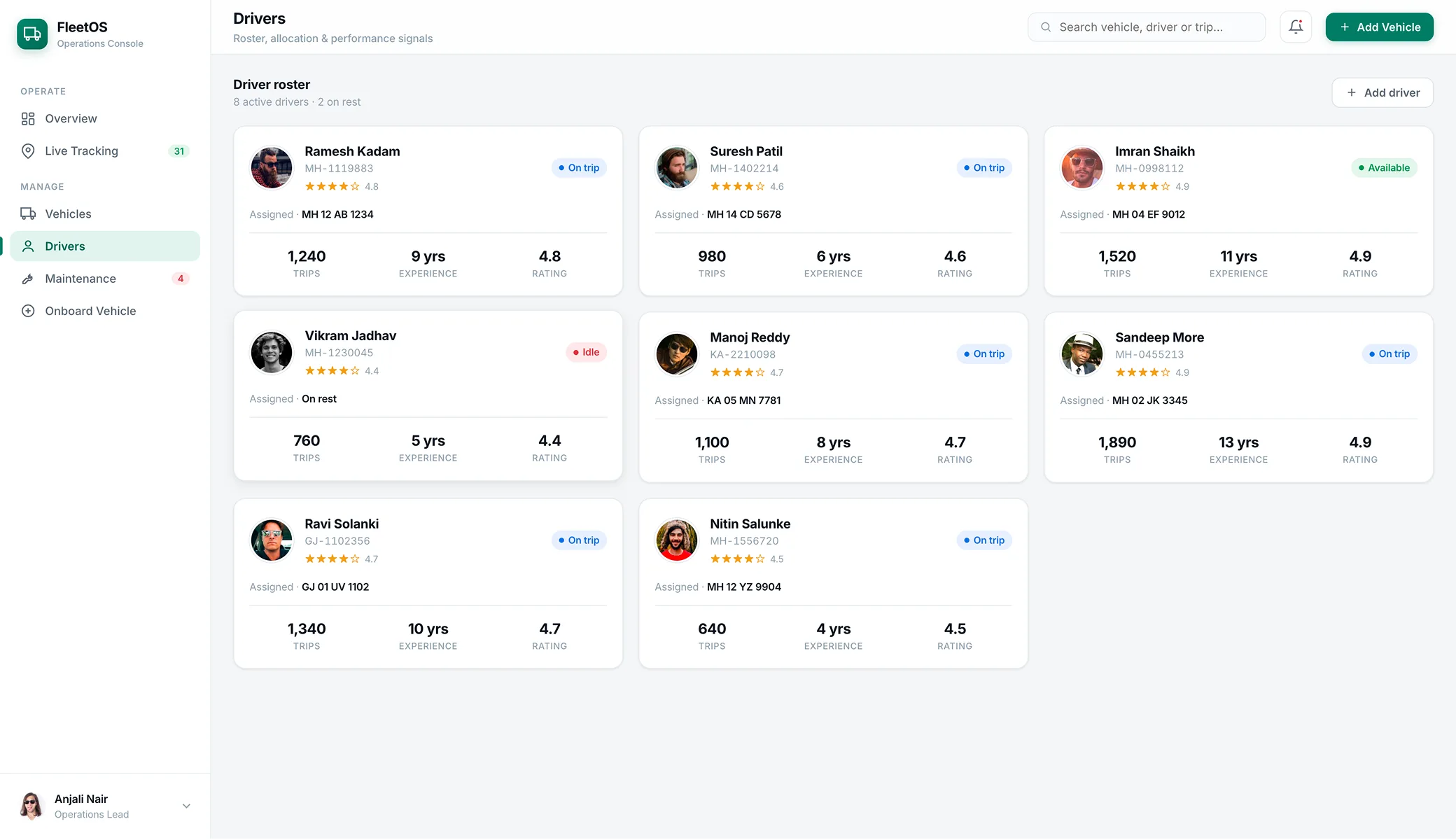
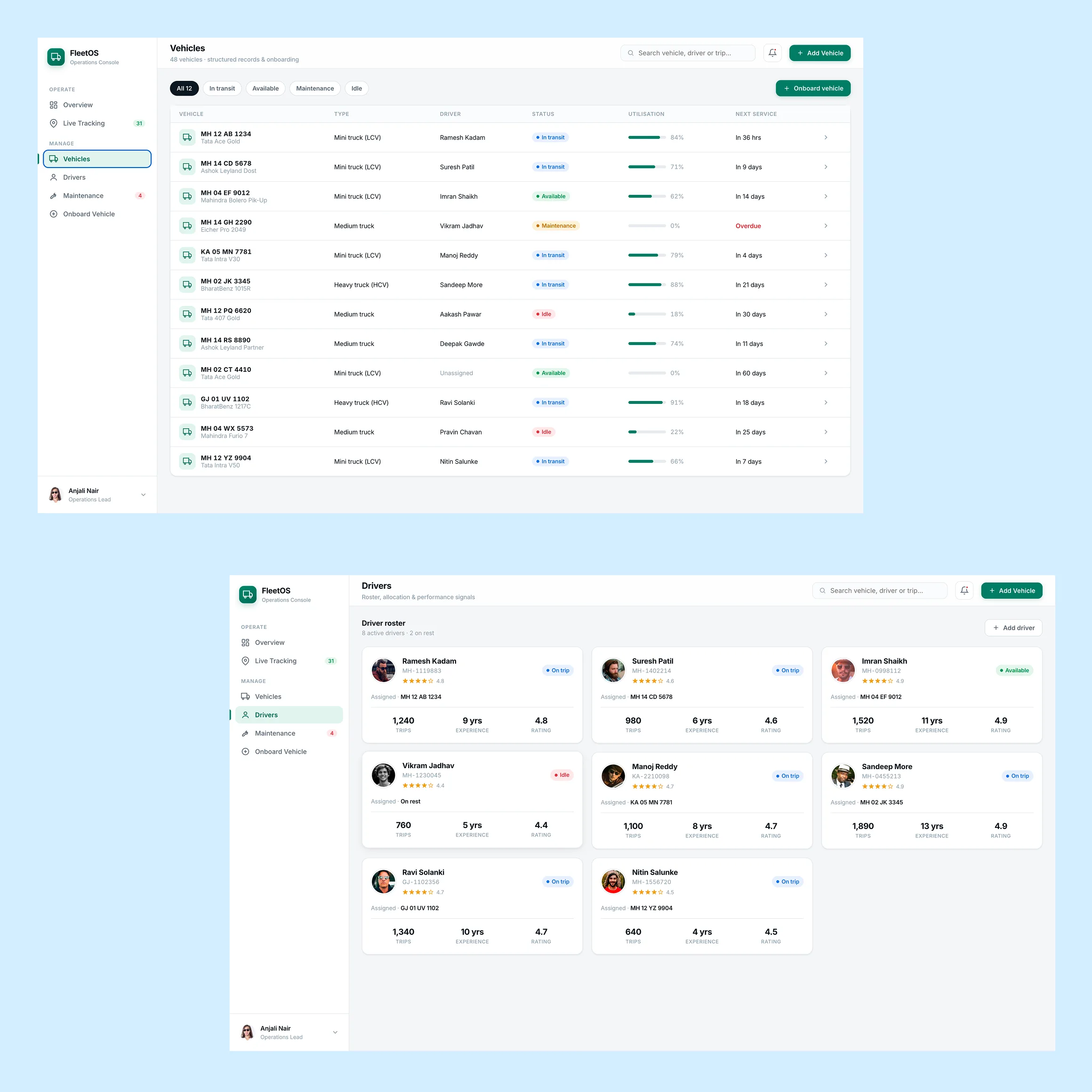
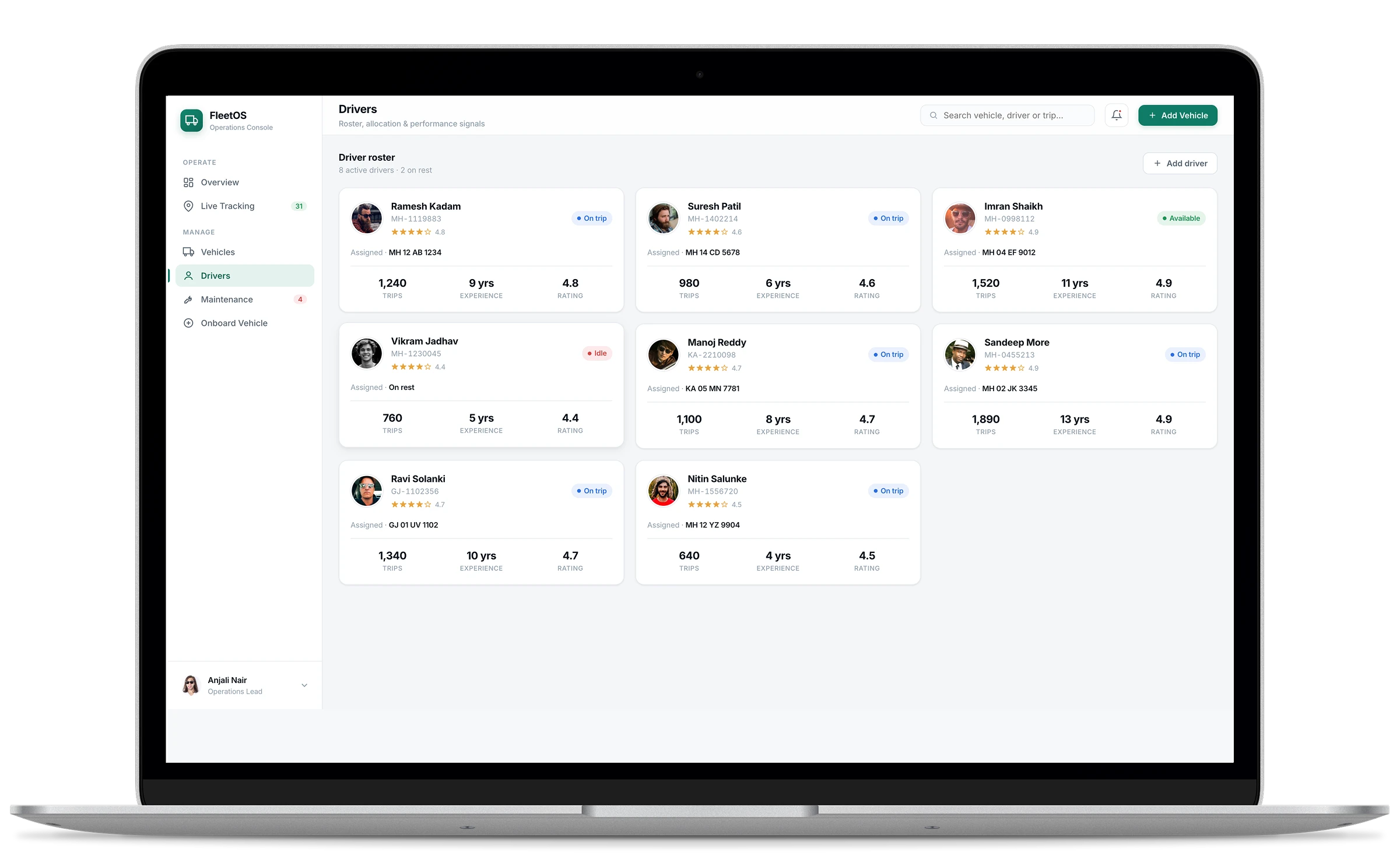
A unified fleet management system covering vehicle records, driver profiles, maintenance schedules and real-time tracking. From a dispatcher’s view it is a single dashboard showing the live state of the fleet — where each vehicle is, who is driving it, its maintenance status and its assigned jobs — with allocations happening in the dashboard and conflicts surfaced before they become problems.
Structured vehicle onboarding
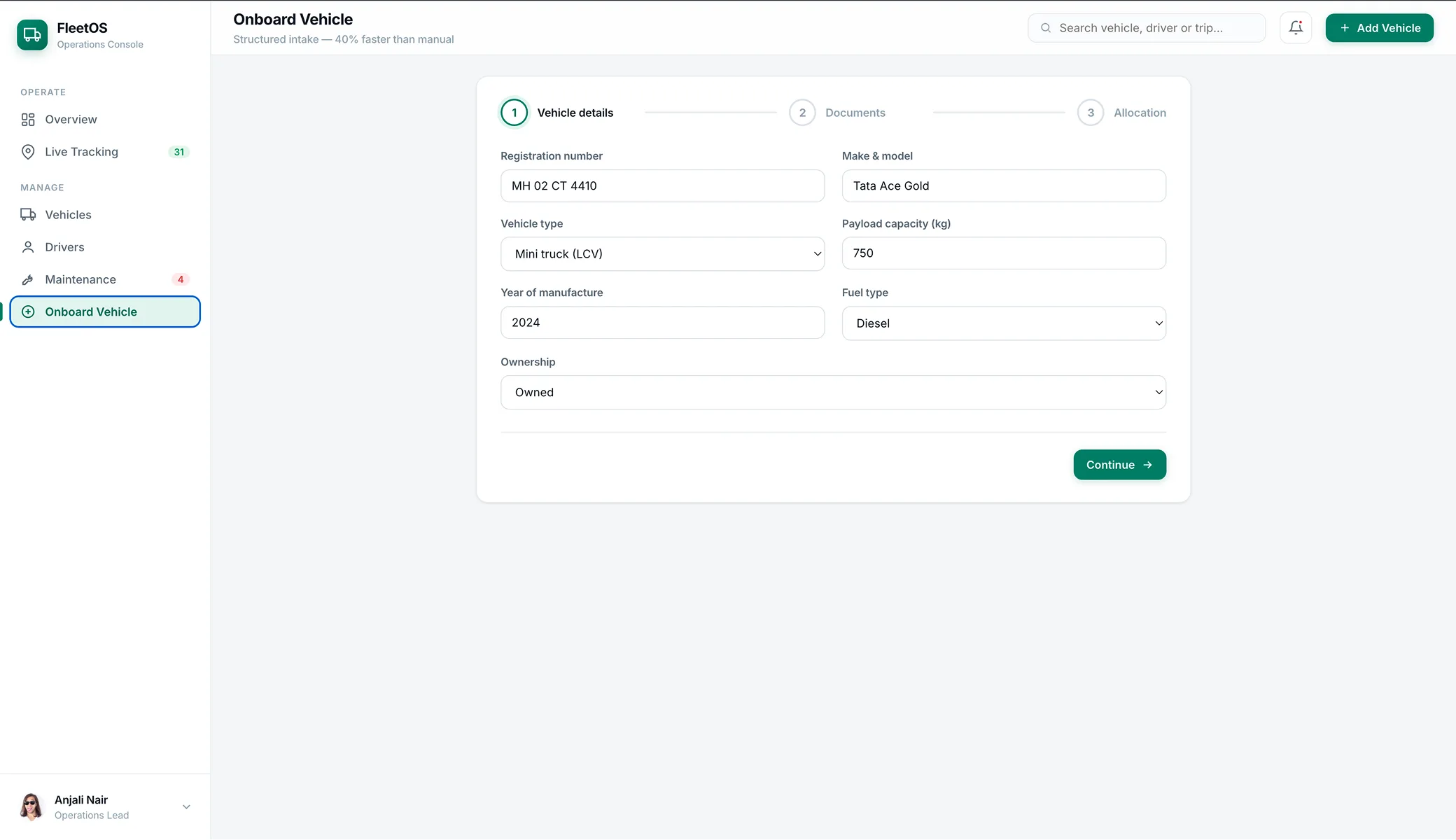
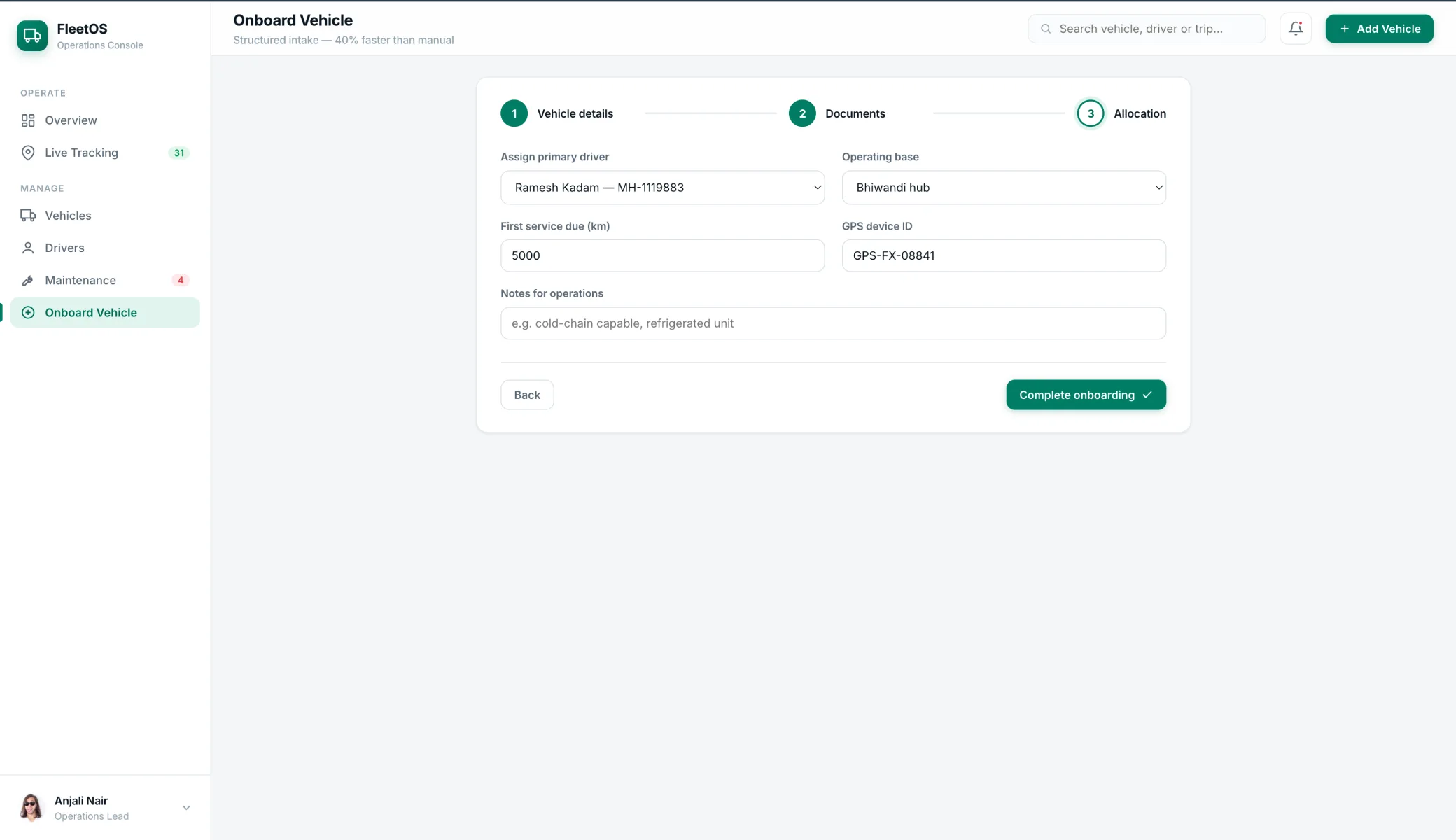
Identification, capacity, ownership and maintenance history captured at intake, documents uploaded directly — the vehicle is visible the moment intake completes (the source of the 40% onboarding gain).
Driver management
Driver profiles, license records, allocation history and performance signals at a glance, removing the back-and-forth coordination that used to consume dispatcher time.
Maintenance tracking
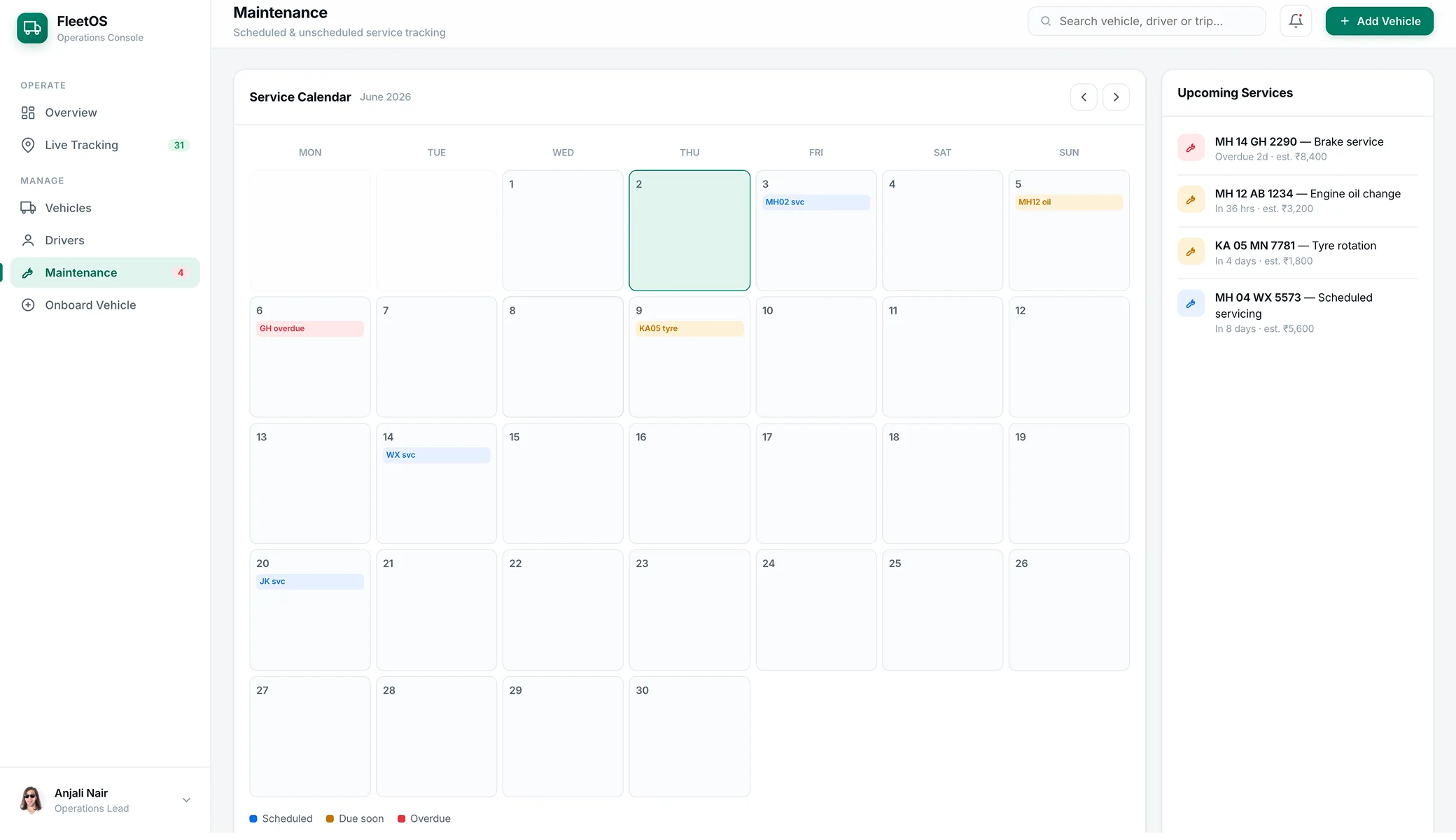
Scheduled and unscheduled events on a calendar view, alerts when service windows approach, and full history so a vehicle’s maintenance story is always retrievable.
Real-time tracking
Vehicles report location continuously to a live map view, feeding both dispatch decisions and the utilisation, idle-time and route data that previously did not exist in usable form.
Tech stack


Outcomes & impact
40%
Faster vehicle onboarding
Real-time
Tracking across the whole fleet
Single
Source of truth for operations
Trusted and verified by our clients


 ISO/IEC 27001:2022
 ISO 9001:2015
 GDPR compliant
Frequently Asked Questions
Let's Build Your Team
Tell us about your operation, the workflows you run manually today and where you want the platform to be in twelve months. We reply within one business day with next steps.
Prefer to book directly?
🗓️ Schedule on Calendly →Or email us:
✉️sales@unicoconnect.com