








Vertex AI Use Cases for AI Innovation, Now the Gemini Enterprise Agent Platform

Vasim Gujrati
Solutions Architect, AI & Platforms, Unico Connect
In this article
- Quick Answer
- Key Takeaways
- What Is Vertex AI and Why Software Teams Prefer It
- Key Features of Vertex AI That Unlock Real Innovation
- Real-World Vertex AI Use Cases Delivering Business Results
- How Software Development Companies Use Vertex AI to Build AI Products Faster
- Why Vertex AI Outperforms Traditional ML Platforms
- Frequently Asked Questions
- Conclusion
Google's Vertex AI has matured into one of the strongest unified AI/ML platforms available — particularly for enterprises already on Google Cloud. The combination of foundation models, AutoML, MLOps tooling, and managed infrastructure makes it possible to ship production AI applications in weeks instead of months. This guide walks through what Vertex AI is, the use cases that consistently deliver business results, and how software teams use it to accelerate AI development.
Quick Answer
First, the news. Google renamed Vertex AI to the Gemini Enterprise Agent Platform on 22 April 2026, at Google Cloud Next. The API endpoint is unchanged, so the use cases in this guide still apply, but code that uses the old Vertex AI SDK for generative AI must move to the Google Gen AI SDK. The platform now includes what used to be Vertex AI Agent Builder. Vertex AI, now the Gemini Enterprise Agent Platform, is Google Cloud's unified AI/ML platform that combines data engineering, model training, MLOps, generative AI, and agent building in a single managed service. Real-world use cases include intelligent chatbots, predictive ML (demand forecasting, fraud detection, recommendations), document processing with OCR and entity extraction, and enterprise-scale MLOps. The platform reduces AI time-to-production by 60–80% compared to assembling equivalent capability from open-source components.
Key Takeaways
- Google renamed Vertex AI to the Gemini Enterprise Agent Platform on 22 April 2026. The API endpoint is the same, and the platform is now packaged agent first
- Vertex AI, under its new name, remains Google's unified AI/ML platform covering training, deployment, and MLOps
- The strongest use cases are chatbots, predictive ML, document processing, enterprise MLOps
- Built-in support for Gemini, foundation models, and generative AI workflows
- Production-ready scaling, monitoring, and security — strong for enterprise workloads
- Especially powerful for organisations already on Google Cloud
What Is Vertex AI and Why Software Teams Prefer It
Vertex AI is Google Cloud's unified AI/ML platform. It combines data engineering, model training, deployment, monitoring, and MLOps in a single managed service. AutoML capabilities make it accessible to teams without deep ML expertise; advanced custom training capabilities serve teams with sophisticated requirements.
Software teams adopt Vertex AI for three reasons. The first is tight integration with Google Cloud services (BigQuery, Cloud Storage, Pub/Sub), the second is strong pre-trained models and Gemini integration, and the third is managed infrastructure that removes operational burden. The platform handles security, compliance, and scaling — letting engineering teams focus on the AI application itself.
Key Features of Vertex AI That Unlock Real Innovation
Streamlined MLOps and Automated Pipelines
Vertex AI Pipelines automate the full ML lifecycle — data preprocessing, model training, evaluation, and deployment. Visual pipeline builders let data scientists and engineers collaborate on complex workflows. The result is reproducible, observable ML operations at enterprise scale.
Built-In Generative AI Capabilities
Vertex AI ships with Gemini foundation models, support for third-party models (Anthropic Claude, Meta Llama, Mistral), and tooling for fine-tuning and prompt engineering. Building generative AI applications — chatbots, content generation, knowledge assistants — happens entirely within the platform.
Scalable ML and Deep Learning Infrastructure
Vertex AI provides elastic GPU and TPU clusters for training. Built-in versioning, monitoring, and automated retraining keep production models accurate over time. The infrastructure handles spiky training workloads and stable production inference without operational overhead.
Real-World Vertex AI Use Cases Delivering Business Results
Generative AI Assistants and Smart Chatbots
Software teams use Vertex AI to build intelligent chatbots that resolve customer support tickets, provide personalised recommendations, and surface contextual information from internal knowledge bases. Generative AI development on Vertex AI lets these assistants handle complex multi-turn conversations — lowering support costs and raising customer satisfaction. Unico Connect's AI development services deliver these patterns end-to-end.
Custom Machine Learning Models for Predictions
Predictive ML on Vertex AI drives demand forecasting (retail and supply chain), fraud detection (financial services), and personalised recommendation engines (e-commerce, content platforms). Custom training on Vertex AI handles massive datasets with strong distributed training primitives.
Document Processing and Intelligent Automation
Vertex AI excels at OCR, entity extraction, and document classification. Healthcare providers structure medical records; legal teams analyse contracts at scale; logistics operations process shipping documents automatically. Document processing pipelines on Vertex AI typically cut manual handling time by 70–80%.
MLOps and Enterprise AI Scaling
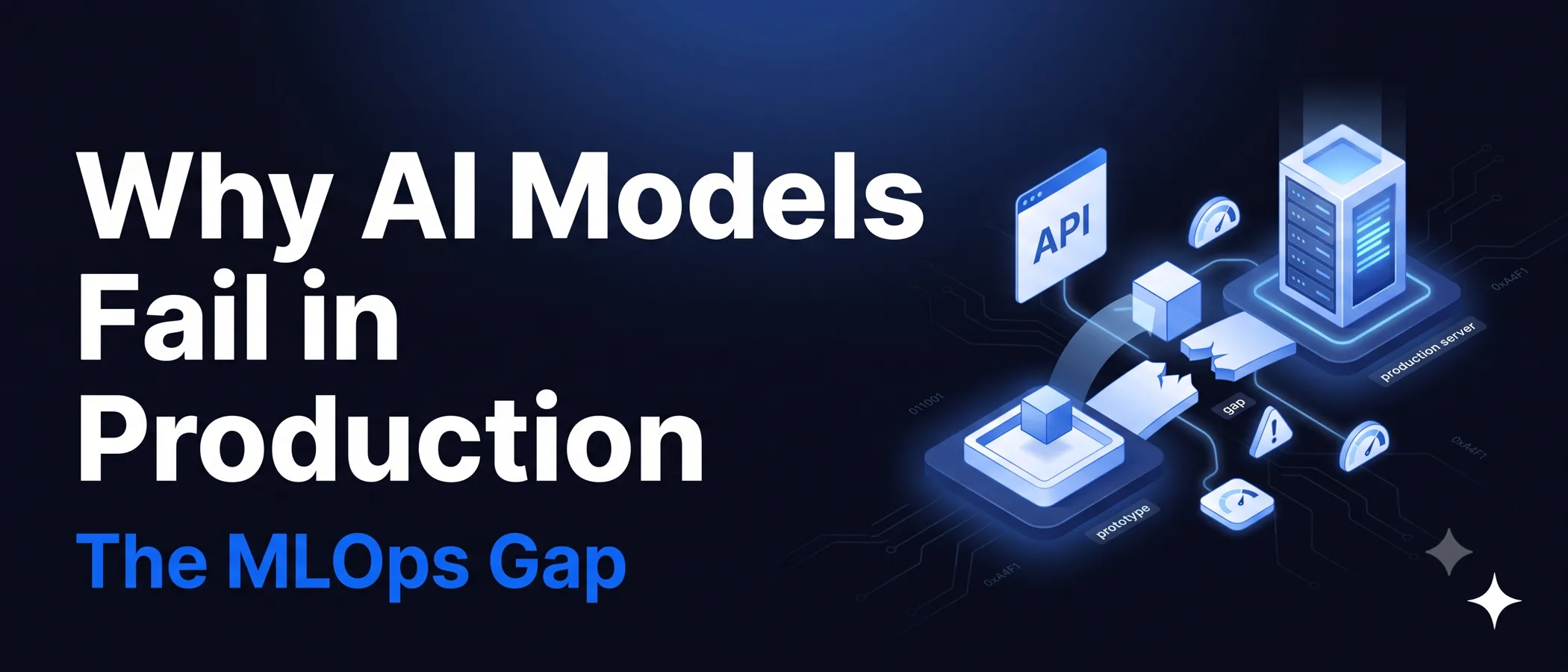
Vertex AI Pipelines, automated retraining, performance monitoring, and centralised model registry let enterprises operate hundreds of production ML models reliably. This MLOps maturity is the difference between successful and stalled enterprise AI programmes.
How Software Development Companies Use Vertex AI to Build AI Products Faster
Strong AI development teams use Vertex AI to compress time-to-production:
- AutoML for baseline custom models without deep ML expertise
- Pre-trained models and Gemini for quick integration of generative AI
- Pipeline templates for common ML workflows (training, evaluation, deployment)
- Managed deployment for low-friction production serving
- Built-in monitoring for performance and drift detection
The result is dramatically shorter cycles from prototype to production — typically 60–80% faster than assembling equivalent capability from open-source components.
Why Vertex AI Outperforms Traditional ML Platforms
Vertex AI's strengths against alternatives:
- Unified platform — training, deployment, MLOps, and generative AI in one interface (vs cobbling tools together)
- Strong Google Cloud integration — BigQuery, Cloud Storage, Pub/Sub, IAM all work natively
- Foundation model breadth — Gemini plus Anthropic, Meta, Mistral models in one API
- Cost optimisation — managed scaling, spot training, and savings plans reduce total cost
- Enterprise security — VPC, CMEK, audit logging, and compliance certifications by default
Organisations with strong Google Cloud footprints typically find Vertex AI a clear default; organisations on other clouds (AWS, Azure) often prefer the equivalent native option for the same reasons.
Frequently Asked Questions
Is Vertex AI still called Vertex AI?
No. Google renamed Vertex AI to the Gemini Enterprise Agent Platform on 22 April 2026, at Google Cloud Next. Searching the Google Cloud Console for Vertex AI now redirects to the new product page. The rename also brought what used to be Vertex AI Agent Builder into the same platform. The API endpoint is unchanged, but the generative AI modules of the Vertex AI SDK were removed after 24 June 2026, so older code that imports them must move to the Google Gen AI SDK.
What are the most common Vertex AI use cases?
Intelligent chatbots, predictive analytics (demand forecasting, fraud detection), recommendation systems, document processing with OCR and entity extraction, and enterprise MLOps. These five cover the vast majority of production Vertex AI workloads.
How do software development companies use Vertex AI to build AI applications?
For rapid prototyping with AutoML and pre-trained models, automated deployment pipelines, scalable model serving, and MLOps at enterprise scale. The platform compresses time-to-production by 60–80% compared to assembling equivalent capability from raw components.
Is Vertex AI good for training custom machine learning models?
Yes. Distributed training, hyperparameter tuning, experiment tracking, and elastic GPU/TPU infrastructure make Vertex AI a strong choice for custom ML at enterprise scale. The Workbench and Notebooks features support data science workflows directly.
What makes Vertex AI strong for generative AI development?
Native Gemini integration, support for third-party foundation models (Claude, Llama, Mistral), prompt engineering tools, fine-tuning support, and grounded generation with vector search. The platform covers the full generative AI lifecycle in one place.
How does Vertex AI compare to AWS SageMaker and Azure ML?
Vertex AI is particularly strong for organisations on Google Cloud, generative AI applications, and integrations with BigQuery and Vertex AI's vector search. SageMaker leads for AWS-native workloads. Azure ML leads for Microsoft-heavy enterprises. Many large enterprises run multiple platforms for different workloads.
What does Vertex AI cost?
Pricing is usage-based — training, inference, storage, and feature store separately. Most enterprise pilots run $1K–$10K/month; production deployments scale from there. Cost optimisation (spot training, managed inference, batch prediction) typically reduces costs 30–50% over an unoptimised baseline.
How long does a Vertex AI deployment take?
A proof of concept takes 2 to 4 weeks and a production deployment typically takes 2 to 4 months, depending on data readiness, model complexity, and integration surface.
Conclusion
Vertex AI has matured into one of the strongest enterprise AI platforms — particularly for organisations already on Google Cloud. The combination of foundation models, AutoML, MLOps tooling, and managed infrastructure makes it possible to ship production AI applications dramatically faster than assembling equivalent capability from scratch. To explore how Unico Connect builds production AI solutions on Vertex AI, see our AI development services and cloud and DevOps services.