









Flutter vs React Native in 2026, Which Cross Platform Framework to Choose

Zubin Gala
Principal Mobile App Engineer, Unico Connect
In this article
- Quick Answer
- Key Takeaways
- Flutter vs React Native compared
- Performance, a settled debate for most apps
- Talent and ecosystem, where React Native leads
- UI and brand, where Flutter leads
- Reach beyond mobile
- Who builds with each
- How to choose
- Shipping closed source and protecting your code
- Our Take
- The Bottom Line
- Frequently Asked Questions
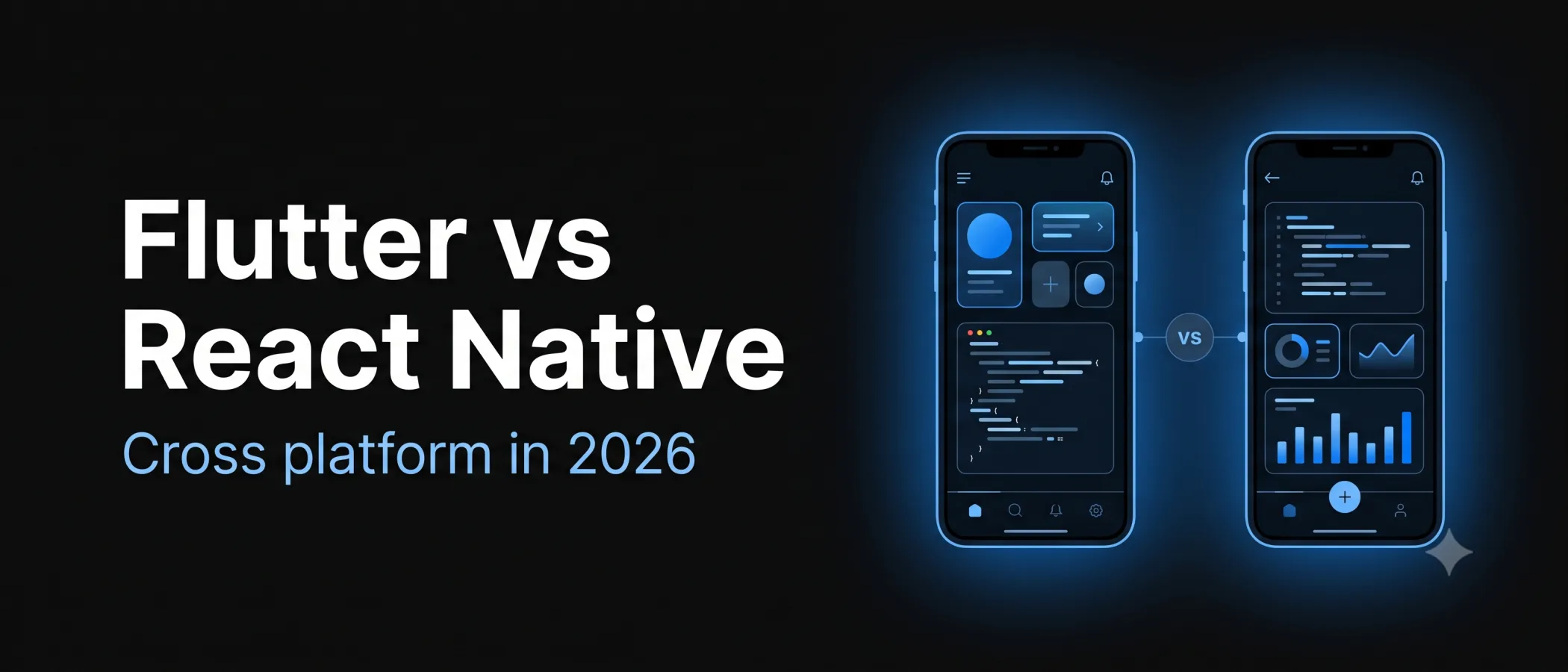
Flutter and React Native are the two frameworks that matter for cross platform app development in 2026. Both are production mature and ship apps used by hundreds of millions of people, and either one cuts the cost of building for iOS and Android at the same time. Which one is better depends on your team, on how ambitious your UI is, and on what else you are building. What follows is a decision framework for that call, with no winner picked in advance.
Quick Answer
Choose Flutter when you want pixel identical UI across platforms, heavy custom animation, or a single codebase that also reaches desktop and embedded devices. Choose React Native when your team already knows JavaScript and React, you want platform authentic native components, or you share code with a web app. Either one commonly saves around 30 to 50% against building two separate native apps. For most business apps in 2026 the performance difference no longer decides it, so the choice comes down to talent, ecosystem and how custom your interface needs to be. At Unico Connect our mobile app development team ships production apps on both and chooses per project.
Key Takeaways
- Both are production grade in 2026. React Native runs on its New Architecture by default and Flutter renders through its Impeller engine, so for a standard business app the old performance gap is effectively closed and should not drive your choice. Checked on 17 September 2026, the current stable releases are React Native 0.87.1 and Flutter 3.47.4, the latter released on 11 September 2026.
- Flutter is the pick when UI consistency and animation matter most, and it reaches the most platforms from one codebase.
- React Native gives you the deeper talent pool and ecosystem, because it runs on JavaScript and shares mental models with React on the web.
- Flutter uses Dart and React Native uses JavaScript or TypeScript. Start from the language your existing team already writes, because that usually tips the decision.
- Neither framework is a mistake in itself. The wrong call is picking one on hype instead of fit. We build production apps in both, so we recommend whichever fits your product and team.
Flutter vs React Native compared
For most apps in 2026, choose Flutter for pixel identical, animation rich, multi platform products, and React Native for JavaScript teams that want platform authentic UI and the deepest talent pool. The table compares the two neutrally on the dimensions that decide it, with a recommendation for each kind of team underneath.
Flutter vs React Native compared, 2026
| Dimension | Flutter | React Native |
|---|---|---|
| Language | Dart | JavaScript and TypeScript |
| Performance | Smooth, edge for heavy animation | Smooth under New Architecture |
| UI rendering approach | Draws every pixel via Impeller | Renders real native components |
| Talent pool | Smaller Dart pool, growing | Very large JavaScript pool |
| Ecosystem and packages | Strong first party libraries | Huge npm ecosystem |
| Native module access | Platform channels to native code | TurboModules to native code |
| Developer experience and hot reload | Fast hot reload, stateful | Fast refresh, stateful |
| Web and desktop support | Web, desktop, and embedded too | Mobile first, web via separate path |
| Code sharing with web | One codebase across targets | Shares React patterns, not codebase |
| App size | Larger baseline, bundles engine | Smaller baseline, grows with libraries |
| Code protection | Compiles to native machine code, harder to reverse engineer | Ships JavaScript bundle, Hermes bytecode and obfuscators raise the bar but weaker |
| Backing and longevity | Backed by Google | Backed by Meta |
| Best fit | Brand led, animation rich, multi platform | JavaScript teams wanting native feel |
Which should you choose
Both frameworks are production proven with apps at hundreds of millions of users, so fit to your team and UI goals decides the choice. Accurate as of June 2026.
Performance, a settled debate for most apps
For years the argument was that Flutter, with its own rendering engine, beat React Native, which talked to native components through a bridge. In 2026 that framing is out of date.
React Native now ships its New Architecture by default, with the JavaScript Interface and TurboModules replacing the old asynchronous bridge, which removes most of the latency that used to show up in heavy lists and rapid interactions. Flutter renders through Impeller, its default engine on iOS and on modern Android with Vulkan, which precompiles shaders and delivers consistent high frame rates without the first run jank older versions had.
In practice, both frameworks hit smooth sixty frames per second and feel native for the kind of apps most companies build, such as dashboards, marketplaces, booking flows, and social and content apps. The performance difference only becomes a deciding factor at the edges, such as very heavy real time animation, on device machine learning, or graphics intensive interfaces, where the direct rendering control in Flutter, or fully native code, can pull ahead.
Talent and ecosystem, where React Native leads
React Native is JavaScript, and JavaScript is the largest developer population in the world. If you already have a React web team, they can become productive in React Native quickly because the component model, hooks, and state patterns carry over. Hiring is easier and the contractor market is deep. The npm ecosystem plus a mature set of native modules means there is usually a package for what you need.
Flutter uses Dart, a clean and pleasant language with a smaller hiring pool. The Flutter package ecosystem is strong and well maintained, though narrower than npm. Teams that commit to Flutter rarely regret the language, but the smaller pool starts to cost you when you plan to scale a team or hand the app off. If you would rather hire an agency, see our list of the top Flutter app development companies.
UI and brand, where Flutter leads
Because Flutter draws every pixel itself, your app looks identical on every device and you control the interface completely. This is ideal for brand led products that want a distinctive, consistent look, and for interfaces with heavy custom animation. React Native renders real native components, so by default an app feels native to each platform and adapts to system conventions, which many teams actively want. The question is whether you value pixel identical brand control (Flutter) or platform authentic feel with less effort (React Native).
Reach beyond mobile
If your roadmap includes desktop or embedded targets, Flutter compiles to iOS, Android, web, desktop, and embedded from one codebase, which is the widest reach available. React Native is mobile first; you reach the web through React proper, which shares the language and the people while keeping a separate codebase. For a phone plus tablet product either is fine, provided you handle responsive layouts across screen sizes properly. For a phone plus desktop plus kiosk product, Flutter is the cleaner path.
Who builds with each
Both frameworks already run apps used by hundreds of millions of people, which settles whether either one is production ready. Flutter powers Google Pay, the My BMW app, the Xianyu marketplace from Alibaba, eBay Motors, and Toyota infotainment systems, and it is especially common in automotive and fintech for its pixel identical interface. React Native powers Discord and the Shopify Shop app and ships features inside Facebook, Instagram, and Microsoft Office and Teams. The Bloomberg consumer app was built on it too. For teams already living in JavaScript, React Native is the natural choice.
The hiring gap has a structural cause. In the Stack Overflow Developer Survey, React and JavaScript are consistently among the most widely used technologies in the world, which is part of why React Native has the deeper hiring pool. Flutter leads on cross platform mindshare and keeps closing the talent gap each year.
How to choose
Let the product and the team make the call. These are the situations that push the decision one way or the other.
- Brand led products that need a distinctive, pixel identical interface across platforms point to Flutter, which draws every pixel itself.
- Heavy custom animation or graphics rich screens favor Flutter because it controls rendering directly.
- One codebase that also reaches desktop or embedded devices is a job for Flutter, which has the widest reach available.
- An existing React or JavaScript team you want productive fast should go to React Native, where the component model and patterns carry over.
- Platform authentic native UI with less custom styling effort comes more easily in React Native, which renders real native components.
- Shared logic or people with a React web product, or a need for the largest talent pool points to React Native.
Most products sit somewhere in between. When both fit equally well, choose the framework your team already knows best and whose ecosystem carries the packages you need. If you intend to ship closed source software, how well each one protects your code is one more factor to weigh.
Shipping closed source and protecting your code
If you care about how hard your shipped app is to reverse engineer, the two frameworks start from different places. Flutter compiles Dart to native machine code, which is harder to inspect than a script, so the released binary gives a stronger starting position. React Native ships a JavaScript bundle, which is easier to read. The Hermes engine ships compiled bytecode instead of plain source and obfuscators raise the bar further, but the practical floor is still weaker than compiled native code. Neither makes reverse engineering impossible, so plan for obfuscation without expecting perfect secrecy, and put real protection for sensitive logic and keys on the server.
Our Take
We build and ship production apps in both Flutter and React Native, so we have no incentive to crown one. Whether an app succeeds depends far more on its architecture, its review discipline and the team behind it than on the framework. We pick the framework that fits the product and the people who will own it after launch, and we explain the tradeoff before a line of code is written. If you want help making the call for a specific product, our mobile app development team scopes it with you, and you can hire Flutter developers or hire React Native and React developers directly. Budgets and timelines are in our mobile app development cost guide.
The Bottom Line
In 2026 both Flutter and React Native are excellent, production proven choices, and the performance argument that used to dominate has mostly gone quiet. Pick Flutter for pixel identical, animation rich, multi platform products, and React Native for JavaScript teams, native feel and the deepest talent pool. Either way, the team and the architecture around the framework will matter more than which one you pick. To talk through the right choice for your app, see our mobile app development service or start a conversation.
Frequently Asked Questions
Is Flutter better than React Native in 2026?
Neither is universally better. Flutter is the stronger choice for pixel identical UI, heavy animation, and multi platform reach, while React Native wins for JavaScript teams, platform authentic UI, and the largest talent pool. Your team and product decide which of those matters more.
Which is faster, Flutter or React Native?
For most business apps the difference is no longer meaningful. React Native runs its New Architecture by default and Flutter renders through Impeller, and both reach smooth sixty frames per second. Flutter can pull ahead on graphics intensive or heavy animation work because it controls rendering directly.
Which is cheaper to build?
Both cut cost by roughly 30 to 50% versus building separate native iOS and Android apps, because you maintain one codebase. Between the two, the cost difference is small, and it usually comes from your existing team and how custom the UI is rather than from the framework itself.
Can I move a React web team to React Native?
Yes, and that is one of the biggest advantages React Native has. The component model, hooks, and state patterns carry over, so a React web developer gets productive in React Native far faster than they would by learning Dart for Flutter.
Does Flutter or React Native produce truly native apps?
Both produce real, installable native apps for the App Store and Play Store. React Native renders actual native components. Flutter draws its own pixels with a high performance engine. Users cannot tell either was built cross platform when the work is done well.
Which is better for shipping a closed source app?
Flutter has a slight edge. It compiles Dart to native machine code, which is harder to reverse engineer than the JavaScript bundle React Native ships, even with Hermes bytecode and obfuscators in play. Neither makes inspection impossible, so keep sensitive logic and secrets on the server and treat client obfuscation as one layer of the defense.
When should I build fully native instead?
Choose fully native iOS and Android when you need maximum performance for graphics or on device machine learning, deep use of brand new platform features the day they ship, or when a single platform is your entire business. For most products, cross platform is the better economics.
Which one does Unico Connect recommend?
We recommend the one that fits your product and team, and we build in both. We scope the decision with you up front and do not default to a house favorite.
Do store requirements differ between the two?
No. Either way you target an Android API level and build against an Apple SDK, so the same deadlines apply, and you also depend on your framework supporting new platform versions. We track the current ones in App Store and Google Play requirements.