









AI Code at Scale, Patterns, Inconsistencies & Maintainability Challenges

Vasim Gujrati
Solutions Architect, AI & Platforms, Unico Connect
In this article
- Quick Answer
- Key Takeaways
- Why AI-Generated Code Becomes Harder to Manage at Scale
- The First Problems Teams Usually Hit
- A Practical Framework for Maintaining AI-Generated Code
- Where AI Coding Works Well, and Where Teams Should Slow Down
- What Engineering Leaders Should Put in Place Next
- Frequently Asked Questions
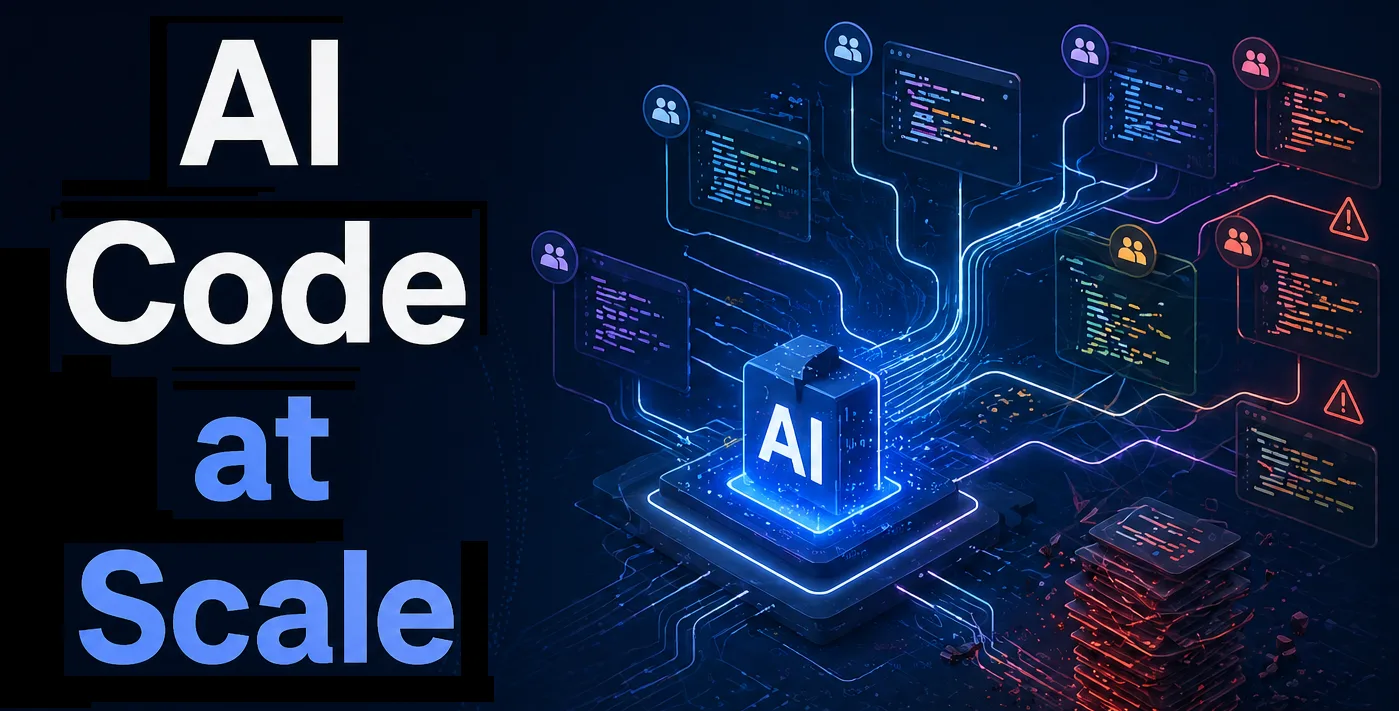
When AI-generated code starts appearing across multiple services and repositories, the issues are not obvious at first. The code compiles, tests pass, and features ship. The problems show up later, as inconsistent patterns across similar modules, duplicated logic written in slightly different ways, and pull requests that look correct in isolation but do not fit the architecture of the system.
Those problems grow as AI-assisted development scales, and engineering teams have to adapt their workflows to keep codebases maintainable.
Quick Answer
At scale, AI-generated code fails through inconsistency far more often than it fails to compile, showing up as duplicated logic, divergent patterns, shallow reviews under higher PR volume and missing documentation of the "why." The fix is workflow design, not better prompts. Set standards before generation, review for architecture fit, strengthen testing and refactor continuously, keeping humans in control of foundational decisions.
Key Takeaways
- Plan for maintenance from the start. Whether AI can write working code is the smaller question, and the real risk is whether your team can maintain that code across repositories, services and release cycles.
- Watch for the early warning signs, which are inconsistent patterns, shallower reviews as PR volume climbs, and documentation drift where nobody records the "why."
- Tighten repo conventions before rolling AI out widely, because AI tools copy whatever patterns already exist and amplify weak conventions instead of fixing them.
- Build maintainability into the workflow by writing standards down before anyone generates code at volume, checking architecture fit in review, raising the testing bar and refactoring continuously.
- Hand AI the bounded tasks that are easy to validate. On shared abstractions, security and logic that depends on deep domain knowledge, slow down and enforce human control.
Why AI-Generated Code Becomes Harder to Manage at Scale
When AI-generated code spreads across an engineering organization, the question shifts quickly from "can AI write functional logic" to "can the team maintain what is being generated across repositories, microservices and release cycles." Moving from isolated AI assistance to team-wide AI-augmented development produces so much more output that the review load climbs steeply.
Without firm constraints, that volume brings severe inconsistency across the codebase and makes downstream rework inevitable. Writing code faster does not help if different parts of the system start evolving in slightly incompatible ways.
The First Problems Teams Usually Hit
Teams that scale AI-assisted development without adapting their workflows run into operational failures fast, and they surface in everyday work with code that AI tools helped write. The first symptoms usually appear in three areas.
Reviewers start to find inconsistent patterns spread across files and services, because different developers accepted different AI-generated approaches. As pull request volume rises, reviews get shallower, and reviewers check that the syntax is fine without asking whether the change fits the architecture. Documentation drifts badly as well, until the code generated at speed and the intent of the system no longer line up.
Inconsistency Across the Codebase
AI models are highly sensitive to their immediate context window, so they faithfully reproduce the mixed legacy patterns already present in the repository, and that is how AI code consistency issues begin. A single file can be locally correct and still break consistency across the system, and enough of those files leave you with a fragmented architecture.
You can see this in industry data. Analysing 211 million changed lines of code, GitClear found that duplicated code blocks rose roughly eightfold in 2024, while the share of changed lines associated with refactoring fell from 25% in 2021 to under 10% in 2024. Both figures point to the maintainability drag that unmanaged AI output creates at scale.
Review and Documentation Start Falling Behind
AI coding tools generate feature logic in seconds, so the human review bottleneck tightens. More output weakens review quality, which turns technical debt in AI-generated code into a quiet organizational risk. AI is good at generating the "what" and weak at documenting the "why," so the rationale behind a change goes unrecorded, and that makes future refactoring riskier.
A Practical Framework for Maintaining AI-Generated Code
Better or longer prompts only go so far. Maintainability comes from deliberate workflow design. Teams that scale AI-generated code well treat AI as an integrated part of the engineering system and adapt their code review, documentation and architectural consistency practices around it.
In practice, maintaining AI-generated code takes a few consistent changes to how teams work every day.
Define Standards Before Generation
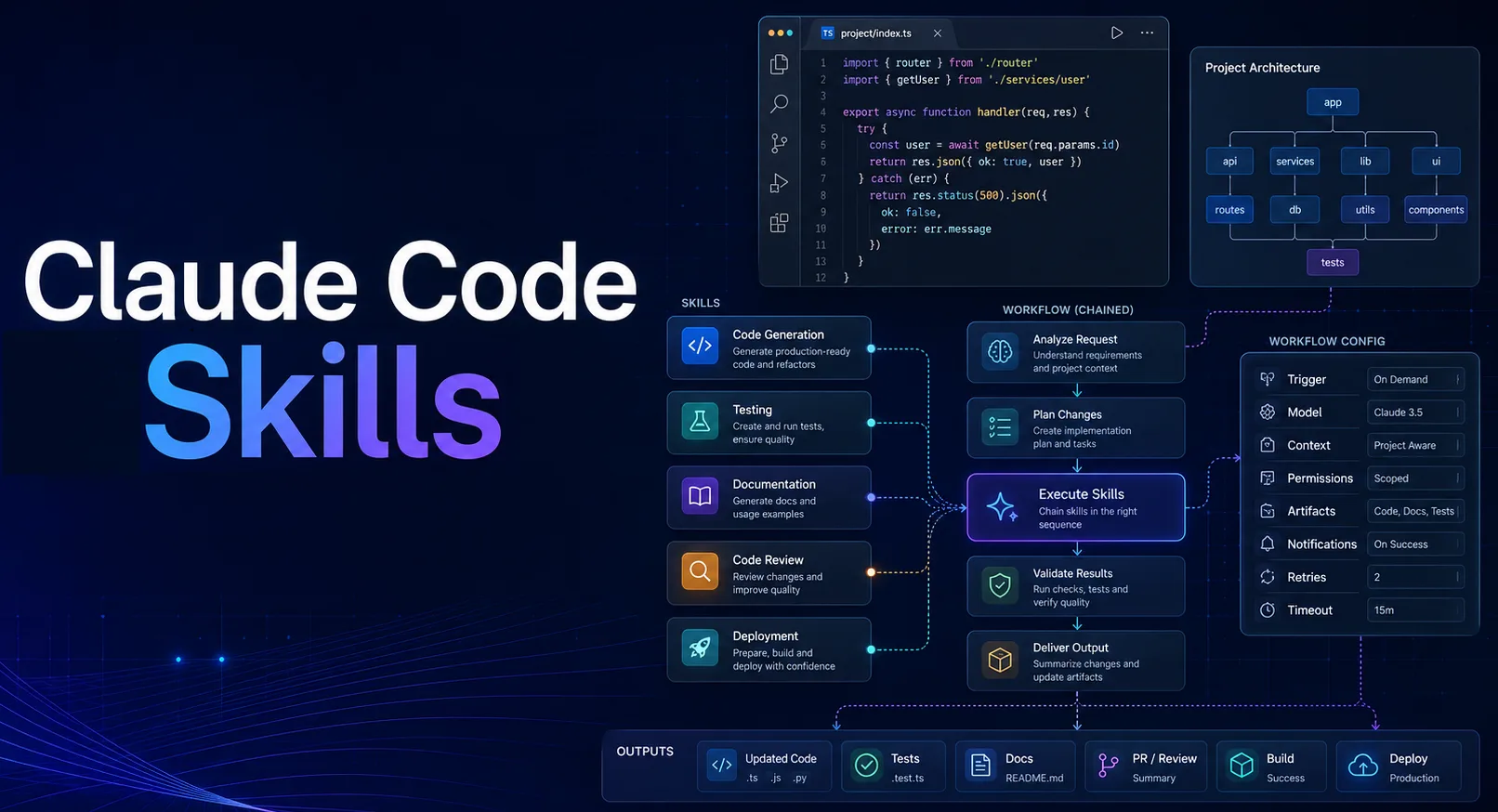
AI output tends to follow whatever patterns already exist in the repository, so if those patterns are inconsistent or loosely defined, the generated code amplifies the inconsistency. Clear naming conventions, module boundaries and approved patterns need to exist before you scale AI usage. Encoding them into reusable, governed workflows (such as Claude Code skills) is one way to make standards travel with the tooling.
Review for Architecture Fit
The main shift in code review is that "works correctly" is no longer enough to approve a change. Reviewers need to check that the code reuses existing abstractions and follows established patterns, and that it fits the wider system design.
Strengthen Testing and Validation
The larger the share of the codebase AI writes, the more weight testing has to carry. To catch AI-generated code quality issues, engineering teams need to mandate stronger regression testing, thorough edge case checks and strict automated quality gates. Rigorous testing is the safety net that catches logically flawed output.
Refactor and Audit Continuously
AI-generated code often needs consolidating after the first implementation lands. Teams that refactor duplicated logic and normalize patterns early keep the codebase from fragmenting over the long run.
Where AI Coding Works Well, and Where Teams Should Slow Down
When you maintain AI code at scale, treating all code generation equally invites risk. AI tends to perform reliably where the task is clearly defined and easy to validate. In high stakes areas, AI code maintainability challenges peak, because the model lacks the deep, undocumented business context needed to make safe, foundational architectural decisions.
| AI works reliably here | Enforce strict human control here |
|---|---|
| Boilerplate scaffolding | Shared system abstractions |
| Repetitive transformations | Security-sensitive authentication logic |
| Test generation | Domain-heavy business workflows |
| Bounded refactors within a defined module | Complex legacy modernization |
What Engineering Leaders Should Put in Place Next
For CTOs and VPs of Engineering, AI code maintainability is a governance mandate that cannot be left to developer preference. To prevent technical debt in AI-generated code, leaders need to implement a strict readiness checklist that covers the following.
- Enforce documented architectural standards.
- Establish specific review rules for AI-authored code.
- Mandate minimum testing requirements.
- Set documentation baselines.
- Schedule a recurring refactor and audit cadence.
Moving to an AI native engineering model requires control over the entire lifecycle of the code, so that speed never comes at the cost of system integrity.
Frequently Asked Questions
Does scaling AI-generated code always create technical debt?
No, not inherently. Scaling AI-generated code creates substantial technical debt when engineering standards and review discipline fail to scale alongside the volume being generated. The root issue is a lack of workflow maturity and governance rather than the AI tools themselves.
What are the biggest AI-generated code challenges for engineering teams?
The biggest AI-generated code challenges include unchecked inconsistency across the codebase, severe human review bottlenecks, documentation drift (missing the "why" behind the code) and the spread of weak, hallucinated abstractions that make future maintenance harder.
How can teams reduce AI code consistency issues in large codebases?
To reduce AI code consistency issues, teams need to enforce strict project standards, work from approved architectural templates and write exact architecture rules into the prompts developers use. Narrowing code review criteria to focus on architectural alignment also catches inconsistencies early.
What causes the most common AI code maintainability challenges?
The most common AI code maintainability challenges come from unstructured, ad hoc tool use by individual developers, weak repository conventions that confuse the AI context window, and a lack of continuous refactoring discipline to clean up early AI output.
When should a company get outside help with AI-generated code quality issues?
Bring in an AI-native development partner when you are scaling AI use quickly but lack the senior review capacity, architecture governance or repeatable operating model in house to stop AI-generated code quality issues from degrading your core product.