









RAG vs Fine Tuning vs Agents, Choosing the Right LLM Strategy in 2026

Vasim Gujrati
Solutions Architect, AI & Platforms, Unico Connect
In this article
- Quick Answer
- Key Takeaways
- RAG vs fine tuning vs agents compared
- RAG gives the model your knowledge
- Fine tuning changes how the model behaves
- Agents let the model act
- Hybrid is the real production answer
- What each looks like in practice
- The stakes, by the numbers
- How to choose
- Our Take
- The Bottom Line
- Frequently Asked Questions
Teams weighing RAG against fine tuning for a large language model are comparing two tools that solve different problems, and a third option, agents, often sits on top of both. RAG gives a model access to your knowledge. Fine tuning changes how the model behaves, and agents let it take actions across tools and steps. Most production systems in 2026 use a combination, and picking the wrong one wastes time and money. Below is the framework we use to decide which layers a problem needs and in what order.
Quick Answer
Use RAG (retrieval augmented generation) when the model needs current, private, or frequently changing knowledge, and when you need answers grounded in citable sources. Use fine tuning when you need a consistent tone, a strict output format, specialized reasoning, or lower latency on high volume tasks. Use agents when the job requires multiple steps, tool calls, or decisions beyond a single answer. The three work as layers, so most real systems start with RAG, add fine tuning only when behavior must change, and wrap both in an agent when the task involves action. At Unico Connect we build production AI systems with all three, so we have no stake in overselling any one of them.
Key Takeaways
- RAG changes what the model knows, fine tuning changes how it behaves, and agents change what it can do. Work out which of those jobs your problem needs before you choose a technique.
- Most enterprise teams start with RAG because it is faster to ship, keeps data current, and grounds answers in sources you control, so in most cases it is the first layer to build.
- Save fine tuning for behavior, meaning consistent voice, strict formats, narrow specialized tasks, and latency at scale. If the gap is missing knowledge, RAG is the better fix.
- Treat agents as an orchestration layer that sits on top of the other two. They plan, call tools, and recover from errors across steps, and they carry the most production risk, so budget for guardrails and evaluation from the start.
- Expect to end up with a hybrid, since a fine tuned model for voice, RAG for facts, and an agent for multi step work is a common production shape.
RAG vs fine tuning vs agents compared
For most teams in 2026, start with RAG to ground a model in current and private knowledge, add fine tuning when behavior must change, and wrap both in an agent when the task needs multi step action. The table compares all three on the dimensions that decide it, with neutral cells so you can weigh them yourself, and ends with a recommendation for each kind of team.
RAG vs fine tuning vs agents compared, 2026
| Dimension | RAG | Fine tuning | Agents |
|---|---|---|---|
| What it does | Retrieves your knowledge into the prompt | Trains the model on your examples | Plans and acts across tools and steps |
| Knowledge freshness | As current as your last index update | Frozen at training time | Depends on the model and tools |
| Accuracy and grounding | Strong, grounded in retrieved sources | Depends on training data | Inherits from the model and RAG |
| Build cost | Lower, retrieval engineering | Higher, needs data and training compute | Highest, orchestration and guardrails |
| Run cost | Recurring per query, extra context tokens | Cheaper per query after training | Extra cost from multiple calls |
| Latency | Adds a retrieval step per query | Lower, no extra context to process | Higher across multiple steps |
| Data control and on premises | Data stays in your own store, can run on premises | Training data leaves the source unless self hosted | Inherits from the model and stores it uses |
| Maintenance effort | Update the document store | Retrain to change behavior | Maintain tools, prompts, and guardrails |
| Hallucination control | Citable sources reduce it | Limited on its own | Inherits from the model and RAG |
| Skill required | Retrieval and data pipelines | Training and evaluation | Orchestration and safety engineering |
| Handles changing knowledge | Yes, once updated documents are reindexed | No, needs retraining | Depends on the underlying model |
| Tooling | Vector stores and retrievers | Training and fine tuning pipelines | Agent frameworks and tool calls |
| Best fit | Current, private, citable knowledge | Consistent voice, format, narrow tasks | Multi step work across tools |
Which should you choose
These are layers, not rivals. Most serious systems combine them, usually starting with RAG and adding the others as the problem needs. Accurate as of June 2026.
RAG gives the model your knowledge
Retrieval augmented generation keeps the base model unchanged and, at query time, retrieves relevant documents from your own data and feeds them into the prompt. The model answers from that retrieved context rather than only from what it learned in training.
RAG is the default starting point for most enterprise use cases because it is more secure, more current, and faster to deploy. Your source documents stay in a store you control, and answers reflect the latest indexed version of your documents. You can also show the sources behind each answer, which helps with trust and compliance. The tradeoff is recurring cost and engineering, because every query pays for retrieval and the extra context tokens, and answer quality depends heavily on how well the retrieval is built.
RAG is the right pick when the knowledge changes often, when answers must be grounded in citable sources, when data privacy matters, or when you need to ship quickly.
Fine tuning changes how the model behaves
Fine tuning adjusts the weights of a model by training it further on your examples. It does not teach the model new facts so much as new behavior, such as a consistent brand voice, a strict output structure, a narrow classification task, or a specialized reasoning style.
The cost profile is the inverse of RAG. Fine tuning is an upfront investment in training compute, after which inference can be cheaper and faster per query because you are not stuffing large context into every prompt. It pays off on high volume, repetitive, structured tasks where consistency and latency matter more than fresh knowledge.
Fine tuning makes sense when you need reliable tone or format that prompting cannot hold, specialized reasoning the base model does not do well, or lower per query cost and latency at high volume. Add it once RAG is in place, because retrieval can inject information into a prompt but it cannot fundamentally change how the model writes or reasons.
Agents let the model act
An agent uses a model to plan and carry out a multi step task, calling tools, querying systems, making decisions, and recovering from errors across many steps, rather than returning a single answer. Agents are an orchestration layer that sits on top of a model that may itself use RAG for knowledge and may be fine tuned for behavior.
Agents can do work that a single prompt cannot, such as researching across sources, taking actions in other systems, or running a process end to end. They also carry the most production risk, because autonomy without guardrails, evaluation, and human checkpoints is where AI projects fail. Building reliable agentic systems depends far more on engineering discipline than on which model you pick.
Use an agent when the task requires multiple steps, tool use, or decisions, and you already have the guardrails to run it safely.
Hybrid is the real production answer
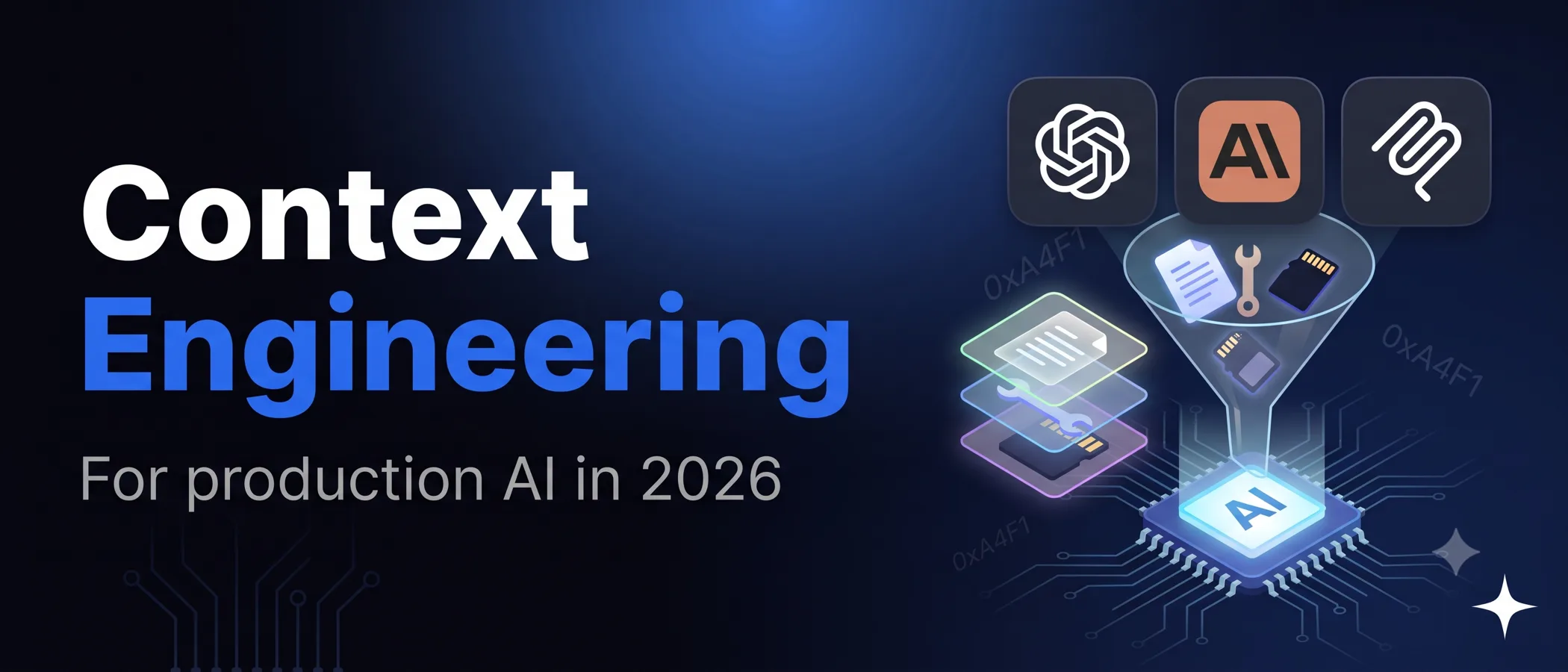
In practice these are layers you stack. A common production shape is a model fine tuned for the right voice and format, grounded with RAG for current and private facts, and wrapped in an agent when the task requires action. Teams that frame this as RAG versus fine tuning versus agents tend to over engineer one layer and under build the others, so the more useful question is which layers your problem needs. Retrieval is itself one technique within context engineering, which also covers tools, memory, and caching.
What each looks like in practice
- RAG in practice. A support assistant that answers from your current help center and policy documents, an internal search tool that cites the exact source document, or a product copilot grounded in your live catalog. The model stays generic and your data does the work.
- Fine tuning in practice. A model trained to always reply in your brand voice and a fixed output structure, a classifier that routes thousands of tickets a day, or a domain model that reasons in a specialized field such as legal or clinical text. Here the behavior is trained into the weights.
- Agents in practice. A research agent that gathers information across several sources and compiles a brief, or an operations agent that reads a request, updates the right systems, and reports back. In both cases the model takes action as well as answering.
The stakes, by the numbers
AI that takes actions is spreading quickly. Gartner forecasts that 40% of enterprise applications will feature task specific AI agents by the end of 2026, up from under 5% in 2025. Discipline has not kept pace with capability, and Gartner also predicts that more than 40% of agentic AI projects will be cancelled by the end of 2027, citing escalating costs, unclear business value, and inadequate risk controls. The same gap shows up at every layer. McKinsey reports that nearly nine in ten organizations now use AI in at least one function, yet only around 6% reach high performer impact, and MIT research covered by Fortune found that about 95% of generative AI pilots delivered no measurable profit impact. None of this is a reason to avoid AI. The teams that get results pick the simplest layer that solves the problem and wrap it in real evaluation and guardrails instead of reaching for the most complex technique first.
How to choose
- Need current, private, or citable knowledge? Start with RAG.
- Need consistent voice, strict format, or specialized reasoning? Add fine tuning.
- Need the system to take multi step actions across tools? Wrap it in an agent.
- Need all three? That is normal for serious products, and the order above is usually the right sequence to build them in.
Our Take
We build production AI systems across all three approaches, so we have no reason to oversell any one of them. The mistakes we see most are reaching for fine tuning when RAG would have shipped in a fraction of the time, and deploying agents without the evaluation and guardrails that keep them trustworthy. We start with the simplest layer that solves the problem and add complexity only when the problem demands it. That habit does more than any single technique to turn an AI demo into a system you can put in front of customers, and it sits at the center of how we approach AI native development. To scope the right approach for your use case, see our AI development, generative AI, and AI integration services, or hire LangChain and AI engineers directly.
The Bottom Line
RAG, fine tuning, and agents answer three different questions, namely what the model knows, how it behaves, and what it can do. Start with RAG for grounded, current knowledge, bring in fine tuning when behavior must change, and add an agent on top when the work needs multi step action. The strongest systems combine them deliberately and use each layer for the job it fits. If you want help building the right mix for your product, our AI development team can scope it with you, or you can start a conversation.
Frequently Asked Questions
What is the difference between RAG and fine tuning?
RAG changes what a model knows, while fine tuning changes how it behaves. RAG retrieves external knowledge at query time and feeds it to an unchanged model. Fine tuning trains the model on your examples and adjusts its weights, which is why it suits behavior problems more than knowledge gaps.
Which delivers better business outcomes, RAG or fine tuning?
Neither wins in the abstract. RAG delivers the better outcome when business value depends on current, private, or citable knowledge, because it grounds answers in sources you control and updates without retraining. Fine tuning comes out ahead when value depends on strict formatting, consistent tone, or lower cost and latency on a high volume task. Pick the one that removes your bottleneck, and combine them when the workflow needs both knowledge and behavior.
Should I use RAG or fine tuning first?
Start with RAG in most cases. It ships faster, keeps knowledge current, grounds answers in sources you control, and keeps data private. Add fine tuning later, and only when you need behavior that prompting and RAG cannot deliver, such as a consistent voice or strict output format.
Is RAG cheaper than fine tuning?
Not necessarily, because the two spend money at different points. RAG adds recurring cost per query for retrieval and extra context tokens, with little upfront investment, while fine tuning puts the cost into training up front, after which inference can be cheaper and faster per query. Which is cheaper overall depends on volume and how much context each query needs.
Where do AI agents fit in?
Agents are an orchestration layer that lets a model plan and act across multiple steps and tools. An agent often runs on a RAG grounded, sometimes fine tuned model underneath, so it complements the other two approaches. Reach for one when the task requires the system to take action.
Can I use RAG and fine tuning together?
Yes, and serious products often do. A common pattern is to fine tune for tone and format while layering RAG on top for factual grounding, so you get both a consistent voice and current, citable knowledge.
Why do most enterprise teams start with RAG?
Because it is faster to deploy, keeps data in your control, reflects the latest indexed version of your knowledge, and lets you cite sources for trust and compliance. Those properties fit most business use cases, which is why RAG is the common entry point before any fine tuning.
Which approach keeps data under our control or runs on premises?
RAG, because it keeps your proprietary data in a store you own and retrieves from it at query time rather than sending it into model training. The retrieval layer can run inside your own network or on premises, and you can pair it with a model you host yourself, so sensitive content never leaves your environment. That control is a large part of why regulated teams reach for RAG first.
How does Unico Connect choose?
We start with the simplest layer that solves the problem, usually RAG, add fine tuning only when behavior must change, and build agents with the guardrails and evaluation that production requires. We scope this with you before building.