









Multi-Model Production AI, Why One LLM Is Not Enough

Vasim Gujrati
Solutions Architect, AI & Platforms, Unico Connect
In this article
Quick Answer
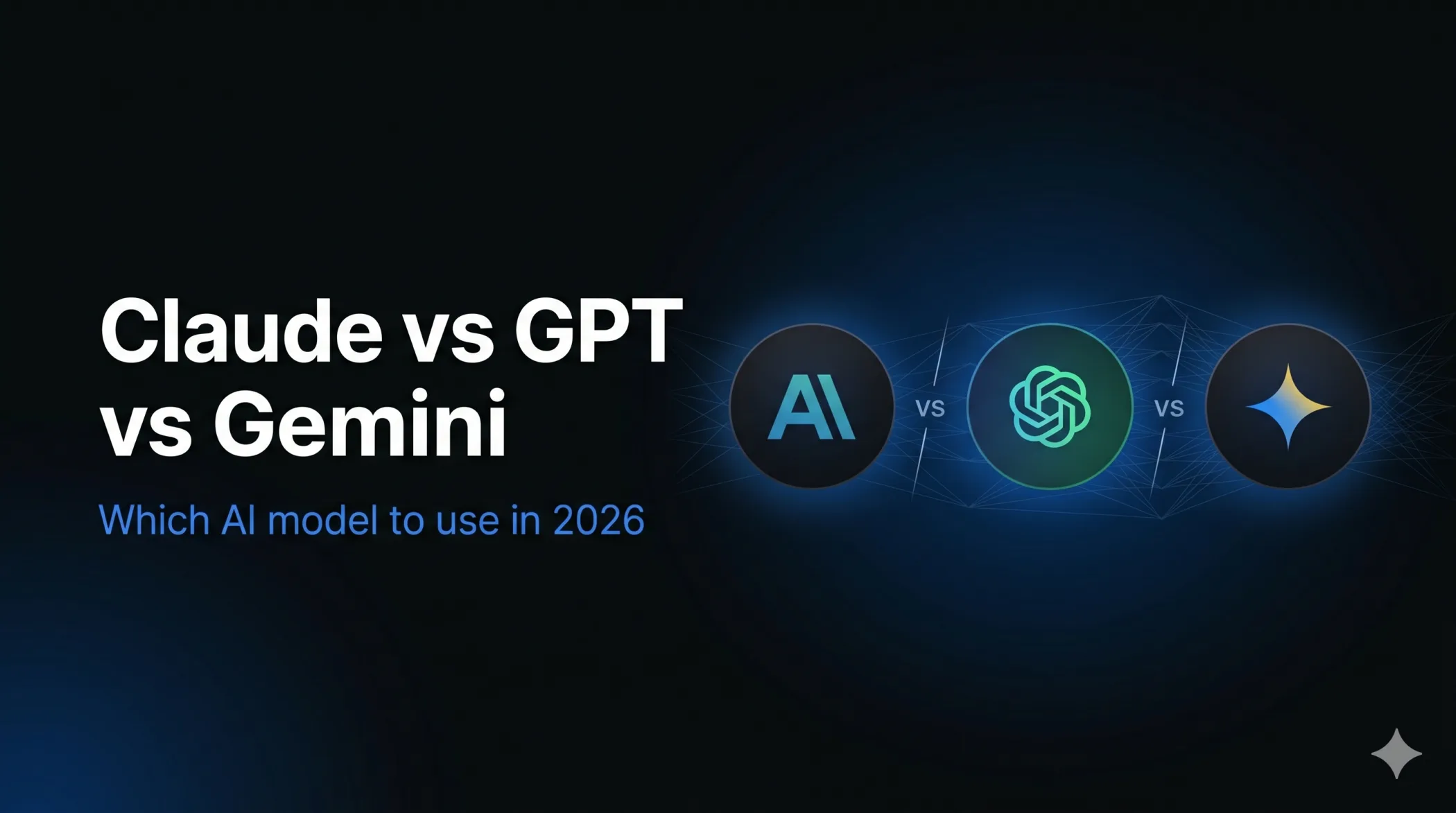
Production AI teams in 2026 do not run on a single LLM. Different models are strong at different tasks, and their costs differ by roughly 100x. Any single vendor is also a single point of failure. Microsoft adding Anthropic Claude alongside OpenAI in Copilot is the latest sign that serious enterprise AI is multi-model. Whether to use more than one model is settled, so the practical question is how to route between them.
The News That Made the Question Loud
In March 2026, Microsoft expanded Copilot to use multiple foundation models in mainline chat through its Frontier program, including Anthropic Claude alongside the OpenAI GPT family, after first adding Claude to Researcher and Copilot Studio in September 2025. Malay Parekh put it this way to DesignRush News.
"Microsoft working with multiple models, including Anthropic alongside OpenAI, is a practical move. Different tasks call for different strengths, and relying on a single model doesn't hold up across the range of work enterprises expect AI to handle."
When the largest AI deployment in the enterprise software market is multi-model, the strategy has stopped being experimental and become the baseline.
Why a Single-LLM Stack Fails at Scale
Production teams move off single-vendor stacks for four reasons.
1. Task-Specific Reasoning Strengths
In practice, as of 2026, each model family leads in a different area.
- Claude models lead on long-context reasoning, code generation, and instruction following in complex workflows.
- GPT-4o and successors are ahead on multimodal use cases, real-time speech, and image generation.
- Gemini is strongest on grounded factual answers through Google Search integration and on extremely long context (1M+ tokens).
- Llama and open-weight models (Llama 4, Qwen, DeepSeek) win on cost-per-token when the task is high-volume and well-bounded.
No single vendor is best at all four, and a real product almost always needs at least two.
2. Cost Asymmetry
LLM pricing varies by roughly 100x between the cheapest and most expensive production-grade options. Routing a low-risk classification task to a $0.10/M-token model and a high-stakes reasoning task to a $15/M-token model decides whether a feature is profitable or runs over budget.
3. Latency Asymmetry
The same model can have very different latency depending on the deployment endpoint (provider-hosted vs Bedrock vs Azure vs self-hosted). For latency-sensitive user-facing features, you need a fast model to fall back on.
4. Vendor Risk
Anyone who lived through the December 2024 OpenAI outage knows the cost of single-vendor dependency. A production AI feature that runs on one model is one outage away from broken.
How to Architect Multi-Model Routing
A working multi-model stack has four layers. Most teams build them in this order.
Layer 1, A Model Abstraction
Wrap every model call in a single interface. Application code says "summarise this document" and the abstraction picks the model. Tools like LiteLLM and Portkey make this trivial.
Do not skip this layer. Calls to specific provider SDKs scattered through the codebase make every later layer harder.
Layer 2, Routing Logic
The router decides which model handles which call, and these are the common inputs it routes on.
- Task class. Classification, extraction, generation, reasoning, code and multimodal work each map to a preferred model.
- Context length. Anything over 200K tokens goes to a long-context model, whatever the task.
- Latency budget. Fast models take the user-facing realtime calls.
- Cost ceiling. Bulk processing goes to cheap models unless quality demands more.
- Risk level. Send compliance-sensitive calls to providers with the right data-residency, BAA and SOC 2 coverage.
Start with a simple lookup table. Move to a semantic router (a small model that classifies the request and picks the executor) only when the table gets unwieldy.
Layer 3, Fallback and Retry
Every primary model needs a fallback. The failures you see in production are rate limits, transient 5xx errors, content filter false positives and latency exceedances. The fallback chain handles each one.
For a critical path, a typical chain runs in this order.
- The primary is Claude Sonnet on the Anthropic API.
- Fallback 1 is the same model on AWS Bedrock, which runs on different infra.
- Fallback 2 is GPT-4o on Azure OpenAI.
- The last resort is a cached canned response or human escalation.
Layer 4, Evaluation Across Models
Multi-model stacks need eval pipelines that run across all candidate models. When you tune a prompt, check that it works on the primary and that the fallbacks degrade gracefully. Our piece on continuous AI evaluation sets out the eval discipline behind this.
Which Model for Which Job (A Starting Point)
Adjust this starting routing table to your own context.
| Task | Primary Model | Fallback |
|---|---|---|
| Long-document analysis (50K+ tokens) | Claude Sonnet | Gemini Pro |
| Code generation and review | Claude Sonnet | GPT-4o |
| Real-time voice and multimodal | GPT-Realtime | Gemini Flash |
| Bulk classification (10K+/day) | Llama 4 / Qwen on Bedrock | GPT-4o-mini |
| Function calling at scale | GPT-4o-mini | Claude Haiku |
| Grounded factual Q&A | Gemini with Search | Claude Sonnet + RAG |
Each row is a defensible default, and your own use case may call for a different choice.
What This Means for Procurement
A multi-model stack changes how you evaluate AI vendors. The question stops being "which model is best?" and becomes "which providers do we have credible access to, with adequate compliance coverage, and a clear migration path between them?"
That has a few practical consequences for how you buy.
- Negotiate access to at least two foundation-model families (for example Anthropic and OpenAI, or Anthropic and Gemini).
- Prefer providers available across multiple clouds (Claude on Bedrock, GPT on Azure) so cloud lock-in does not compound model lock-in.
- Confirm BAA, DPA and data-residency coverage for every model used on regulated workloads.
The Bigger Point
The pitch that one model can handle everything was always a vendor narrative. The teams shipping reliable AI products in 2026 design for multiple models from the start, routing on task fit and cost with explicit fallback semantics. With Copilot, Microsoft is catching up to that design, which confirms a practice those teams already follow.
Frequently Asked Questions
Why does Microsoft use both OpenAI and Anthropic in Copilot?
Microsoft uses both because the two model families are strong at different kinds of work. Claude from Anthropic leads on long-context reasoning and code-heavy workflows, while the OpenAI GPT family leads on multimodal and realtime use cases. Microsoft routes between them based on the task, which is how most production AI teams now work internally.
How much does multi-model routing cost to set up?
A first multi-model implementation takes 1 to 2 engineer weeks, covering a model abstraction layer, a simple routing table and one fallback. The tooling is open source (LiteLLM and the Portkey AI Gateway) or low-cost. The ongoing cost is eval and tuning, which means checking that each model in the routing table keeps producing acceptable output for the tasks assigned to it.
When should I route to open-weight models vs hosted APIs?
Open-weight models (Llama 4, Qwen, DeepSeek) make sense for high-volume, well-bounded tasks where cost dominates, such as bulk classification, extraction from known formats and internal summarisation. Hosted APIs (Claude, GPT-4o, Gemini) remain the default for complex reasoning, multimodal, and user-facing realtime use cases. Most production stacks run both.
What is the biggest risk of multi-model architecture?
The biggest risk is inconsistent behaviour across models. The same prompt routed to two different models will produce subtly different outputs, and without an eval layer that catches the drift, you ship an inconsistent product. The fix is the same continuous-evaluation discipline that single-model stacks need, applied across the whole routing table.
Do I need different prompts per model?
Often, yes. Different model families respond to different prompt styles. Claude prefers XML-tagged structure, GPT models do better with markdown and few-shot examples, and Gemini tends to follow JSON-mode constraints reliably. That is why a multi-model stack stores a prompt for each (task, model) pair instead of one prompt per task.
This article expands on remarks by Malay Parekh in DesignRush News, April 2026. Unico Connect designs and builds production multi-model AI systems for SaaS and enterprise clients. See our Generative AI service and AI Integration service. The method behind picking each model in the stack is in how to choose an AI model for production.