









Scalable Cloud Architecture in 2025, a Strategic Guide for CTOs

Saurav Jagdale
Technical Lead, Unico Connect
In this article
- Quick Answer
- Key Takeaways
- Why Scalability Should Be a CTO's Top Cloud Priority
- Core Principles of Scalable Cloud Architecture
- Multi-Cloud, Hybrid, or Serverless: What's Right for You?
- Governance, Security, and Cost Optimisation at Scale
- Key Tools and Technologies for Modern Cloud Architectures
- Mistakes CTOs Must Avoid While Scaling Cloud Systems
- Frequently Asked Questions
- Conclusion
Cloud architecture decisions made today shape how a company performs three years from now. For CTOs in 2025, the question isn't whether to design for scalability — it's how to do it cost-effectively, securely, and without locking the business into yesterday's choices. This guide walks through the principles, deployment models, governance practices, and tooling that define modern scalable cloud architecture, framed for CTOs making strategic decisions.
Quick Answer
A scalable cloud architecture in 2025 combines decoupled microservices, stateless design, event-driven and serverless patterns, multi-region deployment, and disciplined cost governance. The strongest CTO playbook: pick the right deployment model (serverless, hybrid, or multi-cloud) for your workload, invest in observability and governance from day one, and use Kubernetes plus CI/CD plus FinOps tooling to keep delivery fast and costs predictable.
Key Takeaways
- Scalability is a business requirement, not just a technical one — uptime drives revenue
- Core principles: decoupled microservices, stateless design, event-driven patterns, deep observability
- Deployment model depends on workload: serverless for elasticity, hybrid for legacy, multi-cloud for resilience
- Strong governance, security, and cost optimisation are non-negotiable at scale
- The strongest stacks combine Kubernetes, CI/CD, observability tooling, and FinOps discipline
Why Scalability Should Be a CTO's Top Cloud Priority
Modern businesses operate at a scale where downtime is measured in revenue, not just inconvenience. A 30-minute outage during peak traffic can mean millions in lost transactions, regulatory exposure, and lasting damage to user trust. Scalable cloud architecture is the foundation that keeps these costs from becoming existential.
For CTOs, the strategic challenge isn't whether to invest in scalability — it's where to invest most efficiently. The answer comes from understanding the principles that actually drive scalability, the deployment models that fit your workload, and the operational disciplines that keep the architecture working as it grows.
Core Principles of Scalable Cloud Architecture
Five principles consistently produce scalable systems:
- Decoupled microservices — break monoliths into small, independently deployable services
- Stateless design — no user session data on servers; any server can handle any request
- Event-driven and serverless patterns — elastic resources that scale to actual demand
- Multi-region deployment — proximity to users, fault isolation across geography
- Observability and fault tolerance built-in — system behaviour is visible and failures are contained
These principles compound. Skipping any of them creates a ceiling that's hard to remove later. Unico Connect's cloud and DevOps services build these principles into architecture from day one.
Multi-Cloud, Hybrid, or Serverless: What's Right for You?
The right cloud deployment model depends on workload type, compliance requirements, existing infrastructure, and team capability.
Hybrid Cloud
Combines on-premises infrastructure with public cloud. Best for organisations with legacy systems, strict data sovereignty requirements, or specific regulatory constraints that prevent full public cloud adoption. Common in financial services, healthcare, and government.
Multi-Cloud
Spreads workloads across multiple public cloud providers. Best for organisations seeking vendor lock-in resilience, geographic coverage that no single provider offers, or specific service capabilities (e.g., AI on GCP, identity on Azure, compute on AWS). Increases operational complexity but reduces strategic risk.
Serverless
Runs workloads on managed compute (AWS Lambda, Azure Functions, GCP Cloud Functions) without provisioning servers. Best for event-driven workloads, unpredictable demand, and teams that want to minimise operational overhead. Cost-efficient for variable traffic; can be expensive for sustained high traffic.
Most enterprises use all three patterns simultaneously — serverless for event-driven workloads, hybrid for legacy integration, multi-cloud for resilience and specific capabilities.
Governance, Security, and Cost Optimisation at Scale
Three disciplines separate scalable cloud architectures that work from those that collapse:
Governance
Define clear ownership, naming conventions, tagging policies, and review processes. Implement guardrails (AWS Service Control Policies, Azure Policy, GCP Organisation Policies) that prevent accidental missteps. Without governance, large cloud footprints become impossible to manage.
Security
Apply cloud security best practices consistently: Identity and Access Management with least privilege, encryption everywhere (TLS 1.3, AES-256 at rest), regular security audits, automated vulnerability scanning, and centralised logging for compliance. The OWASP Cloud Top 10 and CIS Benchmarks are good starting points.
Cost Optimisation
FinOps discipline includes rightsizing resources, using reserved instances or savings plans for predictable workloads, implementing aggressive autoscaling, leveraging spot instances for fault-tolerant work, and continuously monitoring cost-to-value ratios. Strong cost optimisation typically saves 30–50% over an unoptimised baseline.
Key Tools and Technologies for Modern Cloud Architectures
The modern cloud architecture toolkit:
- Kubernetes — container orchestration at scale; the de facto standard for production workloads
- CI/CD pipelines — GitHub Actions, GitLab CI, ArgoCD, CircleCI for automated delivery
- Observability stacks — Datadog, New Relic, Grafana, Prometheus, OpenTelemetry
- Infrastructure as Code — Terraform, Pulumi, AWS CDK for reproducible infrastructure
- Service meshes — Istio, Linkerd for managing service-to-service communication at scale
- AI-driven scaling and ops — predictive autoscaling, anomaly detection, AIOps platforms
The strongest stacks combine these intentionally rather than accumulating tools haphazardly.
Mistakes CTOs Must Avoid While Scaling Cloud Systems
Three pitfalls catch many cloud scaling efforts:
- Over-relying on vendor tools without evaluation — what works in vendor demos often fails in production; pilot before committing
- Scaling without observability — without deep monitoring, performance issues become invisible until they're catastrophic
- Skipping cost governance — cloud costs compound silently; without FinOps discipline, bills can grow 2–3x what they should
The strongest CTOs invest in observability and cost governance before — not after — scale becomes a problem.
Frequently Asked Questions
What's the difference between cloud-native and scalable architectures?
Cloud-native architecture uses cloud-specific patterns — containers, microservices, serverless, managed services — to fully exploit the cloud model. Scalable architecture is the property of handling increased workloads efficiently. Cloud-native architectures are usually scalable; not all scalable architectures are cloud-native.
Is Kubernetes necessary for scalable systems?
No, but it's the standard for large-scale container deployments. Smaller workloads can run on managed services (ECS, App Engine, Cloud Run) without Kubernetes complexity. Larger, more complex distributed systems benefit from Kubernetes orchestration and the rich ecosystem around it.
How can I reduce costs while scaling?
Through five strategies: rightsizing resources to actual usage, using reserved instances or savings plans for predictable workloads, aggressive autoscaling, spot instances for fault-tolerant work, and continuous FinOps review with tools like AWS Cost Explorer, CloudHealth, or Vantage. Typically saves 30–50%.
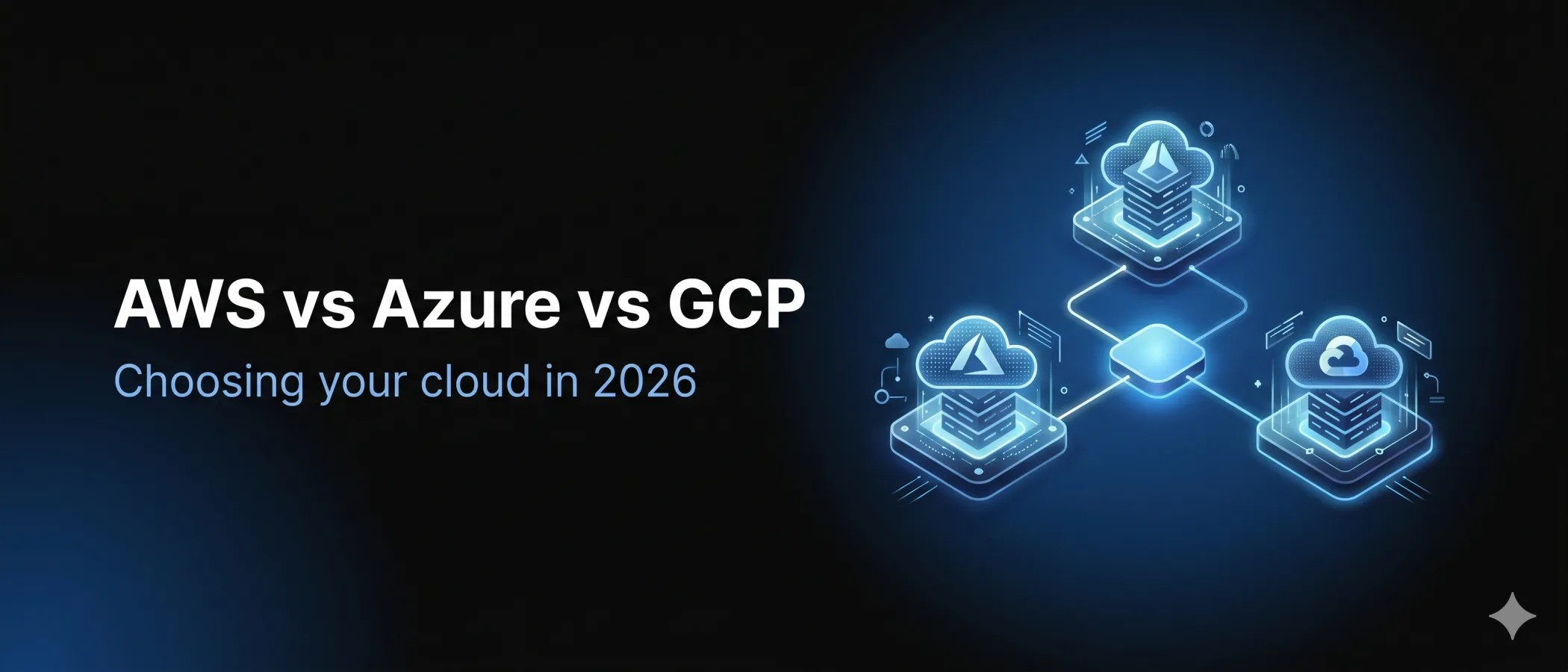
How do you choose between AWS, Azure, and GCP?
It depends on workload, team skills, and strategic context. AWS leads on breadth and maturity. Azure leads when Microsoft infrastructure is already in place. GCP leads on data and AI capabilities. Most large enterprises use multiple clouds for different workloads.
What's the role of AI in modern cloud architecture?
AI now powers predictive autoscaling, anomaly detection, automated remediation, intelligent cost optimisation, and security threat detection. AIOps tooling reduces operational overhead and surfaces issues before they affect users. The strongest cloud teams in 2025 use AI as a force multiplier across operations.
How do I evaluate cloud architecture maturity?
Look at five dimensions: scalability (handles 10x current load gracefully), reliability (achieves SLA targets), security (passes regular audits), cost efficiency (cost-per-request below industry benchmarks), and developer productivity (deployments per day, time-to-recover from failures). Strong architectures score well on all five.
When should I refactor a legacy system to scalable cloud architecture?
When the legacy system has become a binding constraint on the business — slow delivery, frequent outages, ceiling on user growth, or compliance gaps. Refactor is a strategic investment; only do it when the cost of not doing it has become real. Many enterprises run hybrid (legacy + new) indefinitely.
Conclusion
Scalable cloud architecture is no longer optional for serious businesses — it's the operating layer that everything else depends on. The strongest CTOs treat it as a strategic discipline: clear principles, the right deployment model for the workload, deep governance and cost discipline, and a thoughtful tooling stack. To explore how Unico Connect designs scalable cloud architectures for enterprises, see our cloud and DevOps services.