
AI Agents That Work in Production, Not Just in Demos
We build autonomous agents that handle multi-step business workflows - processing documents, managing orders, automating compliance - with the guardrails and reliability that production environments demand.






Why We Build Agents Differently
The gap between a working demo and a production agent is where most AI projects stall. We close that gap because we build and operate agents for our own teams first.
Demo Agent
Clean Input, Happy Path
Agent works perfectly with well-structured test data. Demos impressively. Stakeholders approve the concept.
Linear Workflow
Single path from input to output. No branching logic for exceptions. No recovery when something unexpected happens.
Basic Prompt Engineering
System prompts tuned for ideal inputs. No handling for ambiguous, incomplete, or adversarial user messages.
No Cost Controls
Token usage unchecked. No limits on API calls. Fine in a demo, unsustainable at scale with real traffic.
Silent Failures
When the agent fails, it fails quietly. No escalation path. No monitoring. No way to know it broke until a user complains.
Production Agent (How We Build)
Input Validation & Guardrails
Every input validated before processing. Guardrails prevent hallucination, scope drift, and unsafe outputs. Built from real-world edge cases.
Branching Logic & Error Recovery
Agents handle exceptions, retry with backoff, and degrade gracefully. When they cannot complete a task, they escalate — not fail silently.
Human-in-the-Loop Escalation
Transparent escalation paths when confidence is low. Full context preserved so the human picks up where the agent left off.
Cost Controls & Rate Limiting
Token budgets, API rate limits, and cost monitoring built in from day one. Production-ready means financially sustainable at scale.
Continuous Monitoring & Improvement
Every agent action is logged and monitored. Performance tracked, failures surfaced, and the agent improves based on real production data.
What We Build

Workflow Automation Agents
Agents that execute multi-step processes across systems - triggering from events, pulling data, processing it, updating records, and notifying stakeholders.

Document Intelligence Agents
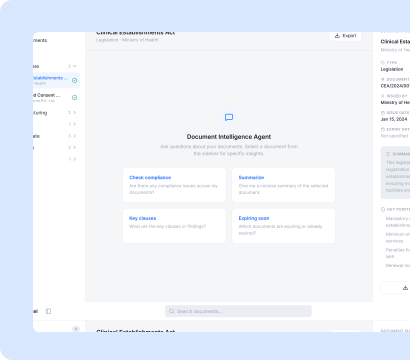
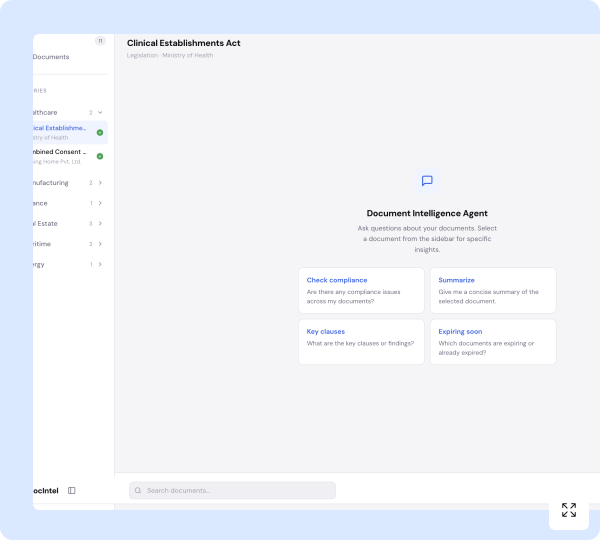
Extract, classify, validate, and route information from documents - invoices, contracts, compliance filings - into structured, system-ready output.

Conversational Commerce Agents
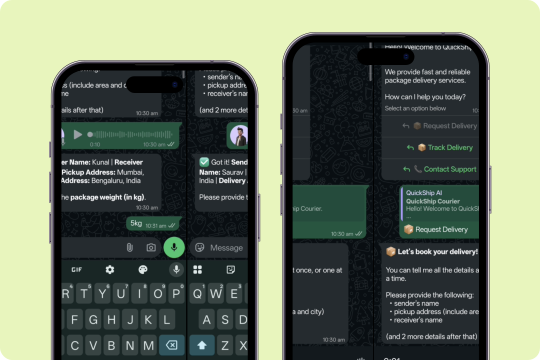
AI agents on WhatsApp, web, and voice that take orders, confirm transactions, check availability, and escalate to humans when needed.

Multi-Agent Systems
Workflows where specialized agents collaborate - one researches, another analyzes, a third drafts, a supervisor validates. For tasks too complex for a single agent.

Internal Operations Agents
Agents for your team: meeting summarizers, sales prep assistants, reporting automation, knowledge base search. Built from patterns we run internally.

Agent Monitoring & Optimization
Post-deployment tracking of accuracy, cost, latency, and satisfaction. Continuous improvement loops that refine agent behavior from real usage data.
Technology We Work With













Our Work

 AI Demo / Cross-Industry
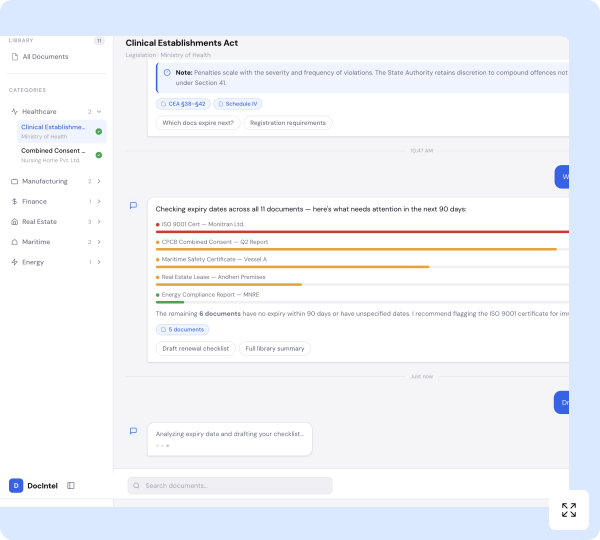
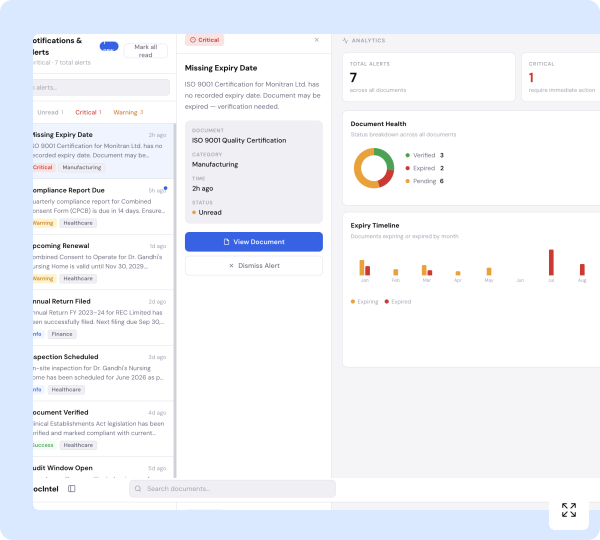
Built an AI agent that processes unstructured documents with 85% extraction accuracy
85%
Extraction Accuracy
70%
Faster Document Processing
90%
Reduction in Manual Review
 AI Demo / B2B Commerce
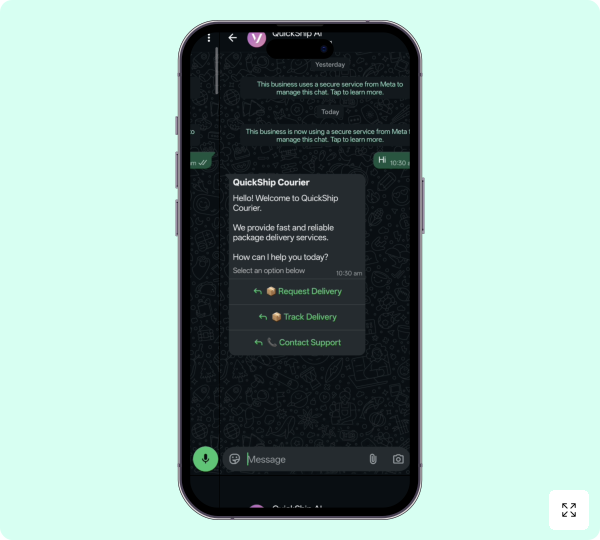
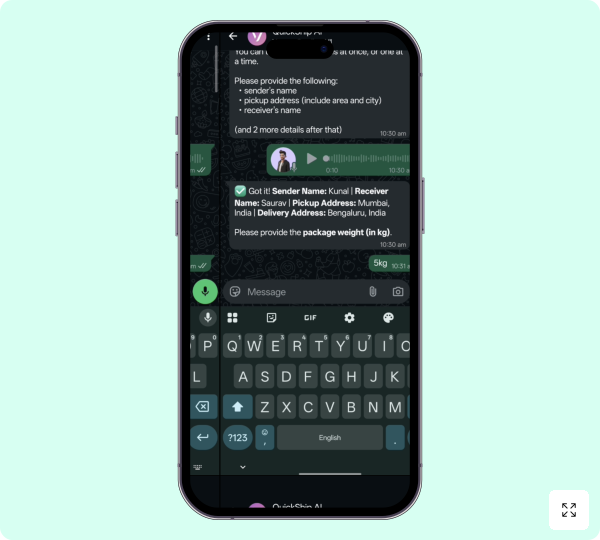
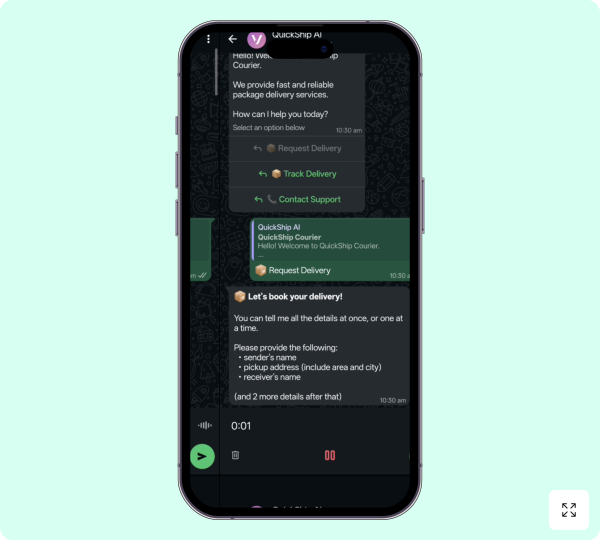
Deployed a WhatsApp agent that processes B2B orders 60% faster across 3 languages
60%
Faster Order Processing
40%
Reduction in Order Errors
3
Languages Supported
 AI Demo / Enterprise Operations
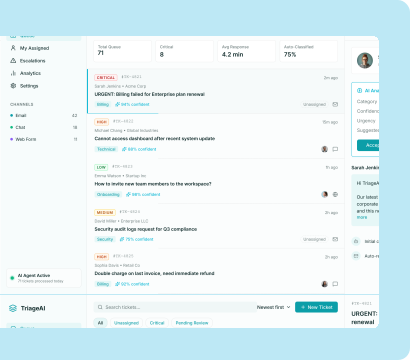
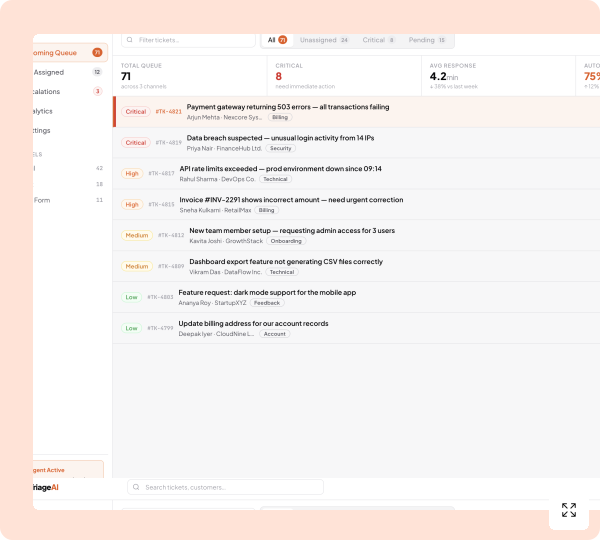
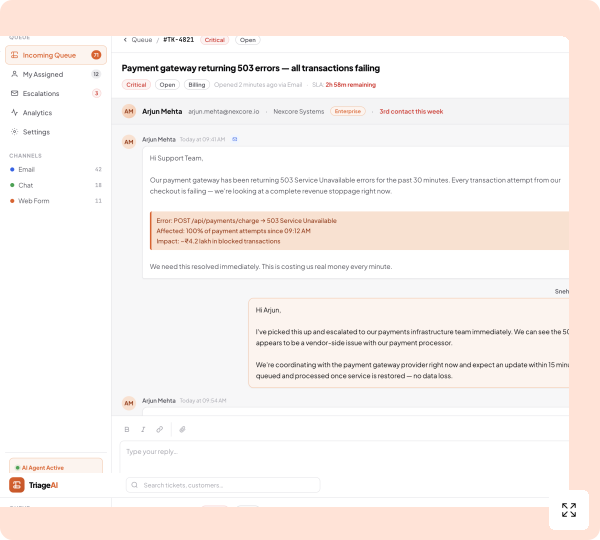
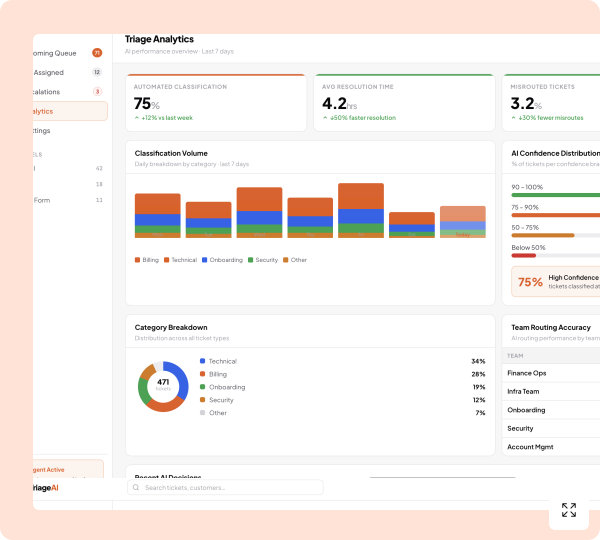
Automated 75% of support ticket classification with AI-driven triage and routing
75%
Automated extraction and classification
50%
Faster Resolution Time
30%
Fewer Misrouted Tickets

Have a workflow that is too complex for simple rules but too repetitive for your team?
Talk to an ExpertFrequently Asked Questions
AI Agent Engineering Insights
View all blogs AI Development
December 16, 2025
How Agentic AI Can Automate Complex Workflows in Enterprises
Read More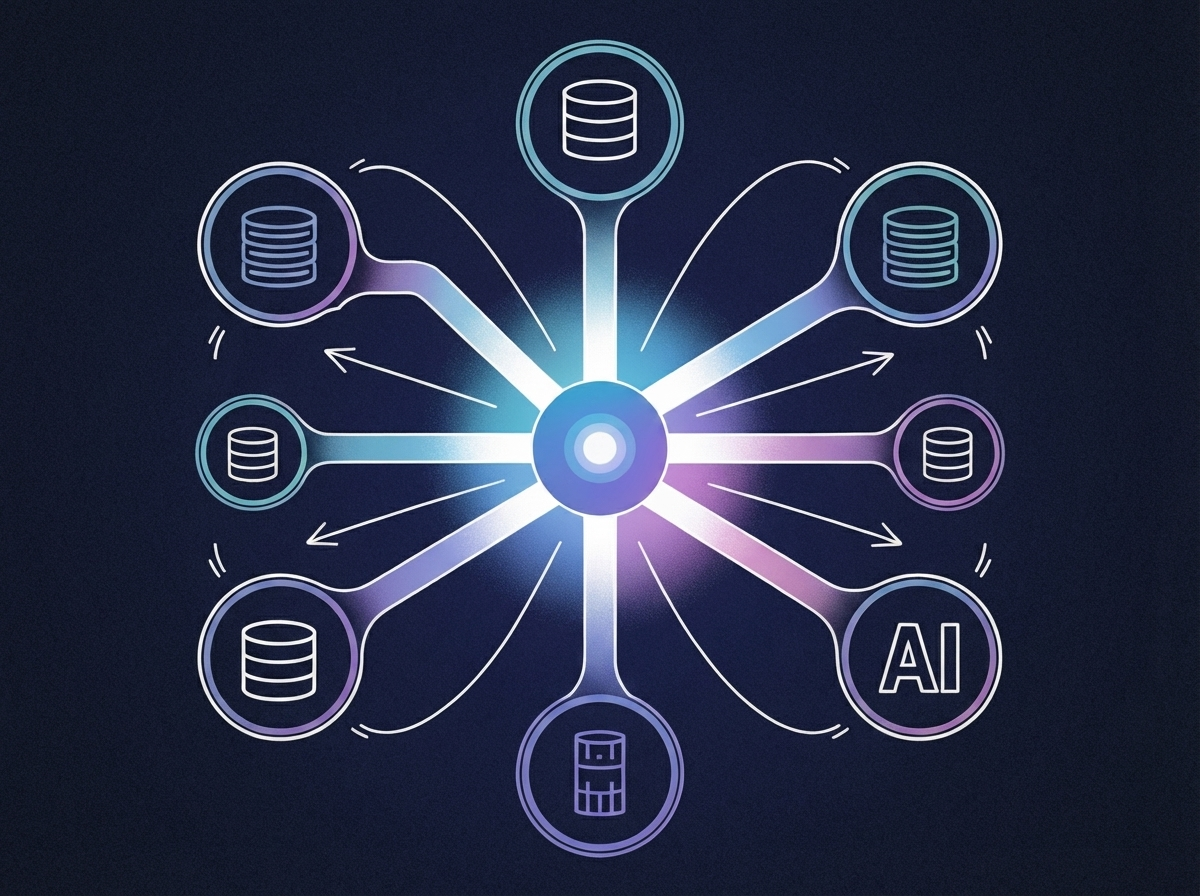 AI Development
April 27, 2026
MCP in Production: Building AI Agents with Model Context Protocol
Read More AI Development
March 2, 2026