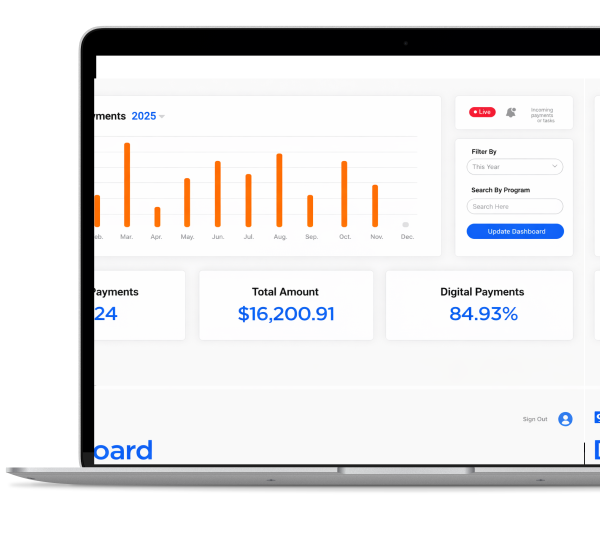
AI-Powered QA & Testing That Ships Confidence, Not Just Code
Quality assurance driven by AI-generated test coverage, automated regression suites, and intelligent defect detection. Testing that keeps pace with accelerated development cycles.






Why Testing Must Evolve With AI-Augmented Development
If nearly 80% of code is AI-generated, the testing layer needs to be equally rigorous. AI does not replace testers - it handles breadth so humans focus on judgment.
Traditional QA Process
Manual Test Case Writing
Test cases written by hand from requirements. Coverage limited by what testers think to test. Obvious paths covered, edge cases missed.
Sequential Test Execution
Test suites run one at a time. Regression testing blocks releases. Full suite execution takes hours or days.
Manual Cross-Browser Testing
Checking layouts and functionality across browsers and devices manually. Inconsistencies caught late or missed entirely.
Bug Triage & Reporting
Bugs documented manually. Priority based on tester judgment. Duplicate reports and missed context slow resolution.
Release Sign-Off
Manual sign-off based on pass/fail counts. Confidence level depends on coverage, which depends on time available.
AI-Native QA Process
AI-Generated Test Suites
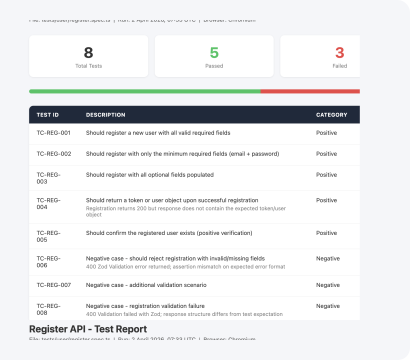
AI generates comprehensive test cases from requirements — functional paths, edge cases, negative scenarios, and boundary conditions covered automatically.
Parallel Automated Execution
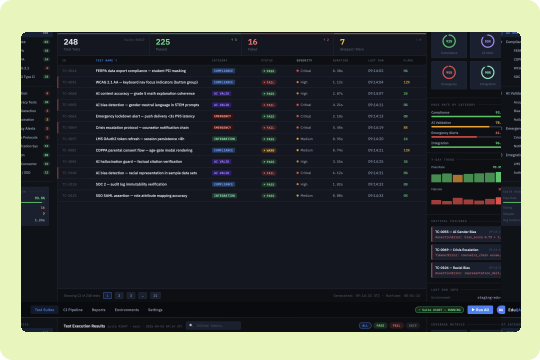
Full regression suites run in minutes, not days. Every pull request validated before merge. Testing is not a bottleneck.
AI Visual Regression Testing
Automated visual comparison across devices and browsers. Layout shifts and rendering inconsistencies caught before any human would notice.
Exploratory Testing by Humans
Human testers focus on what machines cannot - business logic validation, usability assessment, and the judgment calls that require domain knowledge.
Continuous Quality Validation
Every code change triggers automated validation. Confidence in releases is based on comprehensive coverage, not available time.
Capabilities

AI-Generated Test Suites
Comprehensive test cases generated from requirements using AI. Covers functional, edge-case, and negative testing scenarios that manual processes under-cover.

Automated Regression Testing
Selenium, Cypress, and Playwright automation running with every deployment. Catches regressions before they reach users, integrated into CI/CD.

Mobile App Testing
Cross-device and cross-platform testing for iOS and Android. Performance profiling, memory leak detection, and platform-specific compliance using Appium.

Performance & Load Testing
Validate application behavior under real-world traffic. Identify bottlenecks, establish baselines, and set up continuous performance monitoring.

Visual Regression Testing
AI-driven screenshot comparison across browsers and devices catching layout shifts, rendering issues, and UI inconsistencies human reviewers miss.

Security Testing
Vulnerability assessment, penetration testing, and security-focused code review. Automated SAST/DAST integrated into the development pipeline.
Technology We Work With






Our Work

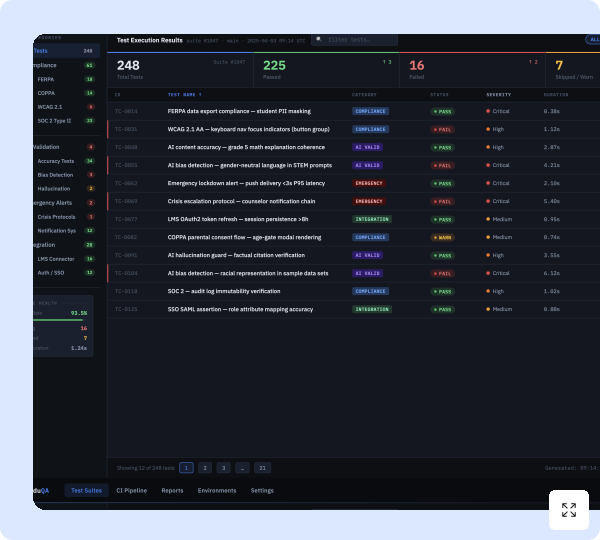
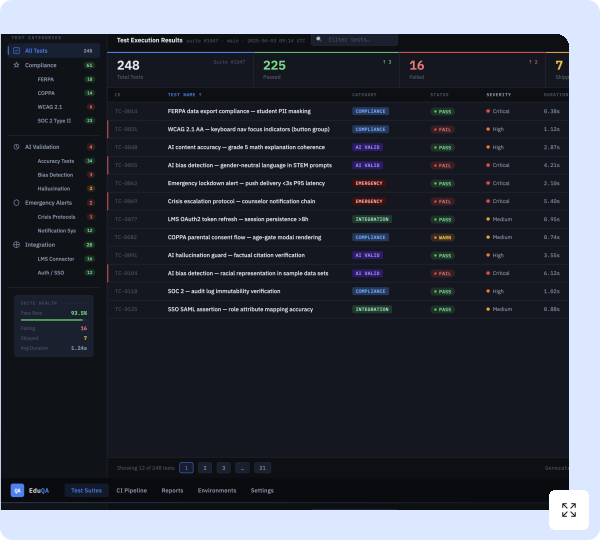
 Education🇺🇸 USA
Achieved zero critical defects in production testing safety-critical workflows for 15,000+ users
95%
Compliance Document Accuracy
40%
Faster Test Cycles
Zero
Critical Defects in Production

 Enterprise SaaS
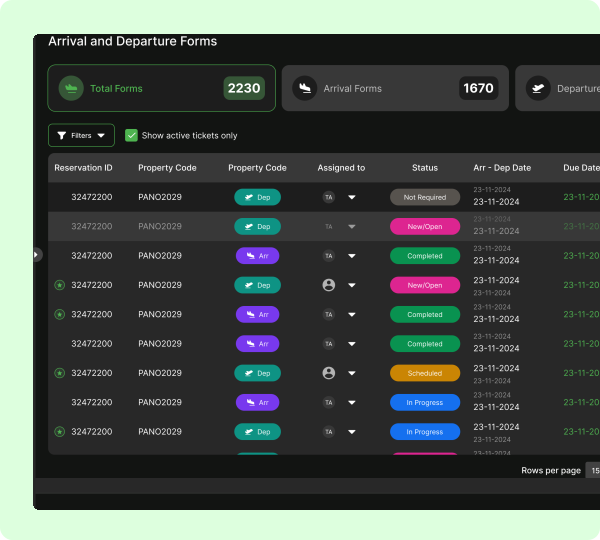
 Achieved 80% test automation coverage cutting regression cycles by 50%
80%
Test Automation Coverage
50%
Faster Regression Cycles
35%
Reduction in Production Defects

 Fintech🇺🇸 USA
Delivered 99.9% transaction accuracy and 100% regulatory compliance pass rate
99.9%
Transaction Accuracy
100%
Regulatory Compliance Pass Rate
60%
Faster Release Cycles