








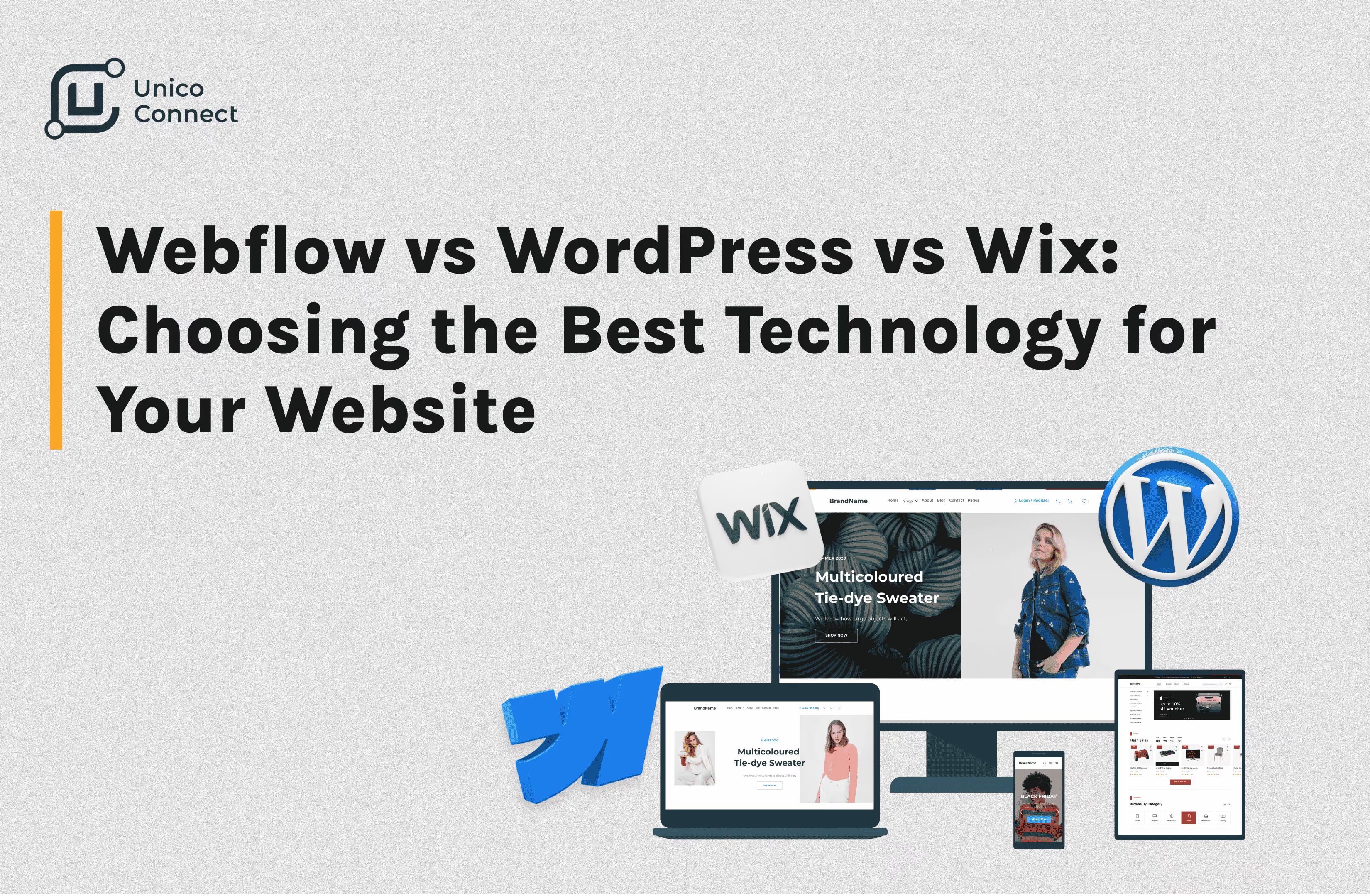
Webflow vs WordPress vs Wix, Which CMS Is Right for Your Website?

Anurag Kurmi
Senior Full Stack Engineer, Unico Connect
In this article
Choosing the right CMS is one of the most consequential decisions for any business website. Get it right and your team ships content fast, your site performs well, and your platform scales with the business. Get it wrong and you're locked into months of friction. This guide compares the three most-considered options — Webflow, WordPress, and Wix — honestly so you can pick the right platform for your specific needs.
Quick Answer
Webflow wins for design-led businesses that want visual control with clean code and built-in hosting. WordPress wins for businesses that need maximum flexibility, plugin ecosystem, and full ownership of the stack. Wix wins for non-technical founders who need a simple site fast. The right choice depends on team skills, design needs, growth ambitions, and how much you value flexibility vs ease of use.
Key Takeaways
- Webflow: design-led, visual editor, clean code, built-in hosting
- WordPress: maximum flexibility, huge plugin ecosystem, full ownership
- Wix: easiest for non-technical users, fast time-to-launch
- Webflow is the strongest choice for modern brand-driven businesses
- WordPress remains the right choice for complex sites with custom requirements
What Is a CMS and Why Your Business Needs One
A CMS (Content Management System) lets non-technical team members create, edit, and publish web content without writing code. For businesses, that means:
- Easy content updates — marketing, product, and ops teams can manage content directly
- Improved collaboration — multiple users edit the same site simultaneously
- SEO optimisation — built-in tools for meta tags, structured data, sitemaps
- Scalability — the platform grows with the business
- Cost-effective — less developer dependency over time
The right CMS removes engineering as a bottleneck on content velocity.
Comparing the Top 3 CMS Solutions
WordPress
WordPress powers a large share of the public web. It's open-source, free, highly customisable, and supported by an enormous plugin and theme ecosystem.
Pros:
- Highly flexible and customisable
- Massive plugin ecosystem (60,000+ plugins)
- Large global community for support
- Strong SEO capabilities (Yoast, RankMath, etc.)
- Free and open-source
Cons:
- Steeper learning curve for non-technical users
- Requires ongoing maintenance and security updates
- Performance can degrade with too many plugins
- Security responsibility falls on the site owner
Webflow
Webflow is a design-first website builder that combines a CMS with a powerful visual editor. It's the strongest choice for brand-driven, design-led businesses.
Pros:
- Visual editor with full design control
- Responsive design built in
- Clean, production-grade code output
- Built-in CMS, e-commerce, hosting, and CDN
- Strong SEO primitives out of the box
- Lower maintenance burden than WordPress
Cons:
- Slightly steeper learning curve than drag-and-drop builders
- Smaller plugin ecosystem than WordPress
- Cost can be higher for very large, complex sites
Unico Connect's Webflow development services cover the full design-to-launch lifecycle.
Wix
Wix is a beginner-friendly drag-and-drop builder with hundreds of templates and an all-in-one approach (design, hosting, SEO, e-commerce in one package).
Pros:
- Very easy for non-technical users
- Huge template library
- All-in-one solution (hosting and domain included)
- App marketplace for extended capabilities
Cons:
- Less customisation than WordPress or Webflow
- Vendor lock-in — migration to another platform is hard
- SEO capabilities less developed than competitors
- Templates can't be swapped after launch without a rebuild
Detailed Comparison
Webflow vs WordPress
Choose WordPress if:
- You need maximum flexibility and customisation
- You're comfortable with a learning curve
- You want the largest possible plugin and theme ecosystem
- You're building a large, complex site or web application
Choose Webflow if:
- Design quality is a strategic priority
- You want a visual editor with complete control
- You need rich animations and interactions
- You value bundled hosting, CMS, and design in one platform
Webflow vs Wix: Design Power vs Ease of Use
Webflow offers:
- Greater design flexibility and creative control
- Cleaner code output and better performance
- Sophisticated features for power users (CMS, animations, custom code)
Wix offers:
- Easier onboarding for absolute beginners
- Faster creation of basic sites
- More guided creation flow
WordPress vs Wix: Flexibility vs Simplicity
WordPress is the right choice if:
- You expect significant business growth and need scalability
- You want full backend control and code ownership
- You're confident in handling updates and security
Wix is the right choice if:
- You need a simple site quickly with minimal investment
- You lack technical skills or budget for engineering
- You prefer everything under one platform
Which CMS Is Best for Most Modern Businesses?
For most modern brand-driven businesses, Webflow is the strongest default. It combines design power, performance, SEO, and operational simplicity in ways that no other platform matches at the same level. If conversion is the goal, our guide to building high converting Webflow websites covers the design, SEO and performance choices that drive it.
Visual Design and Flexibility
Webflow lets designers create distinctive, polished sites without compromising on code quality or performance. Designs in Webflow look as good as custom builds at a fraction of the cost.
Built-In Security
Webflow handles security at the platform level — SSL, password protection, infrastructure hardening, and continuous updates. There's no plugin maintenance burden like WordPress.
Performance Optimisation
Webflow sites are fast out of the box. Built-in CDN, optimised asset delivery, and clean code output produce strong Core Web Vitals scores by default.
Hosting and Operations Included
Webflow handles hosting, scaling, backups, and SSL. There's no separate hosting service to manage, no infrastructure to maintain. The trade-off is platform lock-in; the benefit is dramatically lower operational overhead.
Frequently Asked Questions
Is Webflow better than WordPress?
For design-led businesses where modern visual quality matters, yes — Webflow consistently produces better-looking, faster sites with less maintenance. For sites that need extensive customisation, complex plugins, or specific WordPress integrations, WordPress remains the right choice.
Can I migrate from Wix to Webflow or WordPress later?
Yes, but it's effectively a rebuild. Wix's structured data and templates don't export cleanly to other platforms. Plan migrations as full projects, not partial ports.
Which CMS is best for SEO?
All three support strong SEO when used well. WordPress (with Yoast or RankMath) and Webflow lead on technical SEO control and modern best practices. Wix has improved significantly but still trails on advanced SEO features.
What does each platform cost?
Wix: $16–$159/month per site, depending on tier. Webflow: $14–$200+/month per site, with separate plans for e-commerce. WordPress: free for self-hosted (you pay for hosting separately), $4–$45+/month for WordPress.com. Total cost depends heavily on site complexity.
Which platform is best for e-commerce?
Webflow Ecommerce is strong for design-led storefronts up to mid-market scale. WooCommerce on WordPress dominates large and complex e-commerce. Wix's e-commerce works for small operations but limits as you scale.
Can I use a CMS without technical knowledge?
Yes — Wix is the easiest for absolute beginners. Webflow requires a small learning investment but rewards it with much stronger results. WordPress requires more technical comfort, especially for self-hosted installs.
Which platform is best for a marketing site in 2026?
For most modern brands, Webflow. The combination of design quality, performance, SEO, and operational simplicity makes it the strongest default. Pick WordPress if you need specific plugin functionality or have an existing WordPress site you're extending.
Conclusion
The right CMS depends on your specific needs — Webflow for design-led businesses, WordPress for maximum flexibility, Wix for absolute beginners. Most modern brand-driven businesses get the best results from Webflow, while WordPress remains the right choice for complex sites with custom requirements. To explore how Unico Connect builds Webflow and WordPress sites for startups and enterprises, see our Webflow development services.