








The Role of No-Code in Digital Transformation, a Comprehensive Guide

Vasim Gujrati
Solutions Architect, AI & Platforms, Unico Connect
In this article
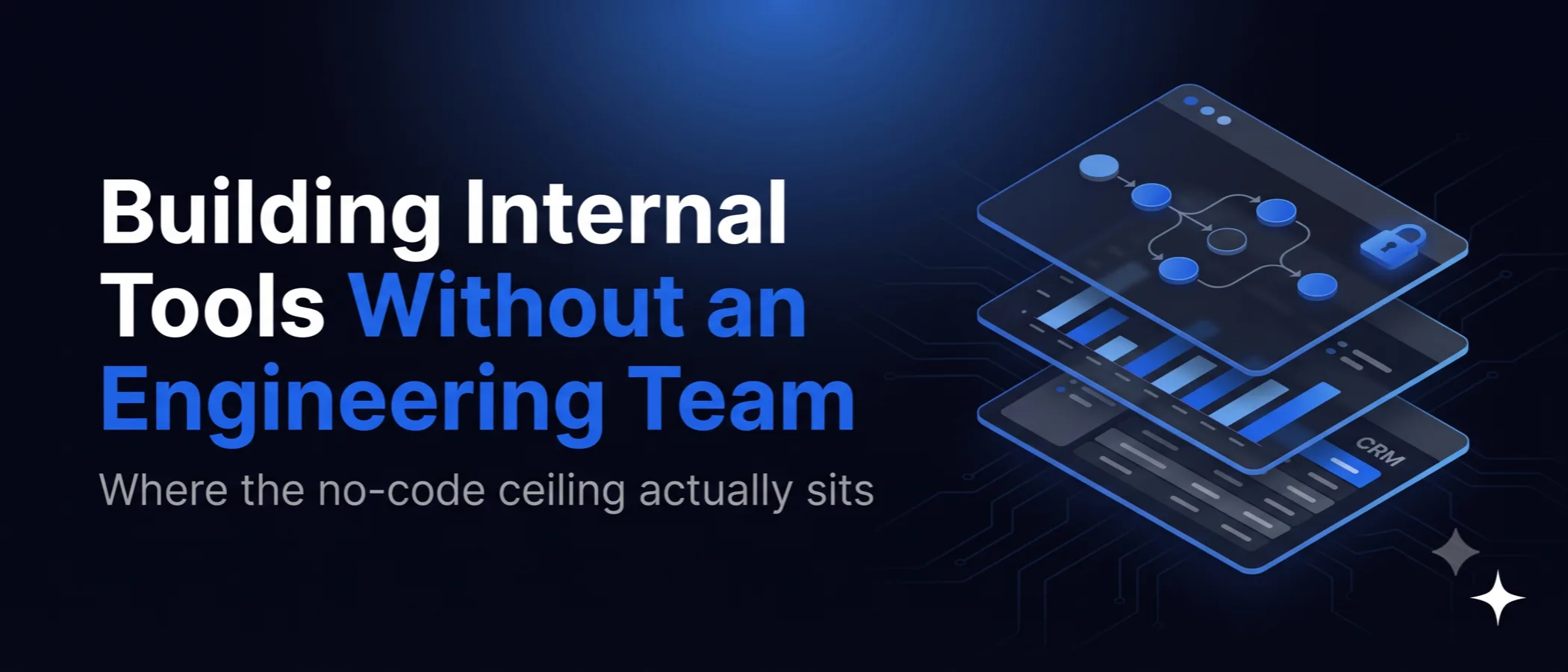
Digital transformation used to mean massive multi-year programmes — new ERP rollouts, custom-built systems, large IT teams. No-code platforms have changed the equation. Today, the most effective transformation programmes combine custom development for differentiated products with no-code platforms for the long tail of operational software. This guide explains the role no-code now plays and how to use it effectively.
Quick Answer
No-code platforms accelerate digital transformation by letting non-technical teams build production-grade apps without writing code. They cut development time by 60–80% on standard operational software (dashboards, portals, internal tools, MVPs) and free engineering capacity for differentiated work. The strongest transformation programmes use no-code for the operational majority and custom development for differentiated products.
Key Takeaways
- No-code lets non-engineers build production apps visually — faster, cheaper, more accessible
- It accelerates digital transformation by removing the engineering bottleneck on standard apps
- The strongest no-code stack in 2026: Xano, WeWeb, Bubble, FlutterFlow, Webflow
- Best for internal tools, MVPs, and operational software; custom is still needed for differentiated products
- Citizen developers become a real lever for transformation when paired with engineering oversight
What Is No-Code?
No-code platforms let non-technical users build web and mobile applications through visual builders, drag-and-drop interfaces, and pre-built components. The platforms abstract away the underlying code while still producing production-grade applications.
Popular tools in 2026 include Bubble for full web apps, Webflow for marketing sites, WeWeb for connected frontends, Xano for backends, and FlutterFlow for native mobile apps. Each strikes a different balance between simplicity and flexibility.
How No-Code Accelerates Digital Transformation
The role of no-code in transformation comes down to four shifts:
Rapid Application Development
No-code platforms compress build cycles dramatically. Internal apps that previously took 3–6 months ship in 2–6 weeks. MVPs that previously needed a 4-person engineering team can be built by a single product manager. The transformation calculus changes — speed-to-value becomes the dominant variable.
Cost Savings
Without specialised engineering effort, build costs drop 40–70% for most operational apps. Maintenance costs drop further over time because changes don't require engineering tickets. Over a five-year horizon, no-code platforms typically deliver 50–60% lower total cost of ownership than custom equivalents.
Democratising App Development
The biggest cultural shift no-code drives is who builds software. Product managers, operations leads, finance, marketing — anyone with a real problem and platform fluency can ship working applications. Engineering capacity stops being a bottleneck on operational change.
Scalability
Modern no-code platforms scale. Xano handles hundreds of thousands of users; Webflow powers sites for major brands; Bubble runs apps with significant transaction volume. The scalability concerns of older no-code platforms have largely been resolved by today's mature ones.
Where No-Code Fits Best in Digital Transformation
Not every application is a fit. The strongest results come from using no-code for:
- Internal tools and dashboards — admin panels, ops workflows, custom reporting
- MVPs and validation projects — fast, cheap experiments to test product ideas
- Customer portals — account dashboards, support portals, partner-facing tools
- Marketing and content sites — corporate websites, landing pages, content hubs
- Workflow automation — approvals, notifications, multi-step processes
- Process-heavy operations — order management, claims processing, onboarding flows
For differentiated core products at scale, custom development remains the right choice. The two approaches complement each other.
The Strongest No-Code Stack in 2026
A typical end-to-end no-code stack for serious applications:
- Webflow — marketing site, landing pages, content publishing
- Xano — backend API, database, authentication, business logic
- WeWeb or Bubble — connected frontend for the application UI
- FlutterFlow — native iOS and Android apps with the same backend
- Make, n8n, or Zapier — workflow automation between systems
- Camunda — business process and workflow orchestration for complex apps
Unico Connect's no-code development services cover this exact stack for transformation programmes.
Common Pitfalls and How to Avoid Them
Three pitfalls catch most no-code transformation efforts:
- Building production apps on the wrong platform — match the tool to the use case (Bubble for full web apps, FlutterFlow for native mobile, Xano for backends)
- No engineering oversight on citizen-built apps — production apps need code review, security audit, and architecture guidance even if "no-code"
- Underestimating integration complexity — connecting apps to existing enterprise systems still requires engineering thinking
The strongest transformation programmes pair citizen developers with engineering oversight, treating no-code platforms as serious infrastructure rather than experimental tools.
Frequently Asked Questions
Can no-code platforms support enterprise digital transformation?
Yes. Modern no-code platforms ship with enterprise-grade security, compliance certifications (SOC 2, ISO 27001, HIPAA), audit logging, and scaling primitives. Companies of all sizes now use them for serious production workloads.
How much faster is no-code than custom development?
Typically 60–80% faster on standard operational apps. The biggest gains are on internal tools, dashboards, and CRUD-heavy apps. Gains are smaller on apps with complex algorithms, custom UX, or performance-critical requirements.
Will no-code replace custom development entirely?
No. The two are complements. No-code handles the operational majority of an enterprise's software; custom handles the differentiated core. Most transformation programmes now use both strategically.
What's the difference between no-code and low-code?
No-code platforms target non-technical users and require zero coding. Low-code platforms target developers and reduce — but don't eliminate — coding. They have similar goals (faster delivery) but different audiences and capability ceilings.
Are no-code apps secure enough for regulated industries?
Yes, for many use cases. Strong platforms (Xano, Bubble, FlutterFlow) ship with the security primitives regulated industries need. Truly strict environments (financial services, healthcare, government) may need additional custom controls, but the baseline is enterprise-ready.
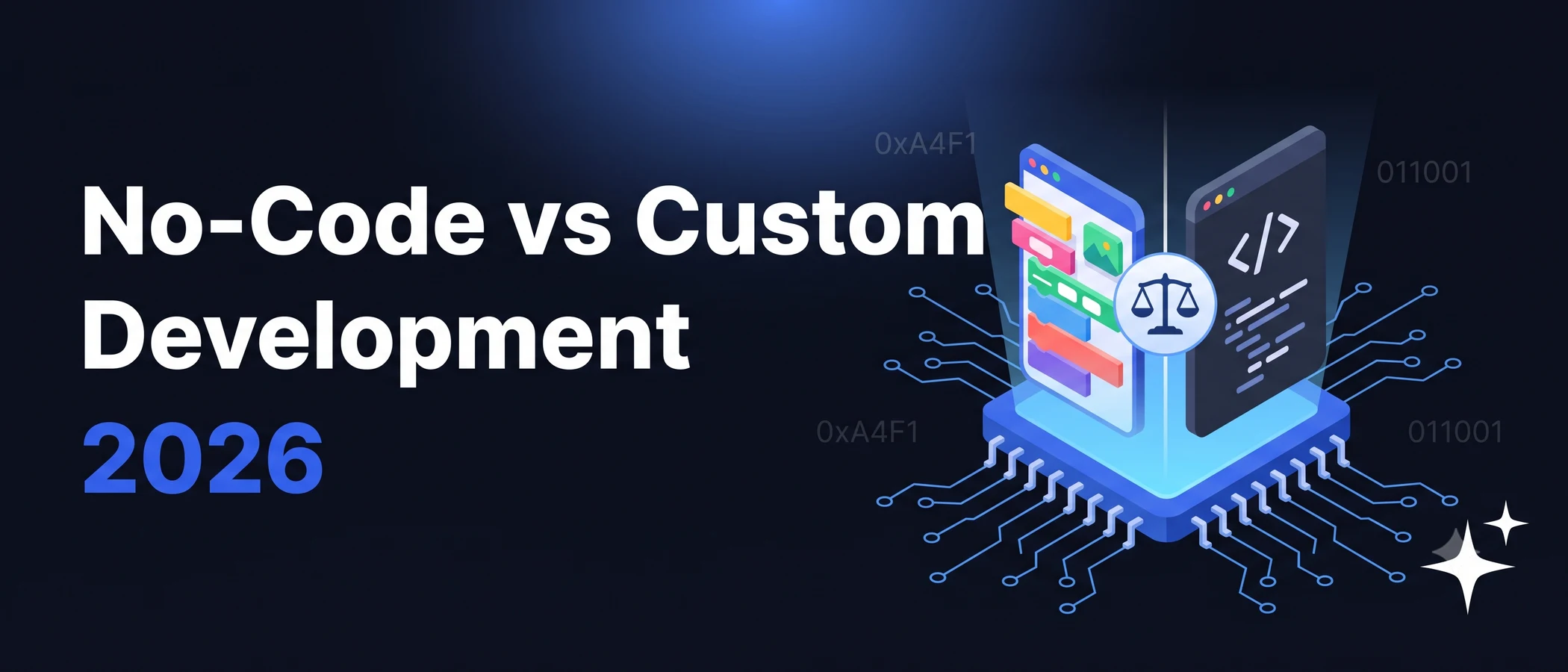
How do you decide between no-code and custom development?
Use no-code when the app is operational, time-to-market matters, and the use case fits standard patterns. Use custom when the app is differentiated, performance is mission-critical, or customisation is extreme. Most enterprises now use both.
Who should build apps in a no-code transformation programme?
A mix of citizen developers (product, operations, finance) for domain-specific apps and engineering for the platform, integrations, and oversight. The strongest programmes build cross-functional pods that combine domain knowledge with engineering rigour.
Conclusion
No-code has earned its place as a core lever for digital transformation. It accelerates delivery, democratises application development, and frees engineering capacity for differentiated work. The strongest transformation programmes use it strategically — production-grade no-code for the operational majority, custom development for the differentiated few. To explore how Unico Connect drives no-code-led transformation for startups and enterprises, see our no-code development services.