










How DevOps Automation Reduces Delivery Time for Complex Software Projects

Saurav Jagdale
Technical Lead, Unico Connect
In this article
- Quick Answer
- Key Takeaways
- Why Delivery Timelines Slow Down in Complex Software Projects
- What Is DevOps Automation? A Quick Overview
- Key Automation Pillars That Improve Delivery Speed
- How DevOps Automation Directly Reduces Delivery Time
- Best Practices for Implementing DevOps Automation in Complex Projects
- Frequently Asked Questions
- Conclusion
Complex software projects ship slowly when manual handoffs dominate the delivery pipeline. Manual testing, manual deployments, manual infrastructure setup — each step adds days, introduces errors, and ties up senior engineers in routine work. Modern DevOps automation closes those gaps systematically, compressing weeks of delivery time into hours. This guide breaks down the four automation pillars that actually move release timelines.
Quick Answer
DevOps automation reduces software delivery time by replacing manual handoffs with automated pipelines that handle continuous integration, deployment, infrastructure provisioning, and security checks. The four pillars are CI/CD automation, software deployment automation, infrastructure as code (IaC), and DevSecOps. Together they shorten the time from commit to production and make each release safer, which is what the DORA delivery metrics measure.
Key Takeaways
- Manual handoffs are the biggest source of delivery delay in complex software projects
- The four DevOps automation pillars are CI/CD, deployment automation, IaC, and DevSecOps
- Expect a shorter path from commit to production and safer releases, tracked with the DORA delivery metrics
- Pipeline orchestration ensures every step runs in the right order with the right validations
- Best practice: automate the highest-friction step first, expand incrementally, measure outcomes
Why Delivery Timelines Slow Down in Complex Software Projects
Three forces consistently slow down delivery in complex projects:
- Manual handoffs — every approval, every test, every environment provision adds hours or days
- Environment inconsistency — "it works on my machine" failures during deployment waste cycles
- Communication silos — development and operations teams that don't share context
Without automation, teams spend more time fighting fires than shipping features. Unico Connect's cloud and DevOps services help enterprises eliminate these bottlenecks systematically.
What Is DevOps Automation? A Quick Overview
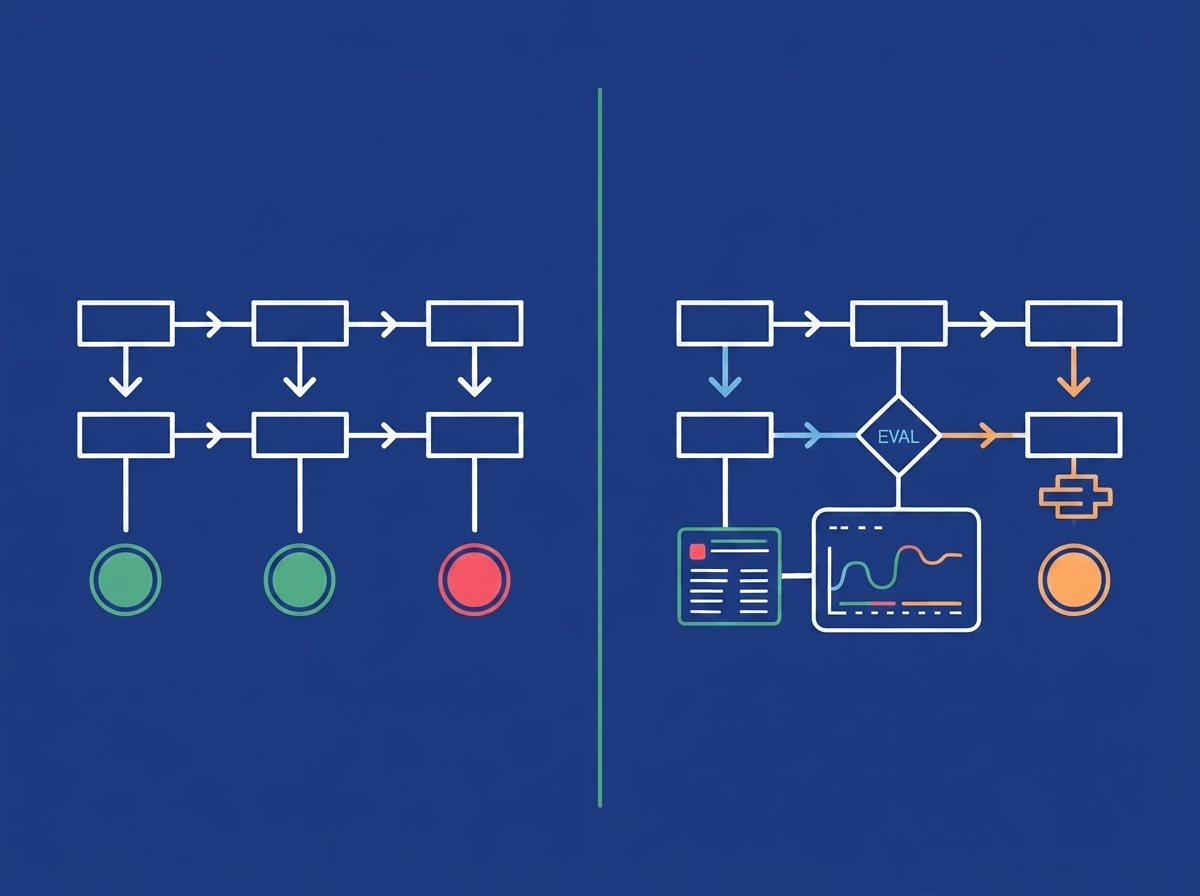
DevOps automation replaces manual steps in the software delivery lifecycle with automated tooling. It covers continuous integration, continuous deployment, infrastructure provisioning, configuration management, monitoring, and security validation.
Modern DevOps automation goes beyond moving code. It includes infrastructure-as-code (IaC) for repeatable environment setup, GitOps for change tracking, observability automation for system health, and DevSecOps for shift-left security. Together these tools form an ecosystem where validated code flows from commit to production with minimal manual intervention.
Key Automation Pillars That Improve Delivery Speed
Four pillars drive the majority of speed improvements:
1. CI/CD Automation for Faster Code Integration
CI/CD pipelines automate code integration, build, test, and deployment. Developers commit frequently; the pipeline runs tests automatically; validated code moves toward production without manual handoffs. The result is fast feedback (hours instead of days), early bug catching, and shorter delivery cycles.
Continuous deployment takes it further — validated code goes to production automatically, with safety gates rather than manual approvals. This is what enables companies like Amazon and Netflix to deploy thousands of times per day.
2. Software Deployment Automation
Production deployment shouldn't be a high-stakes event. Software deployment automation makes releases predictable and repeatable. Modern techniques like blue-green deployments and canary releases let teams ship features to subsets of users first, validate behaviour, then roll out fully.
The result: less downtime, lower user impact, and the ability to roll back in seconds if something goes wrong. Reliable releases become routine instead of stressful.
3. Infrastructure Automation and IaC
Infrastructure-as-code (Terraform, Pulumi, CloudFormation) lets teams define environments in code rather than configure them by hand. Provision a new environment in minutes; tear it down with one command; verify that staging matches production exactly.
For cloud-native applications, IaC is essential. It eliminates environment drift, enables ephemeral preview environments per pull request, and lets teams test infrastructure changes the same way they test code.
4. DevSecOps Automation
Security can't be a final-mile check anymore. DevSecOps shifts security left — automated dependency scanning, secret detection, container image scanning, infrastructure policy validation, and runtime security all run continuously through the pipeline. Issues surface early, when they're cheap to fix.
For regulated industries, this also turns compliance from a release-blocking event into continuous verification.
How DevOps Automation Directly Reduces Delivery Time
Automation attacks delivery delay at its source:
- Eliminates manual approvals for routine changes through automated gates
- Catches bugs earlier when fixing them is cheap rather than expensive
- Parallelises work across the pipeline instead of running serially
- Provisions environments instantly instead of waiting days for operations teams
- Validates security continuously instead of as a last-minute blocker
Together, these reduce a typical complex release cycle from weeks to days — and sometimes to hours for well-automated teams.
Best Practices for Implementing DevOps Automation in Complex Projects
Five practices consistently produce strong outcomes:
- Use IaC and GitOps to keep environments consistent and changes auditable
- Standardise workflows across all engineering and operations teams to avoid fragmentation
- Integrate DevSecOps early so security checks happen throughout the pipeline, not at the end
- Invest in observability — centralised logs, metrics, and traces catch issues before they reach users
- Start with high-impact automation and expand incrementally — don't try to automate everything at once
The teams that move fastest start with their biggest pain point, automate it well, measure the impact, and use that win to fund the next round.
Frequently Asked Questions
How does DevOps automation reduce delivery time in software development?
By eliminating manual handoffs, running tests automatically, enabling parallel work in the pipeline, and provisioning environments on demand. Together these shorten the time from commit to production and make each release safer.
What is the difference between CI/CD automation and software deployment automation?
CI/CD covers continuous integration (build and test on every commit) and continuous delivery (validated code ready for production). Software deployment automation is the specific final step — actually moving validated code into production environments safely.
How do infrastructure automation and IaC speed up release cycles?
By letting teams provision environments in minutes instead of days, ensuring those environments match production exactly, and making infrastructure changes auditable and reviewable. The result is fewer "works on my machine" failures and faster delivery.
Is DevSecOps automation required for complex enterprise projects?
For most regulated or enterprise-scale software, yes. DevSecOps integrates security early in the pipeline so vulnerabilities surface before they reach production. It turns compliance from a periodic event into continuous verification, which significantly reduces release risk.
How does pipeline orchestration improve automated delivery accuracy?
Orchestration ensures every step in the pipeline runs in the right order with the right validations and dependencies satisfied. It eliminates the race conditions, missed steps, and inconsistencies that creep in when teams cobble together scripts manually.
What's a realistic ROI for DevOps automation?
The return shows up as shorter lead time and fewer failed changes, measured against your own baseline with the DORA metrics. The biggest wins come from teams that combine automation with cultural change, not just tooling.
How long does a DevOps automation transformation take?
A focused initial implementation (one or two pipelines, key environments) typically takes 8–16 weeks. A broader transformation across many teams and applications usually runs 6–18 months. Full cultural change continues for years after the tooling is in place.
Conclusion
DevOps automation is the highest-leverage way to reduce delivery time on complex software projects. The four pillars — CI/CD, deployment automation, IaC, and DevSecOps — compress weeks into days when implemented well. The teams that get the most value start with their biggest bottleneck, automate it cleanly, and expand systematically. To explore how Unico Connect builds DevOps automation for enterprises, see our cloud and DevOps services.