









5 Ways No-Code Development Is Changing the Game in Software Development

Vasim Gujrati
Solutions Architect, AI & Platforms, Unico Connect
In this article
No-code development has moved from a curiosity to a core part of how enterprises ship software. It now powers internal tools, customer-facing micro-apps, and rapid prototypes that used to require months of engineering work. For founders, product leaders, and engineering managers, the question is no longer "is no-code real" — it's "where in our stack does no-code create the most leverage". Here are the five most consequential ways no-code is changing software development.
Quick Answer
No-code development is reshaping software in five ways: democratising who can build software, accelerating time-to-market, reducing development cost, expanding cross-functional collaboration, and enabling faster innovation. The realistic frame is not "no-code replaces developers" but "no-code expands the surface area of who can ship software". The best teams combine no-code for internal tools and rapid prototypes with custom engineering for differentiated product work.
Key Takeaways
- No-code democratises software creation — non-engineers can ship real applications
- Pre-built templates and visual logic compress time-to-market dramatically
- Lower development cost lets businesses ship more with the same engineering team
- Non-technical stakeholders can now participate directly in the build process
- The compounding outcome is faster experimentation and faster innovation cycles
1. Democratising Software Development
The biggest shift no-code has produced is in who can build software. Drag-and-drop interfaces, visual logic builders, and pre-built component libraries let business teams, operations leads, and product managers build real applications without writing code.
This democratisation does not eliminate the need for engineers. It expands the surface area of software inside an organisation. Engineers stay focused on differentiated product work; everyone else can ship the long tail of internal tools, workflows, and integrations without queueing for engineering capacity.
2. Accelerating Time to Market
No-code platforms compress timelines that would have taken months of custom development into days or weeks. Pre-built templates, integrations with common SaaS tools, and visual workflow builders mean a new internal app or customer-facing micro-experience can be live in a single sprint.
For startups and innovation teams, this matters. Faster time-to-market means faster learning, faster validation, and faster iteration. The teams that move fastest with no-code are usually the ones experimenting most aggressively.
3. Reducing Development Cost
Custom engineering is expensive — both in salary and in the opportunity cost of pulling senior engineers off product work. No-code reduces this in two ways: simpler tools require less specialised talent, and shorter timelines mean fewer person-weeks of effort per feature.
Enterprises adopting no-code thoughtfully report substantial cost savings on internal tools and middle-of-the-funnel features. The savings free up engineering budget for the work that genuinely requires it.
4. Encouraging Collaboration
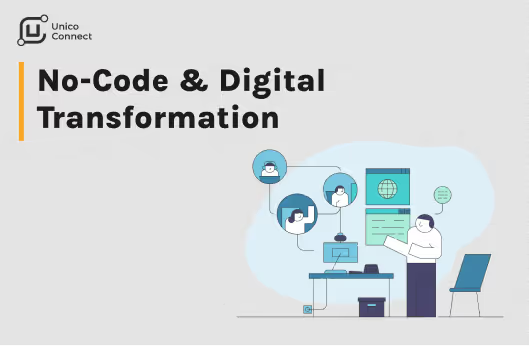
No-code expands who can participate in product development. Designers can prototype interactive flows. Operations leads can build their own workflow automations. Product managers can wire up tests without filing an engineering ticket.
The cultural change is significant: when non-technical stakeholders can participate directly in the build, communication tightens, hand-offs reduce, and the resulting product is more aligned with how the business actually operates.
5. Fostering Innovation
The compounding outcome of the previous four shifts is more innovation. With faster iteration, lower cost, and broader participation, teams can run more experiments per quarter — and learn faster from each one.
In practice, this looks like internal hackathons that ship working tools, product managers who validate hypotheses with real users in days, and operations teams that automate routine work continuously without engineering involvement.
Where No-Code Fits — And Where It Doesn't
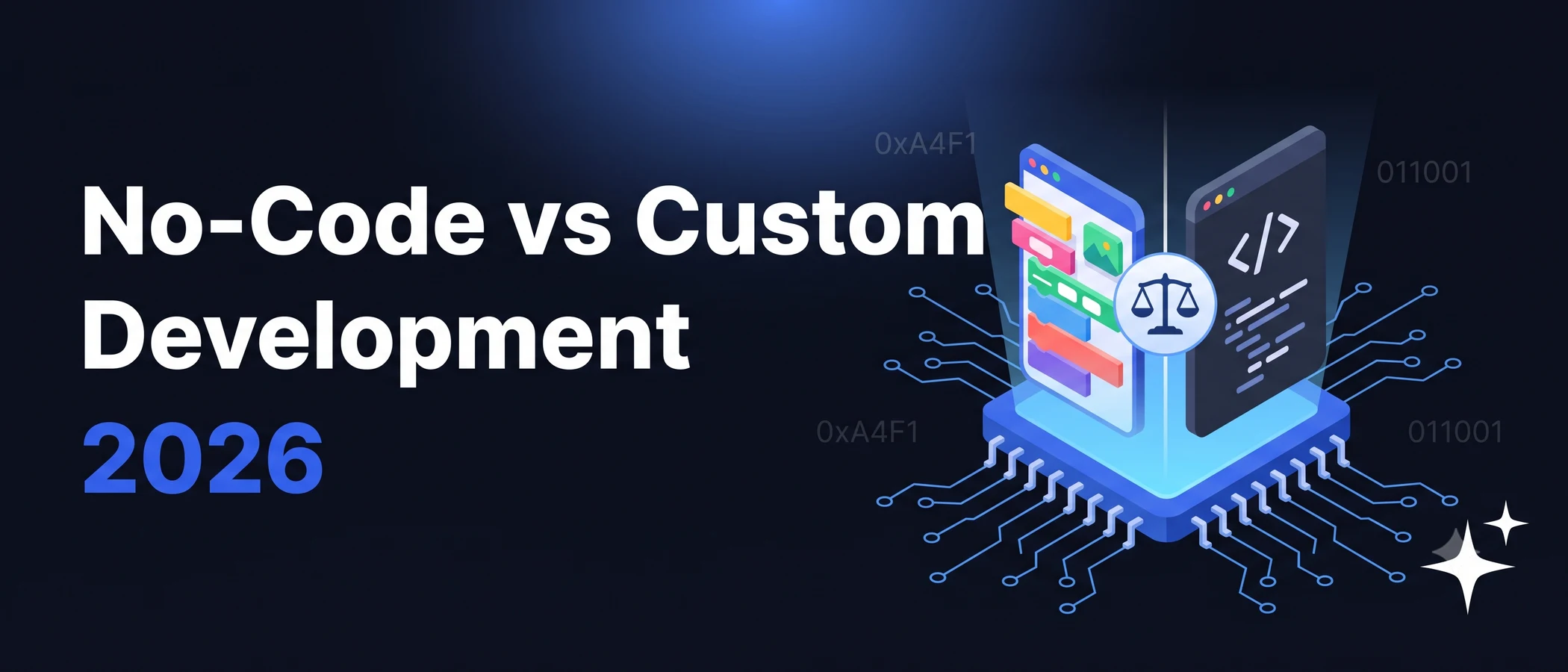
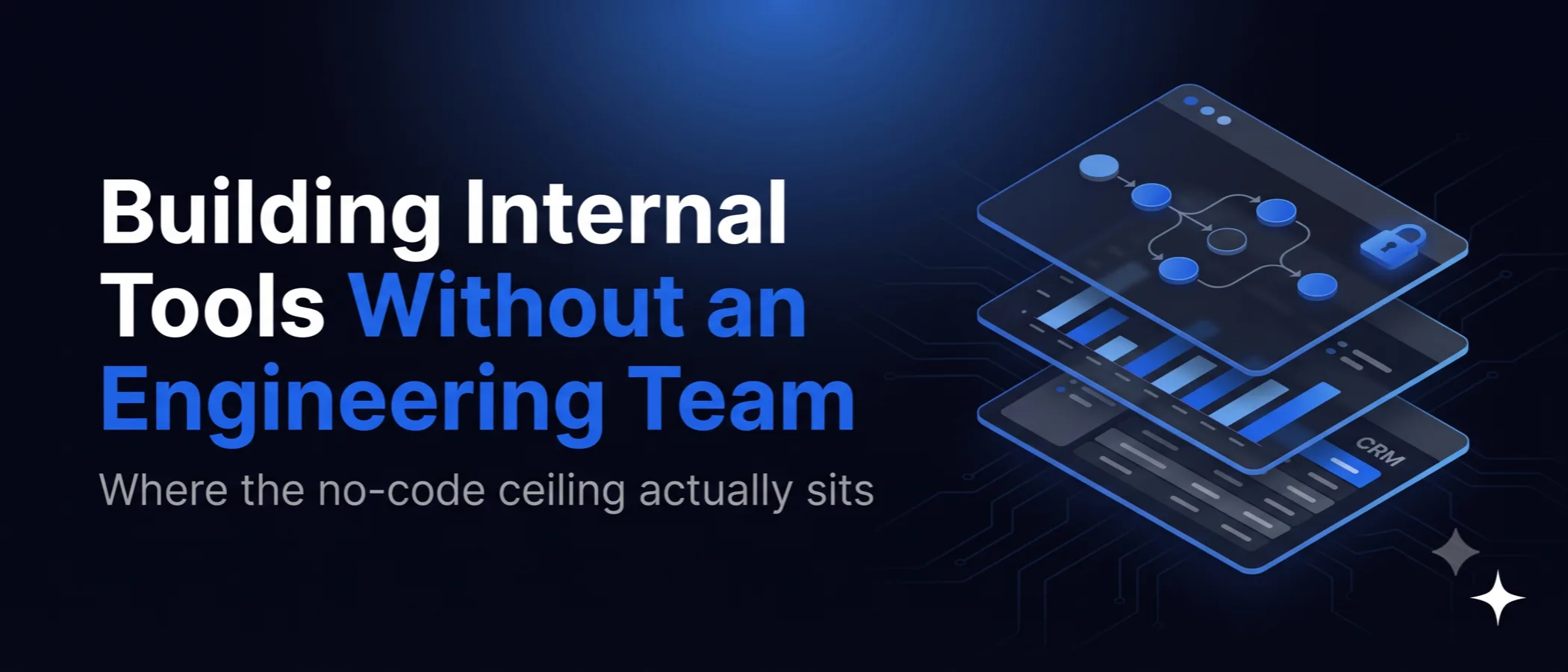
The honest framing for 2026: no-code is the right starting point for internal tools, workflow automations, customer-facing micro-apps, and rapid prototypes. It is not the right starting point for differentiated product work, high-scale systems, or applications with strict performance, security, or compliance requirements.
The mature pattern is hybrid: no-code for the long tail, custom engineering for the differentiated core. Unico Connect's product engineering services help enterprises identify the right boundary and build both sides of it.
Frequently Asked Questions
Will no-code replace developers?
No. No-code expands who can build software, but it does not replace professional engineering for complex, differentiated, or high-scale product work. The realistic outcome is partnership: business teams own the long tail through no-code; engineers focus on the core product.
What kinds of applications are best suited to no-code?
Internal tools, workflow automations, customer-facing micro-apps, marketing landing pages, MVP prototypes, and integrations between SaaS tools. Most enterprises find 30–50% of their internal application portfolio is a strong fit for no-code.
What are the limits of no-code platforms?
No-code platforms generally struggle with complex business logic, large-scale data processing, strict performance requirements, deep customisation, and integrations with internal legacy systems. They are also platform-dependent, which creates lock-in risk.
How does no-code affect software security?
Security depends on the platform. Enterprise-grade no-code platforms now offer SOC 2 compliance, role-based access, audit logging, and SSO. Smaller platforms often do not. Treat platform security review as a precondition before adopting no-code for sensitive use cases.
Can no-code apps scale to thousands or millions of users?
Some can; many cannot. Customer-facing apps with high traffic or strict latency requirements usually need custom engineering. Internal tools and lower-traffic customer apps can scale comfortably on enterprise-grade no-code platforms.
How should a team decide between no-code and custom development?
Ask three questions: is the application differentiated to the business; does it need performance, security, or scale that no-code cannot provide; and does it need to evolve in ways the no-code platform cannot support? If any answer is yes, build custom. Otherwise, no-code is usually faster and cheaper.
Conclusion
No-code is no longer a tool for hobbyists — it is a strategic capability that compounds inside the enterprise. The teams that get the most leverage are those that adopt it thoughtfully: no-code for the long tail of internal tools and rapid prototypes, custom engineering for the differentiated product core. To explore how Unico Connect helps enterprises balance the two, see our no-code development services.